Quick Order Cart

Cat. No. ARG43694

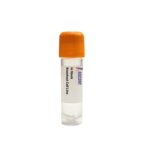
ACBD3 Knockout HeLa Cell Line

  • Product Type:

    In Stock Cell Lines

  • Species:

    Homo sapiens (Human)

  • Tissue Source:

    Uterus (cervix)

  • Disease:

    Adenocarcinoma

The ACBD3 Knockout HeLa Cell Line is a CRISPR/Cas9-edited cell line derived from HeLa cervical adenocarcinoma cells, providing a loss-of-function model for the ACBD3 gene. ACBD3 encodes a Golgi-associated scaffold protein that recruits PI4KB to generate PI4P, governs Golgi structure, and influences Notch signaling through interaction with NUMB. The protein is also exploited by enterovirus 3A for viral replication, making this knockout valuable for both cancer and virology research. Researchers can use this cell line to study Golgi organization by immunofluorescence, analyze Notch target gene expression by RT-qPCR, and assess viral replication kinetics. It is a defined tool for investigating ACBD3-dependent functions in a widely adopted cancer model.

Inquire Now

In stock

Ships next business day


Ask a Question

Shipping Info:

Cryopreserved in vials and shipped on dry ice


Disclaimer:

For Research Use Only

  • Characteristics

    Host Cell

    HeLa

    Sex of Donor

    Female

    Age

    31 years

    Gene Name

    ACBD3

    Gene Identifier

    NCBI Gene ID 64746

    Morphology

    Epithelial-like

    Growth Mode

    Adherent

    Storage

    Liquid nitrogen (LN2)

  • Culture Conditions

    Temperature

    37°C

    Atmosphere

    5% COâ‚‚

  • Quality Control

    Sterility testing

    The bacterial, yeast, and fungi are not detected in these cells by daily monitor.

    Mycoplasma testing

    Negative for mycoplasma through PCR analysis

  • Disclaimer

    Intended Use

    This product is intended for laboratory in vitro use only. It is not intended for diagnostic, therapeutic, or clinical applications.

    Disclaimer

    Ascent Research endeavors to provide accurate and up-to-date product information. However, no warranties or representations are made regarding its completeness or reliability. References to scientific literature and patents are for informational purposes only, and the customer assumes sole responsibility for verifying their accuracy.

    By accepting this product, the customer acknowledges and agrees to assume all risks associated with its receipt, handling, storage, disposal, and use, including compliance with all applicable safety and environmental regulations and precautions. Relevant laws, regulations, and ethical guidelines must be followed in conducting any research, modifications, or derivatives derived from this product.

    This product is provided "AS IS", and except as expressly stated herein, Ascent Research disclaims all other warranties, express or implied. Under no circumstances shall Ascent Research, its affiliates, or representatives be liable for indirect, incidental, consequential, or punitive damages arising from the use of this material. While Ascent Research employs rigorous quality control measures, we shall not be held responsible for damages resulting from misidentification or misinterpretation of the provided materials.

Description

The ACBD3 Knockout HeLa Cell Line is a CRISPR/Cas9-edited knockout cell line derived from HeLa cervical adenocarcinoma cells, engineered to disrupt the ACBD3 gene. This product provides a stable loss-of-function model for investigating ACBD3-dependent cellular processes without the constraints of transient knockdown approaches. The cell line is offered as a bulk population and is suitable for applications requiring constitutive gene disruption in a widely used human cancer model.

The parental HeLa cell line is an immortalized epithelial cell line originating from a human cervical adenocarcinoma. HeLa cells are HPV18-positive, leading to E6-mediated inactivation of wild-type p53, and they display an aneuploid karyotype. These genetic properties, combined with their robust growth and well-characterized signaling networks, have established HeLa as a principal model in cancer biology, virology, and cell signaling research. The ACBD3 knockout thus builds upon a host system with extensive experimental precedent.

At the molecular level, ACBD3 encodes a Golgi-associated scaffold protein essential for maintaining Golgi architecture and facilitating intracellular trafficking. ACBD3 directly interacts with PI4KB and recruits this kinase to Golgi membranes to produce phosphatidylinositol 4-phosphate (PI4P), a phosphoinositide required for vesicle biogenesis and cargo sorting. Additionally, ACBD3 forms complexes with GOLGB1/giantin and NUMB, connecting it to Notch signaling: NUMB-mediated endosomal trafficking of the Notch intracellular domain is influenced by ACBD3, thereby modulating expression of downstream targets such as HES1. This circuitry is perturbed by enterovirus infection, as the viral 3A protein hijacks ACBD3 to redirect PI4KB activity toward replication organelle formation.

In HeLa cells, disruption of ACBD3 is expected to compromise Golgi integrity and impair secretory and endocytic pathways that are active in these transformed cells. Given ACBD3??s involvement in gastric cancer pathobiology and its exploitation by enteroviruses, the knockout model enables dissection of how this scaffold coordinates membrane trafficking and signaling in a cancer cell background. The HPV-driven inactivation of p53 and aneuploid genome of HeLa cells provide a permissive context for probing interplay between Golgi stress responses, oncogenic signaling, and viral subversion.

This knockout cell line serves as a versatile platform for experimental investigations. Researchers can apply immunofluorescence microscopy using antibodies against Golgi markers such as GM130 to assess morphological changes, western blotting to quantify ACBD3 protein loss, and RT-qPCR to measure Notch target gene expression (e.g., HES1). Flow cytometry permits analysis of surface protein trafficking, while enterovirus replication assays reveal the dependency of viral life cycles on ACBD3. Additionally, cell proliferation and viability studies address the role of ACBD3 in cancer cell growth. For further details or custom inquiries, please contact Ascent Research.


Reset Password

    Reach Us Questions? Click Me Here!

    Fill out the form below and a member of our team will contact you shortly!

    *Required field


      Reach Us

      Fill out the form below and a member of our team will contact you shortly!

      *Required field

      Product Inquiry (Optional)