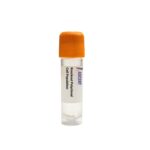
Quick Order Cart

Cat. No. ARG35599

ACOD1 Knockout A549 Polyclonal Cells

  • Product Type:

    Polyclonal Cell Population

  • Species:

    Homo sapiens (Human)

  • Tissue Source:

    Lung

  • Disease:

    Lung adenocarcinoma

The ACOD1 Knockout A-549 Polyclonal Cells are a CRISPR/Cas9-edited polyclonal knockout population in A-549 lung adenocarcinoma cells, enabling functional studies of ACOD1. ACOD1 catalyzes itaconate production, which inhibits SDH, activates Nrf2 via KEAP1 alkylation, and blocks NLRP3 inflammasome assembly, thereby suppressing inflammatory responses. Induced by LPS, IFN-??, and TNF-?? through NF-??B and IRF1, ACOD1 integrates inflammatory signals into metabolic reprogramming. This knockout model supports diverse applications including immunometabolism research, anti-inflammatory drug screening, cancer metabolism studies, and host-pathogen interaction assays, with utility in itaconate quantification and SDH activity measurements.

Inquire Now

In stock

Ships next business day


Ask a Question

Shipping Info:

Cryopreserved in vials and shipped on dry ice


Disclaimer:

For Research Use Only

  • Characteristics

    Host Cell

    A549

    Sex of Donor

    Male

    Age

    58 years

    Derived From Site

    Lung

    Gene Name

    Acod1

    Gene Identifier

    NCBI Gene ID 730249

    Storage

    Liquid nitrogen (LN2)

  • Culture Conditions

    Growth medium

    MEM

    Supplement(s)

    10% Fetal Bovine Serum, 1% Penicillin-Streptomycin Solution

    Temperature

    37°C

    Atmosphere

    5% CO₂

  • Quality Control

    Sterility testing

    The bacterial, yeast, and fungi are not detected in these cells by daily monitor.

    Mycoplasma testing

    Negative for mycoplasma through PCR analysis

  • Disclaimer

    Intended Use

    This product is intended for laboratory in vitro use only. lt is not intended for diagnostic, therapeutic, or clinical applications.

    Disclaimer

    Ascent Research endeavors to provide accurate and up-to-date product information. However, no warranties or representations are made regarding its completeness or reliability. References to scientific literature and patents are for informational purposes only, and the customer assumes sole responsibility for verifying their accuracy.

    By accepting this product, the customer acknowledges and agrees to assume all risks associated with its receipt, handling, storage, disposal, and use, including compliance with all applicable safety and environmental regulations and precautions. Relevant laws, regulations, and ethical guidelines must be followed in conducting any research, modifications, or derivatives derived from this product.

    This product is provided "AS IS", and except as expressly stated herein, Ascent Research disclaims all other warranties, express or implied. Under no circumstances shall Ascent Research, its affiliates, or representatives be liable for indirect, incidental, consequential, or punitive damages arising from the use of this material. While Ascent Research employs rigorous quality control measures, we shall not be held responsible for damages resulting from misidentification or misinterpretation of the provided materials.

Description

The ACOD1 Knockout A-549 Polyclonal Cells provide a CRISPR/Cas9-edited polyclonal knockout cell population derived from the A-549 human lung adenocarcinoma epithelial cell line, designed for loss-of-function studies of the ACOD1 gene. This polyclonal population consists of a heterogeneous mixture of edited cells with targeted disruption of ACOD1, offering a robust model to dissect itaconate-dependent immunometabolic pathways in a cancer-relevant epithelial context without the need for clonal isolation.

The A-549 cell line was originally established from a 58-year-old Caucasian male with lung carcinoma and is widely used as a model for non-small cell lung cancer (NSCLC). These cells exhibit an adherent epithelial morphology, are wild-type for EGFR, and harbor a KRAS G12S activating mutation, which drives oncogenic signaling. As an alveolar epithelial-derived line, A-549 cells retain key features of type II pneumocytes, making them suitable for studying lung cancer biology, inflammation, and host-pathogen interactions. The presence of the KRAS mutation provides a genetically defined context for exploring metabolic vulnerabilities and immune responses in NSCLC.

ACOD1 catalyzes the decarboxylation of cis-aconitate to produce itaconate, an immunometabolite with anti-inflammatory and antimicrobial properties. Its expression is induced by pro-inflammatory stimuli including LPS, IFN-??, TNF-??, and poly(I:C) via transcription factors NF-??B, IRF1, STAT1, and AhR. Itaconate inhibits SDH, remodels the TCA cycle, and activates Nrf2 by alkylating KEAP1. It also blocks NLRP3 inflammasome assembly and modulates ATF3, GAPDH, MAVS, TET2, and I??B??, orchestrating a broad anti-inflammatory program.

In the context of A-549 cells, ACOD1 knockout provides a powerful tool to probe the intersection of inflammation and metabolism in NSCLC. KRAS-mutant lung cancers often display altered metabolic states and immune evasion strategies; loss of ACOD1 may enhance inflammatory signaling, alter mitochondrial metabolism, and impact tumor cell-intrinsic immune responses. This model can be used to investigate how itaconate production influences cancer cell proliferation, survival, and sensitivity to immune-mediated killing. Moreover, by deleting ACOD1 in an alveolar epithelial background, researchers can study the role of pulmonary epithelial cells in shaping innate immunity during infections such as bacterial pneumonia or viral challenges, where ACOD1 is known to restrict pathogen replication.

Researchers can employ the ACOD1 Knockout A-549 Polyclonal Cells for a variety of applications, including immunometabolism research, anti-inflammatory drug screening, and host-pathogen interaction studies. The absence of ACOD1 enables direct assessment of itaconate-dependent effects using complementary assays such as LC-MS?Cbased itaconate quantification, SDH activity measurements, and Nrf2 luciferase reporter assays. Additional applications include CRISPR-based functional genomics, NF-??B luciferase assays, metabolic flux analysis, and bacterial killing assays. This polyclonal knockout model supports detailed mechanistic investigations into ACOD1-regulated pathways in lung adenocarcinoma and inflammation biology. For additional information, please contact Ascent Research.


Reset Password

    Reach Us Questions? Click Me Here!

    Fill out the form below and a member of our team will contact you shortly!

    *Required field


      Reach Us

      Fill out the form below and a member of our team will contact you shortly!

      *Required field

      Product Inquiry (Optional)