Quick Order Cart

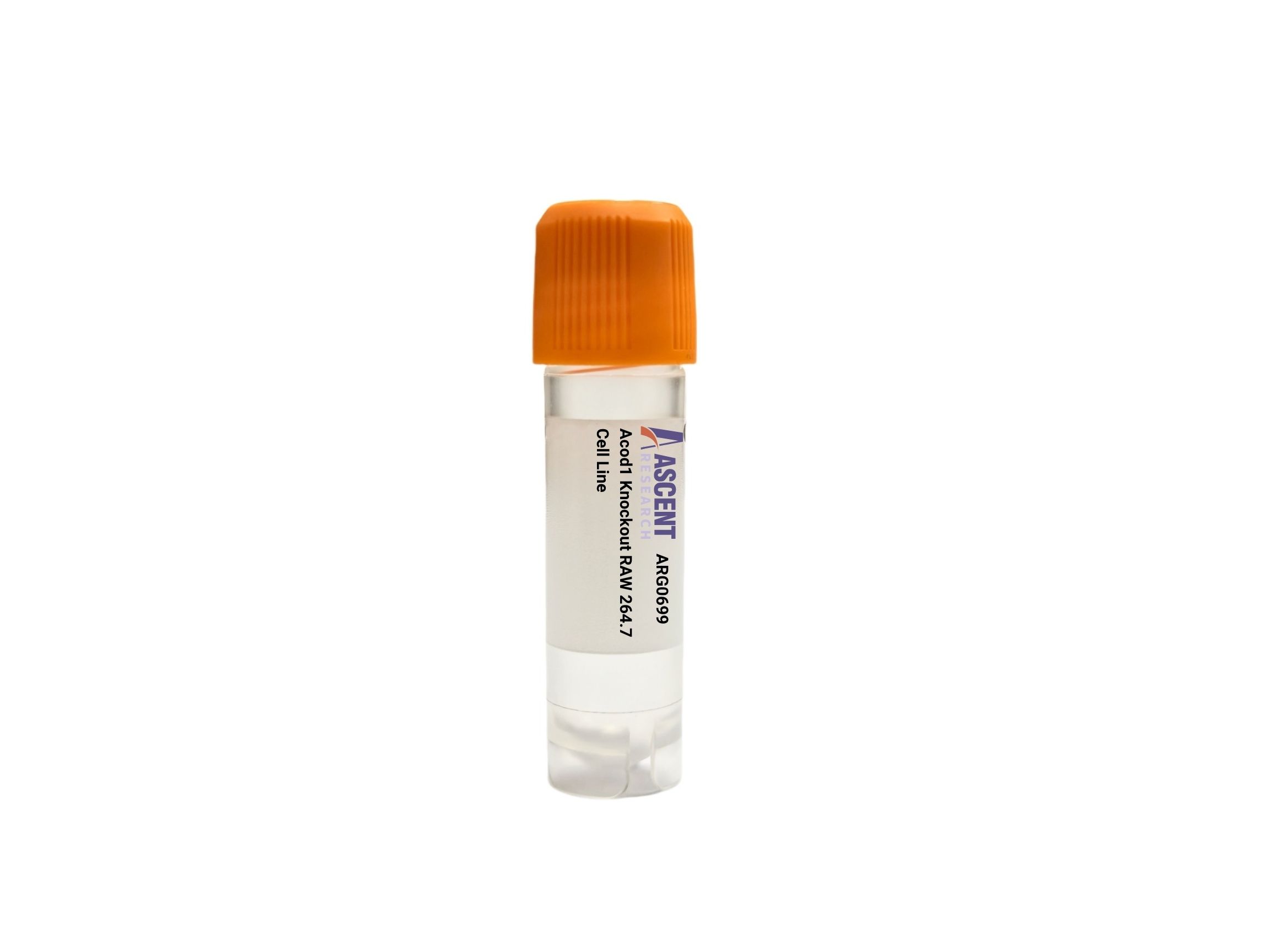
Cat. No. ARG0699

Acod1 Knockout RAW 264.7 Cell Line

  • Product Type:

    Genome-edited Cells

  • Tissue Source:

    Ascites

  • Disease:

    Leukemia

  • Gene Species:

    Mus musculus (Mouse)

The Acod1 Knockout RAW 264.7 Cell Line is a CRISPR/Cas9-edited mouse macrophage cell line with targeted disruption of the Acod1 gene, which encodes aconitate decarboxylase 1, the enzyme that converts cis-aconitate to the anti-inflammatory metabolite itaconate during immune activation. This knockout model enables dissection of itaconate-mediated signaling, including KEAP1 alkylation, NRF2 activation, and NLRP3 inflammasome suppression. It is ideal for immunometabolism research, sepsis and inflammatory disease studies, host defense investigations, and drug screening, with applications in metabolic flux analysis, cytokine profiling, and inflammasome assays.

Inquire Now

In stock

Ships next business day


Ask a Question

Shipping Info:

Cryopreserved in vials and shipped on dry ice


Disclaimer:

For Research Use Only

  • Characteristics

    Host Cell

    RAW 264.7

    Age

    Adult

    Sex of Donor

    Male

    Gene Name

    Acod1

    Gene Species

    Mus musculus (Mouse)

    Gene Identifier

    NCBI Gene ID 16365

  • Culture Conditions

    Temperature

    37°C

    Atmosphere

    5% CO₂

  • Quality Control

    Sterility testing

    Daily monitoring confirms that the cells are free from bacterial, yeast, and fungal contamination.

    Mycoplasma testing

    Negative for mycoplasma through PCR analysis

    Pathogens

    Cells tested negative for HIV-1, HBV, and HCV.

  • Disclaimer

    Intended Use

    This product is intended for laboratory in vitro use only. lt is not intended for diagnostic, therapeutic, or clinical applications.

    Disclaimer

    Ascent Research endeavors to provide accurate and up-to-date product information. However, no warranties or representations are made regarding its completeness or reliability. References to scientific literature and patents are for informational purposes only, and the customer assumes sole responsibility for verifying their accuracy.

    By accepting this product, the customer acknowledges and agrees to assume all risks associated with its receipt, handling, storage, disposal, and use, including compliance with all applicable safety and environmental regulations and precautions. Relevant laws, regulations, and ethical guidelines must be followed in conducting any research, modifications, or derivatives derived from this product.

    This product is provided "AS IS", and except as expressly stated herein, Ascent Research disclaims all other warranties, express or implied. Under no circumstances shall Ascent Research, its affiliates, or representatives be liable for indirect, incidental, consequential, or punitive damages arising from the use of this material. While Ascent Research employs rigorous quality control measures, we shall not be held responsible for damages resulting from misidentification or misinterpretation of the provided materials.

Description

The Acod1 Knockout RAW 264.7 Cell Line is a CRISPR/Cas9-edited knockout cell line derived from the mouse macrophage cell line RAW 264.7, featuring targeted disruption of the Acod1 gene. This product serves as a loss-of-function model for investigating the biological functions of aconitate decarboxylase 1 and the immunometabolic roles of itaconate.

The RAW 264.7 cell line, established from an Abelson murine leukemia virus-induced tumor in a BALB/c mouse, is a widely used macrophage model that exhibits robust phagocytic activity, cytokine secretion, and responsiveness to Toll-like receptor ligands such as lipopolysaccharide (LPS). These cells recapitulate many aspects of primary macrophage biology, including activation of NF-??B signaling, production of inflammatory cytokines, and metabolic reprogramming, making them a suitable host for studying innate immune mechanisms and itaconate-mediated regulation.

Acod1 catalyzes the decarboxylation of cis-aconitate to produce itaconate, a metabolite that accumulates in activated macrophages and exerts potent anti-inflammatory effects. Upstream, Acod1 expression is induced by LPS/TLR4 signaling via NF-??B, IRF1, and STAT1 transcription factors, as well as by TNF-?? and IFN-??. Downstream, itaconate covalently modifies KEAP1 at critical cysteine residues, leading to NRF2 stabilization and activation of antioxidant gene programs, including HO-1 and NQO1. Itaconate also inhibits succinate dehydrogenase (SDH), limiting mitochondrial reactive oxygen species production, and alkylates GAPDH to suppress glycolysis, while simultaneously blocking NLRP3 inflammasome assembly, thereby reducing caspase-1 activation and IL-1?? secretion.

In the RAW 264.7 macrophage context, Acod1 knockout eliminates itaconate synthesis, enabling precise dissection of its role in dampening inflammatory responses. This deficiency disrupts the typical TCA cycle rewiring that occurs upon immune activation and abolishes itaconate-dependent feedback inhibition of the NLRP3 inflammasome and oxidative stress. Consequently, the knockout cell line is particularly valuable for studying the interplay between metabolism and inflammation, including mechanisms of sepsis, inflammatory bowel disease, rheumatoid arthritis, and macrophage responses to bacterial or viral pathogens.

Researchers can employ the Acod1 Knockout RAW 264.7 Cell Line in a variety of experimental paradigms, including Western blotting and RT-qPCR for signaling protein and cytokine analysis, ELISA for secreted cytokines, immunofluorescence for NF-??B or NRF2 localization, and flow cytometry for surface macrophage markers. Metabolic investigations benefit from liquid chromatography-mass spectrometry (LC-MS) for itaconate quantification, Seahorse flux analysis for mitochondrial respiration, and ROS measurements. Additionally, functional assays such as co-immunoprecipitation of KEAP1-NRF2 interactions, NRF2 reporter assays, bacterial killing assays, and NLRP3 inflammasome activation assays can be performed. This knockout cell line supports drug screening for anti-inflammatory agents and detailed immunometabolic studies. For further information, please contact Ascent Research.


Reset Password

    Reach Us Questions? Click Me Here!

    Fill out the form below and a member of our team will contact you shortly!

    *Required field


      Reach Us

      Fill out the form below and a member of our team will contact you shortly!

      *Required field

      Product Inquiry (Optional)