Quick Order Cart

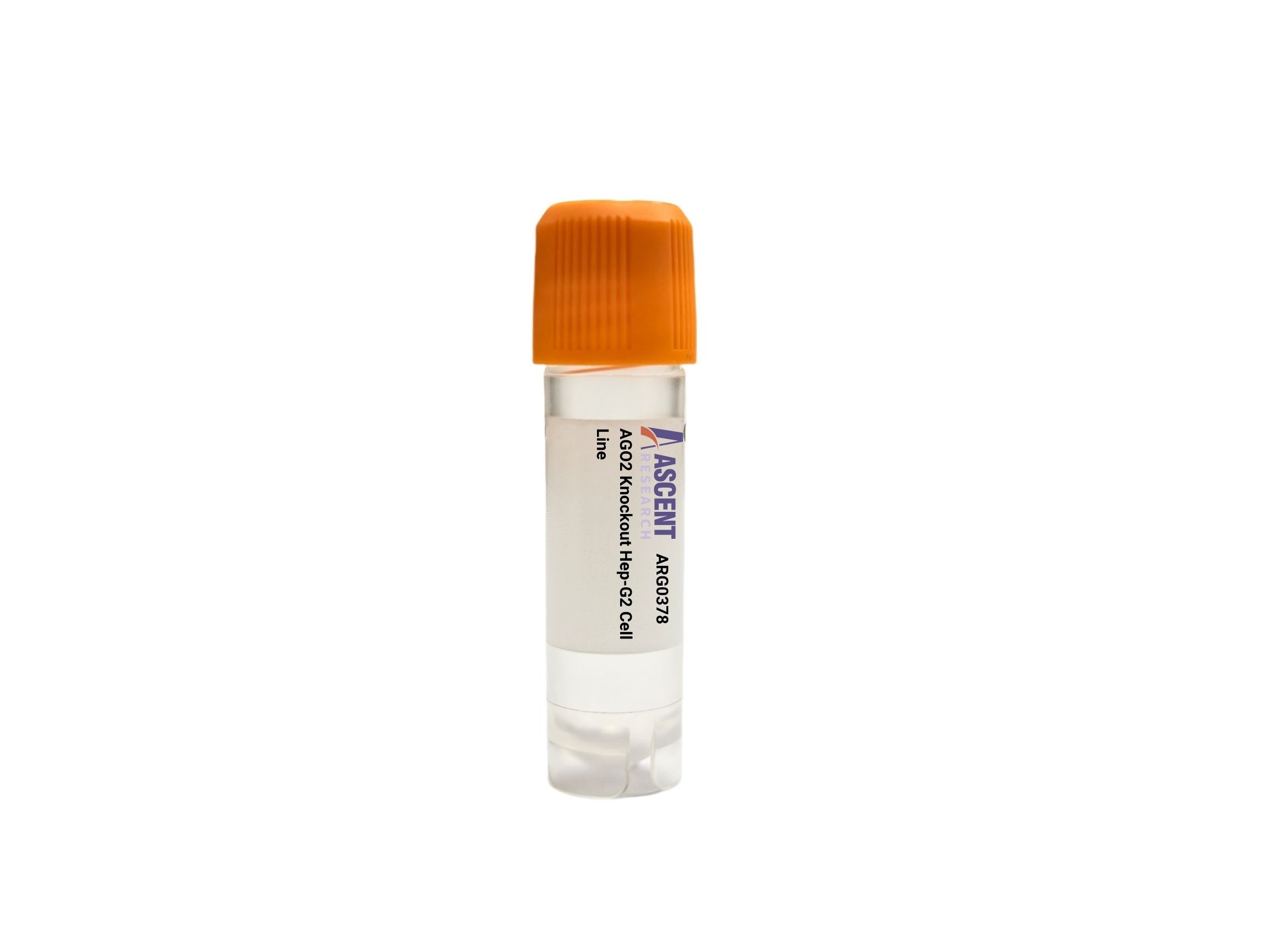
Cat. No. ARG0378

AGO2 Knockout Hep-G2 Cell Line

  • Product Type:

    Genome-edited Cells

  • Tissue Source:

    Liver

  • Disease:

    Hepatoblastoma

  • Gene Species:

    Homo sapiens (Human)

The AGO2 Knockout Hep-G2 Cell Line is a CRISPR/Cas9-edited loss-of-function model in the Hep-G2 human hepatocellular carcinoma background, designed for studying RNA interference and miRNA-mediated gene silencing. By disrupting the Argonaute-2 (AGO2) gene, the catalytic core of the RISC complex, this cell line enables investigation of how miRNAs and siRNAs regulate target mRNAs in liver cancer cells. AGO2 normally interacts with Dicer, TRBP, GW182, and miRNA/siRNA duplexes to mediate translational repression or mRNA cleavage. Knockout of AGO2 in Hep-G2 cells offers a powerful tool for dissecting miRNA?Ctarget relationships, validating miRNA function in hepatocarcinogenesis, and screening RNAi-based therapeutics via assays such as dual-luciferase reporters, RNA-seq, and drug sensitivity testing.

Inquire Now

In stock

Ships next business day


Ask a Question

Shipping Info:

Cryopreserved in vials and shipped on dry ice


Disclaimer:

For Research Use Only

  • Characteristics

    Host Cell

    Hep-G2

    Morphology

    Epithelial-like

    Age

    15 years

    Sex of Donor

    Male

    Gene Name

    AGO2

    Gene Alias

    Argonaute 2; EIF2C2

    Gene Species

    Homo sapiens (Human)

    Gene Identifier

    NCBI Gene ID 27161

    Gene Family

    Argonaute family (PAZ/PIWI domains)

  • Culture Conditions

    Temperature

    37°C

    Atmosphere

    5% CO₂

  • Quality Control

    Sterility testing

    Daily monitoring confirms that the cells are free from bacterial, yeast, and fungal contamination.

    Mycoplasma testing

    Negative for mycoplasma through PCR analysis

    Pathogens

    Cells tested negative for HIV-1, HBV, and HCV.

  • Disclaimer

    Intended Use

    This product is intended for laboratory in vitro use only. lt is not intended for diagnostic, therapeutic, or clinical applications.

    Disclaimer

    Ascent Research endeavors to provide accurate and up-to-date product information. However, no warranties or representations are made regarding its completeness or reliability. References to scientific literature and patents are for informational purposes only, and the customer assumes sole responsibility for verifying their accuracy.

    By accepting this product, the customer acknowledges and agrees to assume all risks associated with its receipt, handling, storage, disposal, and use, including compliance with all applicable safety and environmental regulations and precautions. Relevant laws, regulations, and ethical guidelines must be followed in conducting any research, modifications, or derivatives derived from this product.

    This product is provided "AS IS", and except as expressly stated herein, Ascent Research disclaims all other warranties, express or implied. Under no circumstances shall Ascent Research, its affiliates, or representatives be liable for indirect, incidental, consequential, or punitive damages arising from the use of this material. While Ascent Research employs rigorous quality control measures, we shall not be held responsible for damages resulting from misidentification or misinterpretation of the provided materials.

Description

The AGO2 Knockout Hep-G2 Cell Line is a human hepatocellular carcinoma-derived cell line in which the AGO2 gene has been disrupted via CRISPR/Cas9-mediated genome editing, resulting in loss of AGO2 function. This adherent epithelial cell line serves as a powerful tool for studying the roles of Argonaute-2 in RNA interference and post-transcriptional gene silencing within a liver cancer background.

The parental Hep-G2 cell line was originally isolated from a 15-year-old male patient with hepatocellular carcinoma and is widely employed as an in vitro model for hepatocyte biology, drug metabolism, and hepatocarcinogenesis. These cells exhibit typical epithelial morphology, grow in adherent monolayers, and retain many hepatic functions, making them suitable for investigating liver-specific gene regulation and the molecular mechanisms underlying liver cancer. The Hep-G2 background is particularly relevant for studying miRNA-mediated control of oncogenes and tumor suppressors in the liver.

AGO2 is the catalytic engine of the RNA-induced silencing complex (RISC) and is essential for miRNA- and siRNA-directed gene silencing. After primary miRNA processing by the Drosha/DGCR8 complex and export from the nucleus by Exportin-5, precursor miRNAs are cleaved by Dicer in association with TRBP, generating mature miRNA duplexes that are loaded onto AGO2. Within RISC, AGO2 interacts with GW182 (TNRC6A) and PABP to mediate translational repression or mRNA cleavage, while Hsp90 participates in RISC assembly. AGO2 thus directly controls the expression of target mRNAs, including numerous oncogenes and tumor suppressors, and is a central node in the miRNA biogenesis and RNA interference pathways.

In the Hep-G2 hepatocellular carcinoma model, loss of AGO2 function disrupts miRNA-mediated gene regulation, potentially altering the expression of oncogenes and tumor suppressors that are controlled by liver-enriched miRNAs. This knockout model enables systematic evaluation of miRNA functions in hepatic cell proliferation, apoptosis, and drug sensitivity, as well as the identification of direct miRNA targets through differential transcriptomic and proteomic approaches. By disrupting AGO2-dependent silencing, researchers can dissect the contributions of individual miRNAs to liver cancer biology and uncover compensatory regulatory mechanisms.

Key applications of the AGO2 Knockout Hep-G2 Cell Line include mechanistic studies of miRNA function in hepatocellular carcinoma, validation of miRNA?Ctarget interactions, and screening for miRNA-based therapeutics. The cell line is compatible with a wide array of assays, such as Western blotting to confirm AGO2 absence, RT-qPCR for miRNA and target mRNA quantification, dual-luciferase reporter assays to measure miRNA activity, RNA immunoprecipitation (RIP) and CLIP-seq for mapping AGO2?CRNA interactions, as well as RNA-seq to analyze global transcriptomic changes. Additional functional assays, including cell viability, apoptosis, and drug sensitivity tests, allow researchers to connect post-transcriptional regulation to phenotypic outcomes. For further details, please contact Ascent Research.


Reset Password

    Reach Us Questions? Click Me Here!

    Fill out the form below and a member of our team will contact you shortly!

    *Required field


      Reach Us

      Fill out the form below and a member of our team will contact you shortly!

      *Required field

      Product Inquiry (Optional)