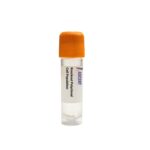
The AKR1A1 Knockout HT29 Polyclonal Cells are a CRISPR/Cas9-edited polyclonal knockout cell population derived from the HT29 human colorectal adenocarcinoma cell line. This product features targeted disruption of the aldo-keto reductase family 1 member A1 (AKR1A1) gene, creating a loss-of-function model system for investigating carbonyl detoxification and oxidative stress biology in intestinal epithelial cancer cells.
The parental HT29 cell line is a widely established epithelial model originating from a human colorectal adenocarcinoma. Under standard culture conditions, HT29 cells exhibit epithelial morphology and retain the capacity to differentiate into intestinal-like enterocytes upon reaching confluence or following appropriate stimuli, making them a valuable tool for studies of colorectal cancer pathogenesis, intestinal epithelial biology, and differentiation-dependent cellular processes.
AKR1A1 encodes an NADPH-dependent aldo-keto reductase that catalyzes the reduction of a broad spectrum of cytotoxic carbonyl compounds??including methylglyoxal, 4-hydroxynonenal, and other reactive aldehydes and ketones??to their corresponding less reactive alcohols. This enzymatic activity is central to cellular detoxification pathways, working in concert with glutathione S-transferases and aldehyde dehydrogenases to mitigate oxidative stress and electrophilic damage. AKR1A1 expression is transcriptionally regulated by the NRF2 (NFE2L2) transcription factor and HIF1A under conditions of oxidative or hypoxic stress, and its activity requires NADPH as a cofactor. Downstream consequences of AKR1A1 function include reduced levels of reactive aldehydes, decreased oxidative DNA damage, modulation of NF-??B signaling, and inhibition of apoptosis, collectively positioning AKR1A1 as a critical node in the intersection of redox homeostasis, xenobiotic metabolism, and cell survival signaling.
Disruption of AKR1A1 in the HT29 colorectal cancer background eliminates a key aldehyde reductase activity, rendering cells more susceptible to carbonyl stress and electrophilic insult. This knockout model provides a clinically relevant platform to explore how abrogation of carbonyl detoxification influences colorectal cancer proliferation, chemoresistance, and response to oxidative stress-inducing chemotherapeutics such as 5-fluorouracil or oxaliplatin. Given the role of HT29 cells as a model for intestinal epithelial differentiation, the AKR1A1 knockout also permits evaluation of detoxification capacity in the context of epithelial maturation and tumor microenvironment interactions.
The AKR1A1 Knockout HT29 Polyclonal Cells are suitable for a range of functional investigations, including Western blotting and RT-qPCR confirmation of AKR1A1 loss, assessment of aldehyde reductase enzymatic activity, and detection of reactive oxygen species (ROS) accumulation via DCFDA fluorescence. Researchers can perform cell viability and colony formation assays under imposed carbonyl stress using agents such as methylglyoxal, as well as chemosensitivity profiling to identify synthetic lethal interactions or altered drug response. Transcriptomic profiling by RNA-seq further enables dissection of compensatory pathways and downstream signaling changes resulting from AKR1A1 disruption. For further information, contact Ascent Research.