Quick Order Cart

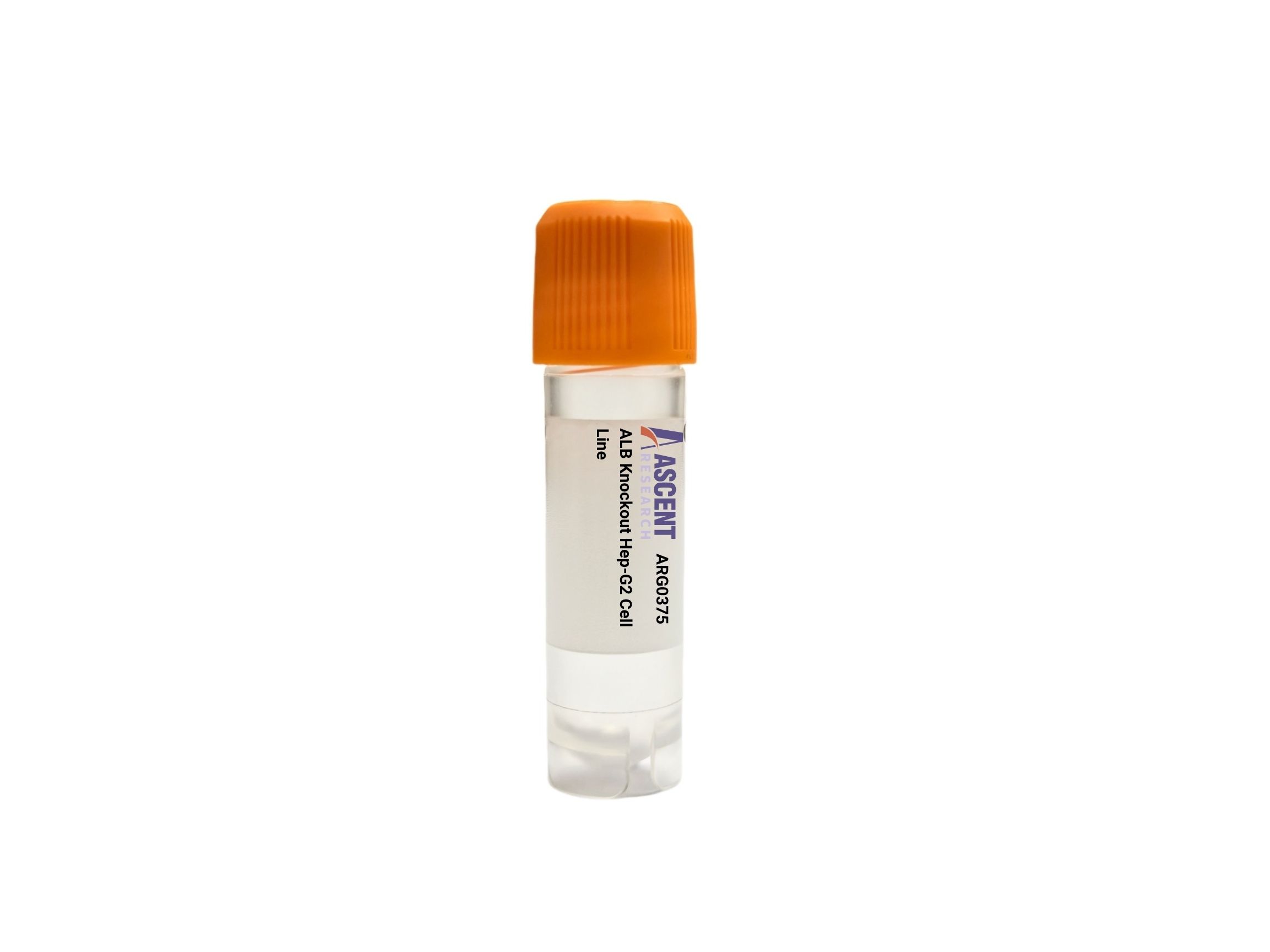
Cat. No. ARG0375

ALB Knockout Hep-G2 Cell Line

  • Product Type:

    Genome-edited Cells

  • Tissue Source:

    Liver

  • Disease:

    Hepatoblastoma

  • Gene Species:

    Homo sapiens (Human)

The ALB Knockout Hep-G2 Cell Line is a CRISPR/Cas9-edited knockout cell line derived from the human hepatocellular carcinoma cell line Hep-G2. It features targeted disruption of the ALB gene, which encodes albumin, the major plasma protein responsible for ligand transport and oncotic pressure regulation. Albumin expression is controlled by transcription factors such as HNF1A and C/EBPB and the IL-6/JAK/STAT3 pathway. This model enables investigation of hepatic secretory mechanisms, drug-protein interactions, and liver disease pathologies including hypoalbuminemia and hepatocellular carcinoma. Applications range from functional assays like drug binding and fatty acid uptake to transcriptomic profiling, supporting drug discovery and liver biology research.

Inquire Now

In stock

Ships next business day


Ask a Question

Shipping Info:

Cryopreserved in vials and shipped on dry ice


Disclaimer:

For Research Use Only

  • Characteristics

    Host Cell

    Hep-G2

    Morphology

    Epithelial-like

    Age

    15 years

    Sex of Donor

    Male

    Gene Name

    ALB

    Gene Alias

    Albumin

    Gene Species

    Homo sapiens (Human)

    Gene Identifier

    NCBI Gene ID 213

    Gene Family

    Albumin family

  • Culture Conditions

    Temperature

    37°C

    Atmosphere

    5% CO₂

  • Quality Control

    Sterility testing

    Daily monitoring confirms that the cells are free from bacterial, yeast, and fungal contamination.

    Mycoplasma testing

    Negative for mycoplasma through PCR analysis

    Pathogens

    Cells tested negative for HIV-1, HBV, and HCV.

  • Disclaimer

    Intended Use

    This product is intended for laboratory in vitro use only. lt is not intended for diagnostic, therapeutic, or clinical applications.

    Disclaimer

    Ascent Research endeavors to provide accurate and up-to-date product information. However, no warranties or representations are made regarding its completeness or reliability. References to scientific literature and patents are for informational purposes only, and the customer assumes sole responsibility for verifying their accuracy.

    By accepting this product, the customer acknowledges and agrees to assume all risks associated with its receipt, handling, storage, disposal, and use, including compliance with all applicable safety and environmental regulations and precautions. Relevant laws, regulations, and ethical guidelines must be followed in conducting any research, modifications, or derivatives derived from this product.

    This product is provided "AS IS", and except as expressly stated herein, Ascent Research disclaims all other warranties, express or implied. Under no circumstances shall Ascent Research, its affiliates, or representatives be liable for indirect, incidental, consequential, or punitive damages arising from the use of this material. While Ascent Research employs rigorous quality control measures, we shall not be held responsible for damages resulting from misidentification or misinterpretation of the provided materials.

Description

The ALB Knockout Hep-G2 Cell Line is a CRISPR/Cas9-edited knockout cell line engineered to disrupt the ALB gene in the human hepatocellular carcinoma cell line Hep-G2. This loss-of-function model enables precise investigation of albumin biology by ablating its expression in a hepatic epithelial background.

Hep-G2 is a human hepatocellular carcinoma cell line originally derived from a 15-year-old male with liver cancer. Widely employed as a model of hepatocyte function, this adherent line retains key hepatic characteristics, including a secretory phenotype that produces plasma proteins such as albumin, as well as expression of liver-enriched transcription factors and responsiveness to hormonal cues like insulin and glucagon. Its well-characterized biology makes it an ideal host for studying liver-specific gene function.

The ALB gene encodes albumin, the most abundant plasma protein, which serves as a critical carrier for fatty acids, hormones, bilirubin, and drugs, while maintaining colloid osmotic pressure. In hepatocytes, albumin expression is transcriptionally regulated by hepatocyte nuclear factors HNF1A and C/EBPB, and is induced by IL-6 through the JAK/STAT3 signaling pathway during acute phase responses. Albumin interacts with numerous ligands, including fatty acids, bilirubin, thyroxine, heme, metal ions, and the drug warfarin, and associates with binding partners such as SPARC and gp60. Following synthesis, it is processed in the endoplasmic reticulum and secreted into the extracellular space. Disruption of ALB therefore eliminates a central node in hepatic secretory function and ligand transport, and is expected to alter downstream effects on oncotic pressure regulation and stress resilience.

Within the Hep-G2 hepatocellular carcinoma background, ALB knockout removes the cell??s primary secretory protein, offering a clean system to dissect hepatic secretory pathways and ligand-binding events. Because Hep-G2 cells exhibit cancerous properties, this model also enables exploration of albumin??s potential roles in hepatocellular carcinoma progression, including effects on proliferation, stress tolerance, and tumor microenvironment interactions. Moreover, it serves as a relevant in vitro paradigm for hypoalbuminemic states linked to liver cirrhosis and nephrotic syndrome, where albumin loss is a hallmark.

Researchers can apply the ALB Knockout Hep-G2 Cell Line in diverse experimental settings, leveraging assays such as albumin ELISA and western blotting for knockout confirmation, RT-qPCR for transcript analysis, and functional tests like fatty acid uptake and drug binding assays. Secretion assays can profile alterations in other hepatic proteins, while cell viability studies under metabolic or oxidative stress assess albumin??s cytoprotective influence. Transcriptomic analysis via RNA-seq enables comprehensive mapping of pathway perturbations. These tools support applications in drug-protein interaction screening, hepatocyte secretion modeling, toxicity testing, and mechanistic studies of liver disease. For technical inquiries, please contact Ascent Research.


Reset Password

    Reach Us Questions? Click Me Here!

    Fill out the form below and a member of our team will contact you shortly!

    *Required field


      Reach Us

      Fill out the form below and a member of our team will contact you shortly!

      *Required field

      Product Inquiry (Optional)