Quick Order Cart

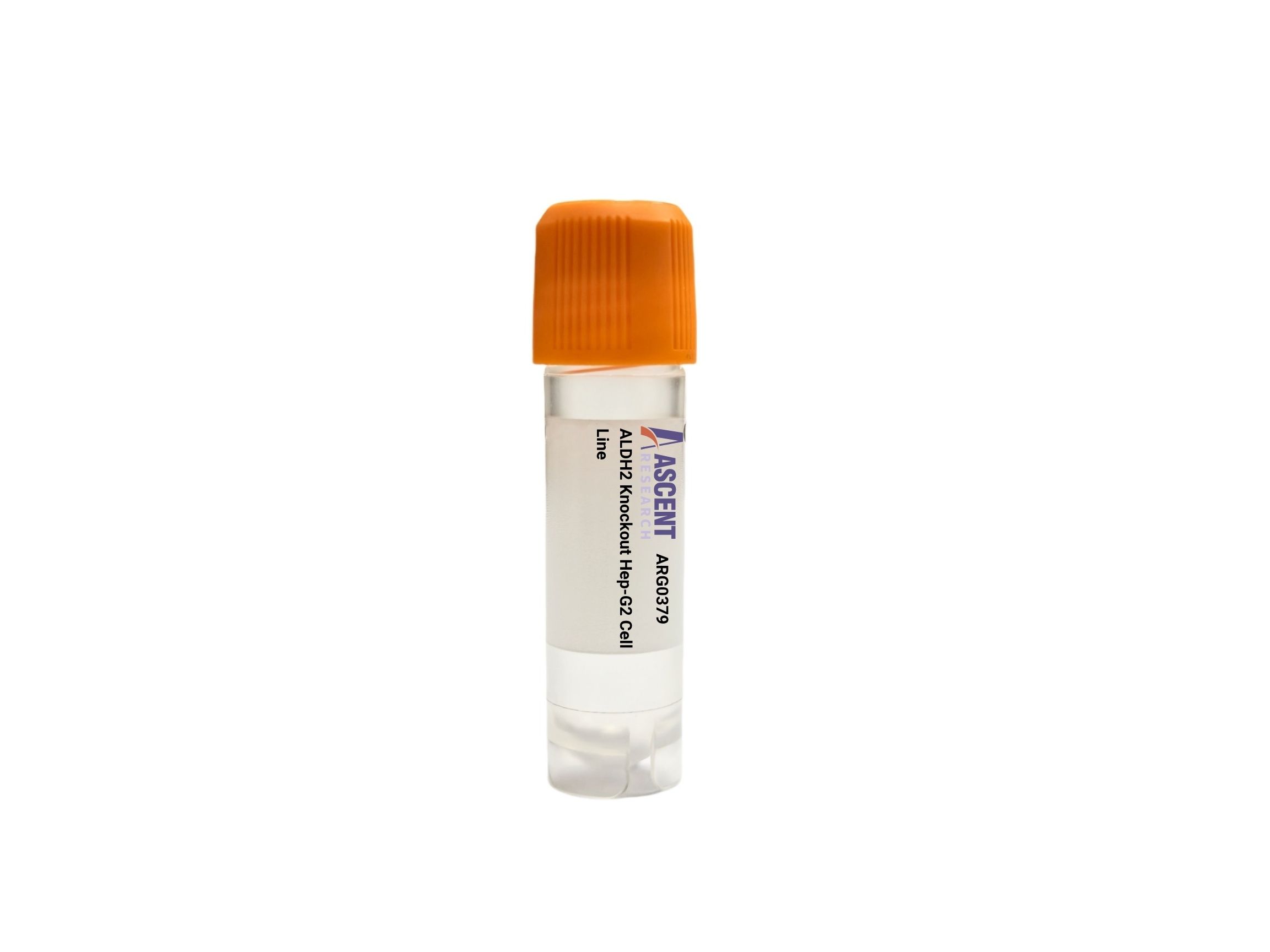
Cat. No. ARG0379

ALDH2 Knockout Hep-G2 Cell Line

  • Product Type:

    Genome-edited Cells

  • Tissue Source:

    Liver

  • Disease:

    Hepatoblastoma

  • Gene Species:

    Homo sapiens (Human)

The ALDH2 Knockout Hep-G2 Cell Line is a CRISPR/Cas9-edited human hepatocellular carcinoma cell line lacking functional ALDH2 protein. ALDH2 detoxifies toxic aldehydes including acetaldehyde and 4-HNE, and its deficiency in this hepatic model leads to aldehyde accumulation, oxidative stress, and impaired nitroglycerin bioactivation. The model is relevant for studying alcohol-related liver disease, cancer susceptibility, and drug metabolism, with key interactions including NRF2/KEAP1 regulation, SIRT3-dependent activation, and downstream NO/sGC/cGMP signaling. Standard applications include acetaldehyde quantification by LC-MS, ROS detection, mitochondrial membrane potential assays, and ALDH2 activity screening. This defined knockout cell line provides a reproducible platform for mechanistic studies of aldehyde toxicity, alcohol metabolism, and nitroglycerin pharmacology.

Inquire Now

In stock

Ships next business day


Ask a Question

Shipping Info:

Cryopreserved in vials and shipped on dry ice


Disclaimer:

For Research Use Only

  • Characteristics

    Host Cell

    Hep-G2

    Morphology

    Epithelial-like

    Age

    15 years

    Sex of Donor

    Male

    Gene Name

    ALDH2

    Gene Alias

    Aldehyde dehydrogenase 2

    Gene Species

    Homo sapiens (Human)

    Gene Identifier

    NCBI Gene ID 217

    Gene Family

    Mitochondrial aldehyde dehydrogenase family

  • Culture Conditions

    Temperature

    37°C

    Atmosphere

    5% CO₂

  • Quality Control

    Sterility testing

    Daily monitoring confirms that the cells are free from bacterial, yeast, and fungal contamination.

    Mycoplasma testing

    Negative for mycoplasma through PCR analysis

    Pathogens

    Cells tested negative for HIV-1, HBV, and HCV.

  • Disclaimer

    Intended Use

    This product is intended for laboratory in vitro use only. lt is not intended for diagnostic, therapeutic, or clinical applications.

    Disclaimer

    Ascent Research endeavors to provide accurate and up-to-date product information. However, no warranties or representations are made regarding its completeness or reliability. References to scientific literature and patents are for informational purposes only, and the customer assumes sole responsibility for verifying their accuracy.

    By accepting this product, the customer acknowledges and agrees to assume all risks associated with its receipt, handling, storage, disposal, and use, including compliance with all applicable safety and environmental regulations and precautions. Relevant laws, regulations, and ethical guidelines must be followed in conducting any research, modifications, or derivatives derived from this product.

    This product is provided "AS IS", and except as expressly stated herein, Ascent Research disclaims all other warranties, express or implied. Under no circumstances shall Ascent Research, its affiliates, or representatives be liable for indirect, incidental, consequential, or punitive damages arising from the use of this material. While Ascent Research employs rigorous quality control measures, we shall not be held responsible for damages resulting from misidentification or misinterpretation of the provided materials.

Description

The ALDH2 Knockout Hep-G2 Cell Line is a CRISPR/Cas9-edited knockout cell line that enables targeted disruption of the ALDH2 gene in a human hepatocellular carcinoma background. This well-defined loss-of-function model is provided as an adherent cell line, facilitating reproducible experimental designs in hepatic and systemic aldehyde metabolism research. The ALDH2 gene encodes a mitochondrial aldehyde dehydrogenase critical for the detoxification of endogenous and exogenous aldehydes, and its targeted disruption creates a physiologically relevant system for examining aldehyde-induced cellular stress and related pathologies.

The host cell line, Hep-G2, is a widely employed cellular model isolated from a 15-year-old male with hepatocellular carcinoma. These adherent epithelial cells retain many differentiated hepatic functions, making them a benchmark system for investigating hepatocyte biology, drug toxicity, and metabolic pathways. Hep-G2 cells endogenously express enzymes involved in phase I and phase II metabolism, providing a relevant context for examining the consequences of ALDH2 deficiency on aldehyde detoxification, nitroglycerin bioactivation, and alcohol metabolism within an intact liver-derived cellular environment.

ALDH2 is a mitochondrial enzyme that oxidizes toxic aldehydes, such as acetaldehyde and 4-hydroxynonenal (4-HNE), into less reactive acids. Its transcription is driven by NRF2/NFE2L2 downstream of KEAP1, and its activity is enhanced by SIRT3-mediated deacetylation and PPAR?? activation under oxidative stress. The enzyme directly interacts with substrates like acetaldehyde, 4-HNE, and nitroglycerin, as well as cytochrome c. Product acetate feeds into metabolism, while nitroglycerin-derived nitric oxide (NO) stimulates sGC/cGMP signaling. Aldehyde detoxification by ALDH2 suppresses JNK pathway activation, reduces NF-??B-driven inflammation, limits protein carbonylation, and preserves mitochondrial membrane potential, also converting the neurotoxic dopamine aldehyde DOPAL to DOPAC.

Knockout of ALDH2 in Hep-G2 cells disrupts this detoxification node, leading to accumulation of acetaldehyde and 4-HNE, elevated ROS, and hypersensitivity to alcohol-induced cytotoxicity. Impairment of nitroglycerin bioactivation attenuates NO-sGC-cGMP vasoprotective signaling, while sustained JNK and NF-??B activation exacerbates mitochondrial dysfunction. This hepatocyte model recapitulates key aspects of ALDH2 deficiency observed in human populations, including alcohol intolerance, oxidative tissue injury, and metabolic dysregulation.

This cell line is suited for alcohol-related liver disease modeling using acetaldehyde LC-MS quantification and ROS detection (DCFDA), mitochondrial potential assays (JC-1), apoptosis (Annexin V/PI), and cell viability (MTT). It enables studies on ethanol metabolism, nitroglycerin bioactivation via NO measurement (Griess), and drug toxicity screening. Additionally, it supports cancer susceptibility research in esophageal and head and neck cancers, and neurodegeneration studies involving dopamine aldehydes. Characterization can be performed with ALDH2 activity assays, western blotting, RT-qPCR, and immunofluorescence. For detailed technical support and custom applications, contact Ascent Research.


Reset Password

    Reach Us Questions? Click Me Here!

    Fill out the form below and a member of our team will contact you shortly!

    *Required field


      Reach Us

      Fill out the form below and a member of our team will contact you shortly!

      *Required field

      Product Inquiry (Optional)