Quick Order Cart

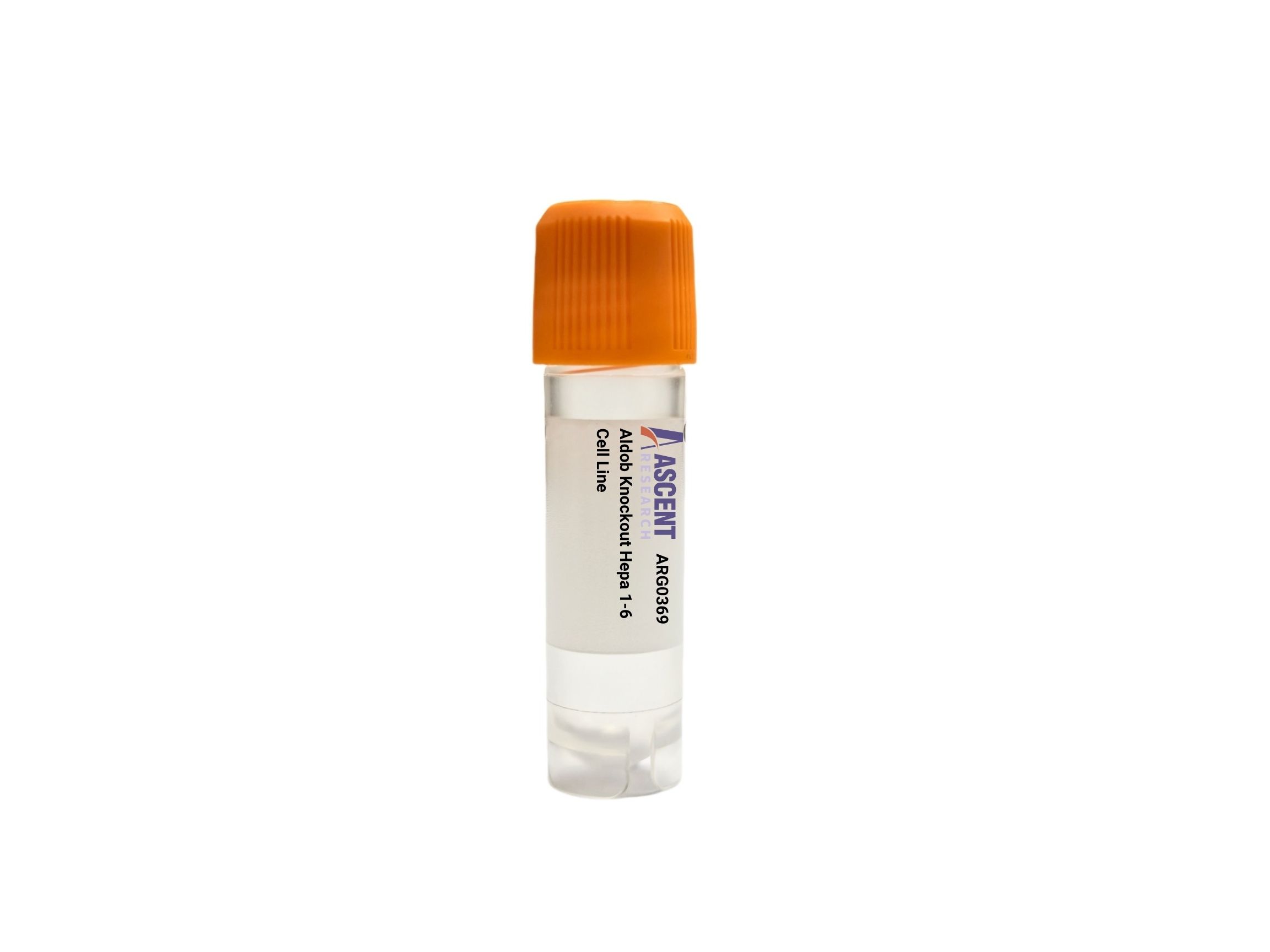
Cat. No. ARG0369

Aldob Knockout Hepa 1-6 Cell Line

  • Product Type:

    Genome-edited Cells

  • Tissue Source:

    Liver

  • Disease:

    Hepatocellular carcinoma

  • Gene Species:

    Mus musculus (Mouse)

The Aldob Knockout Hepa 1-6 Cell Line is a CRISPR/Cas9-edited mouse hepatoma cell line lacking functional ALDOB, a central enzyme in fructose metabolism. Derived from the C57L strain Hepa 1-6 hepatocellular carcinoma model, it enables targeted study of fructose-induced metabolic stress and related disorders. Aldob disruption impairs glycolysis/gluconeogenesis, downstream of KHK and upstream of TKFC, and is regulated by ChREBP and SREBP1. This model is ideal for hereditary fructose intolerance and NAFLD research, with applications in metabolic profiling, lipid accumulation assays, and drug discovery.

Inquire Now

In stock

Ships next business day


Ask a Question

Shipping Info:

Cryopreserved in vials and shipped on dry ice


Disclaimer:

For Research Use Only

  • Characteristics

    Host Cell

    Hepa 1-6

    Morphology

    Epithelial-like

    Gene Name

    Aldob

    Gene Alias

    aldolase B, fructose-bisphosphate; Aldo-2, Aldo2

    Gene Species

    Mus musculus (Mouse)

    Gene Identifier

    NCBI Gene ID 230163

    Gene Family

    Aldolases

  • Culture Conditions

    Temperature

    37°C

    Atmosphere

    5% CO₂

  • Quality Control

    Sterility testing

    Daily monitoring confirms that the cells are free from bacterial, yeast, and fungal contamination.

    Mycoplasma testing

    Negative for mycoplasma through PCR analysis

    Pathogens

    Cells tested negative for HIV-1, HBV, and HCV.

  • Disclaimer

    Intended Use

    This product is intended for laboratory in vitro use only. lt is not intended for diagnostic, therapeutic, or clinical applications.

    Disclaimer

    Ascent Research endeavors to provide accurate and up-to-date product information. However, no warranties or representations are made regarding its completeness or reliability. References to scientific literature and patents are for informational purposes only, and the customer assumes sole responsibility for verifying their accuracy.

    By accepting this product, the customer acknowledges and agrees to assume all risks associated with its receipt, handling, storage, disposal, and use, including compliance with all applicable safety and environmental regulations and precautions. Relevant laws, regulations, and ethical guidelines must be followed in conducting any research, modifications, or derivatives derived from this product.

    This product is provided "AS IS", and except as expressly stated herein, Ascent Research disclaims all other warranties, express or implied. Under no circumstances shall Ascent Research, its affiliates, or representatives be liable for indirect, incidental, consequential, or punitive damages arising from the use of this material. While Ascent Research employs rigorous quality control measures, we shall not be held responsible for damages resulting from misidentification or misinterpretation of the provided materials.

Description

The Aldob Knockout Hepa 1-6 Cell Line is a robust CRISPR/Cas9-edited knockout cell line designed to disrupt the Aldob gene in Mus musculus hepatoma-derived cells. This model eliminates functional ALDOB protein, enabling precise dissection of fructose metabolism and related pathologies. The stable cell line constitutes an in vitro system that bypasses primary hepatocyte limitations, offering a reproducible platform for investigating aldolase B deficiency in a malignant hepatic background.

The parental Hepa 1-6 cell line was established from a spontaneously immortalized hepatoma isolated from the C57L mouse strain. These cells retain key hepatocellular characteristics, including expression of liver-specific metabolic enzymes and signaling networks, making them a widely employed model for hepatocellular carcinoma research. Their robust proliferative capacity and compatibility with genetic manipulation make them an ideal recipient for CRISPR/Cas9-mediated gene editing, facilitating reproducible loss-of-function studies in a cancer-relevant context.

ALDOB catalyzes the reversible cleavage of fructose-1,6-bisphosphate into dihydroxyacetone phosphate and glyceraldehyde-3-phosphate, a pivotal step in glycolysis and gluconeogenesis. Within the fructose metabolism pathway, it operates downstream of ketohexokinase (KHK) and upstream of triokinase (TKFC), linking dietary fructose to glycolytic intermediates and lipogenic substrates. Its expression is transcriptionally regulated by ChREBP (MLXIPL) and SREBP1 (SREBF1) in response to insulin, glucagon, and fructose levels. ALDOB functionally interacts with glyceraldehyde-3-phosphate dehydrogenase (GAPDH) and fructose-1,6-bisphosphatase, and its activity modulates flux through pathways including triglyceride synthesis and amino acid biosynthesis. Knockout-induced loss of function disrupts hepatic energy homeostasis, phosphate balance, and lipid metabolism.

In the Hepa 1-6 hepatocellular carcinoma model, Aldob knockout recapitulates the metabolic hallmarks of hereditary fructose intolerance (HFI) and amplifies fructose-induced cellular stress. The loss of ALDOB leads to accumulation of fructose-1-phosphate, phosphate depletion, and impaired ATP regeneration, mirroring clinical fructose metabolism disorders. This cell line is particularly valuable for dissecting the contribution of aldolase B to non-alcoholic fatty liver disease (NAFLD) progression, as it enables separation of fructose-driven lipogenesis from oncogenic metabolic reprogramming in a controlled in vitro environment.

Researchers can employ this knockout model for fructose challenge experiments, coupling ATP depletion measurements with metabolomic profiling of fructose-1-phosphate accumulation. Lipid accumulation can be assessed by Oil Red O staining, and glycogen content assays provide metabolic readouts. Viability assays under fructose stress facilitate drug discovery for HFI. Standard validation techniques include Western blotting for ALDOB and RT-qPCR analysis of Aldob mRNA. For further technical details, please contact Ascent Research.


Reset Password

    Reach Us Questions? Click Me Here!

    Fill out the form below and a member of our team will contact you shortly!

    *Required field


      Reach Us

      Fill out the form below and a member of our team will contact you shortly!

      *Required field

      Product Inquiry (Optional)