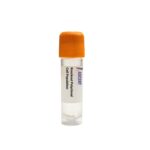
The ANGPT1 Knockout A-549 Polyclonal Cells product comprises a CRISPR/Cas9-edited polyclonal population derived from the A-549 human lung adenocarcinoma cell line, in which the ANGPT1 gene has been disrupted to create a loss-of-function model. This polyclonal knockout cell population, generated by Ascent Research, enables systematic investigation of angiopoietin-1 (ANGPT1)-mediated signaling and its roles in endothelial cell biology, vascular regulation, and tumor microenvironment interactions. The cells are supplied as a mixed population carrying heterogeneous editing events across the ANGPT1 locus, providing a robust platform for functional genomics studies without the bottleneck of clonal selection.
The parental A-549 cell line was originally established from the lung adenocarcinoma of a 58-year-old Caucasian male and harbors a KRAS G12S activating mutation while retaining wild-type p53. These cells are widely used as a model for type II alveolar epithelial cells, as they exhibit characteristics of surfactant production and epithelial barrier function. Their epithelial origin and well-characterized genetic background make them particularly valuable for dissecting tumor?Cstroma crosstalk and angiogenic signaling in a non-small cell lung cancer context.
ANGPT1 encodes a secreted glycoprotein that serves as the major agonistic ligand for the TIE2 receptor tyrosine kinase. Upon binding, ANGPT1 triggers TIE2 autophosphorylation, activating PI3K?CAKT and MAPK/ERK pathways to promote endothelial survival, migration, and vascular stabilization, while opposing ANGPT2-mediated destabilization. Upstream regulators include HIF1A, VEGF, and TNF; downstream effectors include AKT, ERK, eNOS, and anti-apoptotic BCL2; and interacting partners encompass TIE2, integrins ITGA5/ITGB1 and ITGAV/ITGB3, and phosphatase PTPRB. Disruption of ANGPT1 thus eliminates the primary TIE2 agonist, enabling dissection of angiopoietin-dependent signaling.
In the A-549 lung adenocarcinoma background, loss of ANGPT1 provides a unique tool to study how tumor-derived angiogenic factors influence endothelial behavior and vascular permeability. Given that A-549 cells express KRAS G12S, this knockout model can be employed to explore oncogenic KRAS-driven angiogenic signaling and to evaluate the contribution of ANGPT1 to tumor vascularization, metastatic dissemination, and the maintenance of an immunosuppressive microenvironment. Moreover, the model is relevant for research into diseases characterized by vascular dysfunction, including diabetic retinopathy, sepsis, atherosclerosis, and vascular leakage disorders, where ANGPT1?CTIE2 signaling plays a protective role.
Typical research applications include investigating mechanisms of tumor angiogenesis, screening for anti-angiogenic compounds, and studying the regulation of endothelial permeability. The polyclonal knockout cells are compatible with a wide range of downstream assays, including Western blotting for ANGPT1, TIE2, and phospho-AKT; RT-qPCR for ANGPT1 and downstream targets; endothelial tube formation assays; transwell migration and invasion assays; vascular permeability measurements; immunofluorescence staining for junctional proteins; co-immunoprecipitation of TIE2 with signaling molecules; and RNA-seq transcriptome profiling. These applications facilitate comprehensive analysis of angiopoietin-mediated processes. For additional technical specifications or guidance on experimental design, please contact Ascent Research.