Quick Order Cart

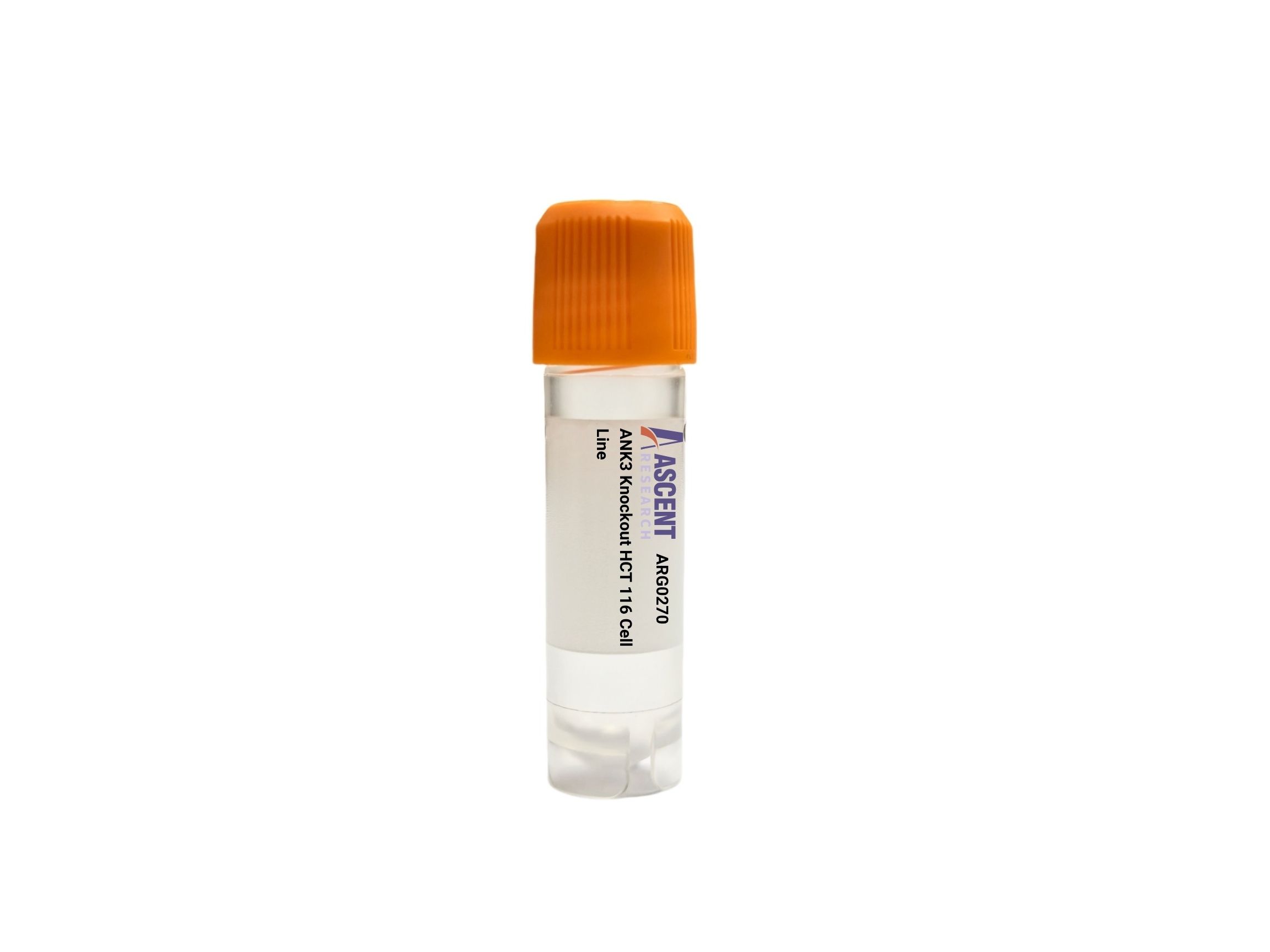
Cat. No. ARG0270

ANK3 Knockout HCT 116 Cell Line

  • Product Type:

    Genome-edited Cells

  • Tissue Source:

    Large intestine (colon)

  • Disease:

    Carcinoma

  • Gene Species:

    Homo sapiens (Human)

The ANK3 Knockout HCT 116 Cell Line is a CRISPR/Cas9-edited knockout cell line derived from the HCT 116 human colorectal carcinoma cell line. This model features disruption of the ANK3 gene, encoding ankyrin-G, a critical scaffolding protein that links membrane proteins to the spectrin-actin cytoskeleton. ANK3 interacts with beta-spectrin, actin, and E-cadherin, and is regulated by Wnt/beta-catenin signaling. Its loss disrupts cell adhesion, migration, and signaling pathways. This cell line is ideal for studying colorectal cancer metastasis, epithelial-mesenchymal transition, and ankyrin-related psychiatric disorders, as well as for drug screening targeting ankyrin interactions.

Inquire Now

In stock

Ships next business day


Ask a Question

Shipping Info:

Cryopreserved in vials and shipped on dry ice


Disclaimer:

For Research Use Only

  • Characteristics

    Host Cell

    HCT 116

    Morphology

    Epithelial-like

    Age

    Adult

    Sex of Donor

    Male

    Gene Name

    ANK3

    Gene Alias

    ankyrin 3; MRT37; ANKYRIN-G

    Gene Species

    Homo sapiens (Human)

    Gene Identifier

    NCBI Gene ID 288

    Gene Family

    Ankyrin repeat family

  • Culture Conditions

    Temperature

    37°C

    Atmosphere

    5% CO₂

  • Quality Control

    Sterility testing

    Daily monitoring confirms that the cells are free from bacterial, yeast, and fungal contamination.

    Mycoplasma testing

    Negative for mycoplasma through PCR analysis

    Pathogens

    Cells tested negative for HIV-1, HBV, and HCV.

  • Disclaimer

    Intended Use

    This product is intended for laboratory in vitro use only. lt is not intended for diagnostic, therapeutic, or clinical applications.

    Disclaimer

    Ascent Research endeavors to provide accurate and up-to-date product information. However, no warranties or representations are made regarding its completeness or reliability. References to scientific literature and patents are for informational purposes only, and the customer assumes sole responsibility for verifying their accuracy.

    By accepting this product, the customer acknowledges and agrees to assume all risks associated with its receipt, handling, storage, disposal, and use, including compliance with all applicable safety and environmental regulations and precautions. Relevant laws, regulations, and ethical guidelines must be followed in conducting any research, modifications, or derivatives derived from this product.

    This product is provided "AS IS", and except as expressly stated herein, Ascent Research disclaims all other warranties, express or implied. Under no circumstances shall Ascent Research, its affiliates, or representatives be liable for indirect, incidental, consequential, or punitive damages arising from the use of this material. While Ascent Research employs rigorous quality control measures, we shall not be held responsible for damages resulting from misidentification or misinterpretation of the provided materials.

Description

The ANK3 Knockout HCT 116 Cell Line is a CRISPR/Cas9-edited knockout cell line engineered from the HCT 116 human colorectal carcinoma cell line, designed for loss-of-function studies of the ANK3 gene. This model features targeted disruption of ANK3, which encodes ankyrin-G, a scaffolding protein that organizes the spectrin-actin cytoskeleton and anchors membrane proteins. The resulting cell line provides a robust in vitro system to dissect ANK3??s roles in cell adhesion, migration, and signaling without the confounding effects of pharmacological inhibition.

HCT 116 cells are a well-characterized epithelial cell line derived from a male colorectal carcinoma patient, exhibiting a near-diploid karyotype. Widely adopted in cancer research, these cells retain key features of colorectal tumor biology, including active Wnt signaling and intact adhesion machinery, making them an ideal parental line for gene-editing applications. The epithelial morphology and genetic stability of HCT 116 ensure reproducible results in downstream functional assays, and the ANK3 knockout derivative preserves these baseline characteristics while introducing a defined genetic alteration.

Ankyrin-G, the protein product of ANK3, functions as a scaffold that couples integral membrane proteins, such as E-cadherin and Na/K ATPase, to the spectrin-actin cytoskeleton via direct interactions with beta-spectrin and actin. In the context of Wnt signaling, beta-catenin/TCF complex transcriptionally regulates ANK3 expression, while TGF-beta also acts upstream to modulate ankyrin-G levels. Downstream, ANK3 is critical for E-cadherin localization at adherens junctions and for maintaining organized actin networks, thereby reinforcing cell adhesion and polarity. Its disruption impairs spectrin?Cactin complexes, likely affecting downstream effectors such as the actin cytoskeleton and cell adhesion molecules, with consequences for both structural integrity and signal transduction.

In HCT 116 colorectal cancer cells, ANK3 knockout models the consequences of ankyrin-G loss in a transformed epithelial context. Given that colorectal carcinoma progression involves dysregulated adhesion and migration, this model is particularly valuable for investigating epithelial-mesenchymal transition (EMT) and metastatic potential. Loss of ankyrin-G may compromise E-cadherin stability and actin organization, recapitulating features observed in invasive cancers. Moreover, because ANK3 is implicated in psychiatric disorders such as bipolar disorder and autism spectrum disorder, this cell line offers a platform to study neuron?Cglia adhesion mechanisms in a reductionist system, bridging cancer biology and neurobiology.

Researchers can employ this ANK3 knockout cell line in a range of assays to probe ankyrin-G function. Western blotting and immunofluorescence enable confirmation of ANK3 ablation and assessment of E-cadherin and actin organization. Cell migration and invasion assays quantify metastatic behavior, while co-immunoprecipitation elucidates spectrin-ankyrin complexes. RNA-seq can reveal transcriptomic changes resulting from ANK3 loss, and drug sensitivity studies facilitate screening for compounds targeting ankyrin interactions. This versatile tool supports diverse investigations in cell adhesion, cancer progression, and neurobiology. For further information, please contact Ascent Research.


Reset Password

    Reach Us Questions? Click Me Here!

    Fill out the form below and a member of our team will contact you shortly!

    *Required field


      Reach Us

      Fill out the form below and a member of our team will contact you shortly!

      *Required field

      Product Inquiry (Optional)