Quick Order Cart

Cat. No. ARG43723

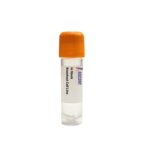
APC Knockout HCT 116 Cell Line

  • Product Type:

    In Stock Cell Lines

  • Species:

    Homo sapiens (Human)

  • Tissue Source:

    Large intestine (colon)

  • Disease:

    Carcinoma

The APC Knockout HCT 116 Cell Line is a CRISPR/Cas9-edited knockout model derived from human epithelial colorectal adenocarcinoma HCT 116 cells. By disrupting the tumor suppressor APC, it stabilizes ??-catenin (CTNNB1) and drives constitutive TCF/LEF-mediated transcription of oncogenes such as MYC and CCND1, mirroring APC loss in colorectal cancers. This knockout line is a powerful tool for studying Wnt/??-catenin signaling, colorectal cancer pathogenesis, and chromosomal instability. It supports drug screening of Wnt inhibitors and functional assays including TOP/FOP flash reporter, proliferation, and invasion studies, exploiting the HCT 116 background with KRAS G13D, PIK3CA H1047R, and CTNNB1 S45 mutations.

Inquire Now

In stock

Ships next business day


Ask a Question

Shipping Info:

Cryopreserved in vials and shipped on dry ice


Disclaimer:

For Research Use Only

  • Characteristics

    Host Cell

    HCT 116

    Sex of Donor

    Male

    Age

    Adult

    Derived From Site

    In situ; Colon

    Gene Name

    APC

    Gene Identifier

    NCBI Gene ID 324

    Morphology

    Epithelial-like

    Growth Mode

    Adherent

    Storage

    Liquid nitrogen (LN2)

  • Culture Conditions

    Temperature

    37°C

    Atmosphere

    5% COâ‚‚

  • Quality Control

    Sterility testing

    The bacterial, yeast, and fungi are not detected in these cells by daily monitor.

    Mycoplasma testing

    Negative for mycoplasma through PCR analysis

  • Disclaimer

    Intended Use

    This product is intended for laboratory in vitro use only. It is not intended for diagnostic, therapeutic, or clinical applications.

    Disclaimer

    Ascent Research endeavors to provide accurate and up-to-date product information. However, no warranties or representations are made regarding its completeness or reliability. References to scientific literature and patents are for informational purposes only, and the customer assumes sole responsibility for verifying their accuracy.

    By accepting this product, the customer acknowledges and agrees to assume all risks associated with its receipt, handling, storage, disposal, and use, including compliance with all applicable safety and environmental regulations and precautions. Relevant laws, regulations, and ethical guidelines must be followed in conducting any research, modifications, or derivatives derived from this product.

    This product is provided "AS IS", and except as expressly stated herein, Ascent Research disclaims all other warranties, express or implied. Under no circumstances shall Ascent Research, its affiliates, or representatives be liable for indirect, incidental, consequential, or punitive damages arising from the use of this material. While Ascent Research employs rigorous quality control measures, we shall not be held responsible for damages resulting from misidentification or misinterpretation of the provided materials.

Description

The APC Knockout HCT 116 Cell Line is a CRISPR/Cas9-edited knockout cell line originating from the human HCT 116 colorectal adenocarcinoma line. It provides a stable loss-of-function model for the tumor suppressor APC, enabling detailed functional studies without confounding endogenous protein. This knockout line faithfully recapitulates APC inactivation events prevalent in colorectal cancers.

HCT 116 is a male-derived colorectal carcinoma cell line exhibiting microsatellite instability and established driver mutations: KRAS G13D, PIK3CA H1047R, and CTNNB1 S45 deletion. These features render it a clinically relevant model for KRAS/PI3K/Wnt-co-altered tumors. Its partial ??-catenin stabilization sensitizes the line to further pathway activation upon APC loss.

APC functions as an essential scaffold in the ??-catenin destruction complex, which also comprises AXIN1, GSK3B, and CK1??. In unstimulated cells, this complex phosphorylates ??-catenin, marking it for ubiquitination and proteasomal degradation. APC knockout dismantles the complex, leading to ??-catenin stabilization, nuclear accumulation, and TCF/LEF-dependent transcription of pro-proliferative genes including MYC, CCND1, and AXIN2. Upstream, APC activity is governed by WNT3A/WNT1 binding to Frizzled/LRP receptors, while downstream it interacts with proteins such as AMER1, DLG1, and PPP2CA, implicating additional roles in adhesion and microtubule organization.

In the HCT 116 context, APC knockout cooperates with the endogenous CTNNB1 mutation to yield maximal ??-catenin signaling, mimicking the frequent APC/CTNNB1 co-alterations in colorectal tumors. This synergy drives enhanced proliferation, invasion, and chromosomal instability phenotypes. The cell line’s epithelial character and tumorigenic potential in xenografts make it an ideal platform for investigating APC’s tumor-suppressive mechanisms in a disease-relevant background.

Applications span multiple domains of colorectal cancer research. It is extensively used for Wnt pathway dissection via western blotting for active ??-catenin, RT-qPCR of MYC/AXIN2, and TOP/FOP flash reporter assays. Drug discovery efforts employ it for high?throughput screening of Wnt inhibitors using MTT proliferation and Transwell invasion assays. Co?immunoprecipitation experiments elucidate destruction complex integrity, while colony formation assays assess long-term growth effects. In vivo, it supports tumor xenograft models for pharmacodynamic studies. For additional details, please reach out to Ascent Research.


Reset Password

    Reach Us Questions? Click Me Here!

    Fill out the form below and a member of our team will contact you shortly!

    *Required field


      Reach Us

      Fill out the form below and a member of our team will contact you shortly!

      *Required field

      Product Inquiry (Optional)