Quick Order Cart

Cat. No. ARG43725

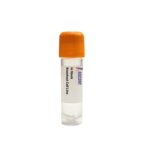
APOBEC1 Knockout HEK293T Cell Line

  • Product Type:

    In Stock Cell Lines

  • Species:

    Homo sapiens (Human)

  • Tissue Source:

    Kidney

CRISPR/Cas9-edited knockout cell line of the APOBEC1 gene in HEK293T cells. APOBEC1 is the catalytic subunit of the RNA editing complex that converts cytidine 6666 to uridine in ApoB mRNA, producing the ApoB48 isoform critical for chylomicron assembly. Its activity depends on the cofactor ACF and is regulated by insulin and lipid-related signals. This model enables dissection of RNA editing mechanisms and lipoprotein metabolism in a human epithelial cell background. Ideal for functional complementation assays, drug target validation, and antiviral response studies using techniques such as RNA editing assays and co-immunoprecipitation.

Inquire Now

In stock

Ships next business day


Ask a Question

Shipping Info:

Cryopreserved in vials and shipped on dry ice


Disclaimer:

For Research Use Only

  • Characteristics

    Host Cell

    HEK293T

    Sex of Donor

    Female

    Age

    Fetus

    Derived From Site

    Fetal kidney

    Gene Name

    APOBEC1

    Gene Identifier

    NCBI Gene ID 339

    Growth Mode

    Adherent

    Storage

    Liquid nitrogen (LN2)

  • Culture Conditions

    Temperature

    37°C

    Atmosphere

    5% COâ‚‚

  • Quality Control

    Sterility testing

    The bacterial, yeast, and fungi are not detected in these cells by daily monitor.

    Mycoplasma testing

    Negative for mycoplasma through PCR analysis

  • Disclaimer

    Intended Use

    This product is intended for laboratory in vitro use only. It is not intended for diagnostic, therapeutic, or clinical applications.

    Disclaimer

    Ascent Research endeavors to provide accurate and up-to-date product information. However, no warranties or representations are made regarding its completeness or reliability. References to scientific literature and patents are for informational purposes only, and the customer assumes sole responsibility for verifying their accuracy.

    By accepting this product, the customer acknowledges and agrees to assume all risks associated with its receipt, handling, storage, disposal, and use, including compliance with all applicable safety and environmental regulations and precautions. Relevant laws, regulations, and ethical guidelines must be followed in conducting any research, modifications, or derivatives derived from this product.

    This product is provided "AS IS", and except as expressly stated herein, Ascent Research disclaims all other warranties, express or implied. Under no circumstances shall Ascent Research, its affiliates, or representatives be liable for indirect, incidental, consequential, or punitive damages arising from the use of this material. While Ascent Research employs rigorous quality control measures, we shall not be held responsible for damages resulting from misidentification or misinterpretation of the provided materials.

Description

The APOBEC1 Knockout HEK293T Cell Line is a CRISPR/Cas9-edited human cell product in which the APOBEC1 gene has been functionally disrupted. Derived from the HEK293T host, this knockout cell line provides a stable loss-of-function model for studying RNA editing, lipoprotein metabolism, and post-transcriptional gene regulation. This cell line is supplied as a live product for immediate use in advanced research applications. The CRISPR/Cas9-mediated gene disruption abrogates APOBEC1 function, offering a robust alternative to transient knockdown methods.

The HEK293T parental cell line originates from human embryonic kidney epithelium and has been immortalized through stable integration of the SV40 large T antigen. This genetic modification enables episomal replication of transfected plasmids containing an SV40 origin of replication, leading to high-level expression of recombinant proteins and efficient production of lentiviral and retroviral vectors. Consequently, HEK293T cells are a cornerstone in molecular biology and drug discovery efforts, offering easy transfection, rapid growth, and scalability. Their human epithelial origin makes them a relevant model for studying intracellular signaling and metabolism, particularly when combined with targeted gene disruption.

APOBEC1 encodes the catalytic subunit of the RNA editing complex that deaminates cytidine 6666 to uridine in ApoB mRNA, producing the ApoB48 isoform essential for chylomicron assembly. The editing requires the cofactor ACF and involves interactions with RBM47, CUGBP2, hnRNP A/B, and KHSRP. Regulatory inputs include insulin, fatty acids, bile acids, HNF4??, and PPAR??; downstream targets comprise ApoB48, NAT1, and NF1. APOBEC1 also participates in innate antiviral responses.

In HEK293T cells, APOBEC1 knockout creates a simplified system for dissecting RNA editing mechanisms independent of tissue-specific factors. Leveraging the scalable, transfection-friendly nature of these cells, the model allows biochemical reconstitution and structure-function analysis of the editing complex. The line is ideal for substrate specificity studies, investigation of editing site recognition, and rescue experiments with APOBEC1 variants.

This cell line supports diverse assays: RNA editing analysis by RT-PCR and sequencing, co-immunoprecipitation of editing complex components (e.g., ACF), RNA immunoprecipitation, and immunofluorescence microscopy. It is applicable to lipid metabolism research, drug target validation, and antiviral studies. These applications are supported by well-established protocols for each assay type. For further information, contact Ascent Research.


Reset Password

    Reach Us Questions? Click Me Here!

    Fill out the form below and a member of our team will contact you shortly!

    *Required field


      Reach Us

      Fill out the form below and a member of our team will contact you shortly!

      *Required field

      Product Inquiry (Optional)