Quick Order Cart

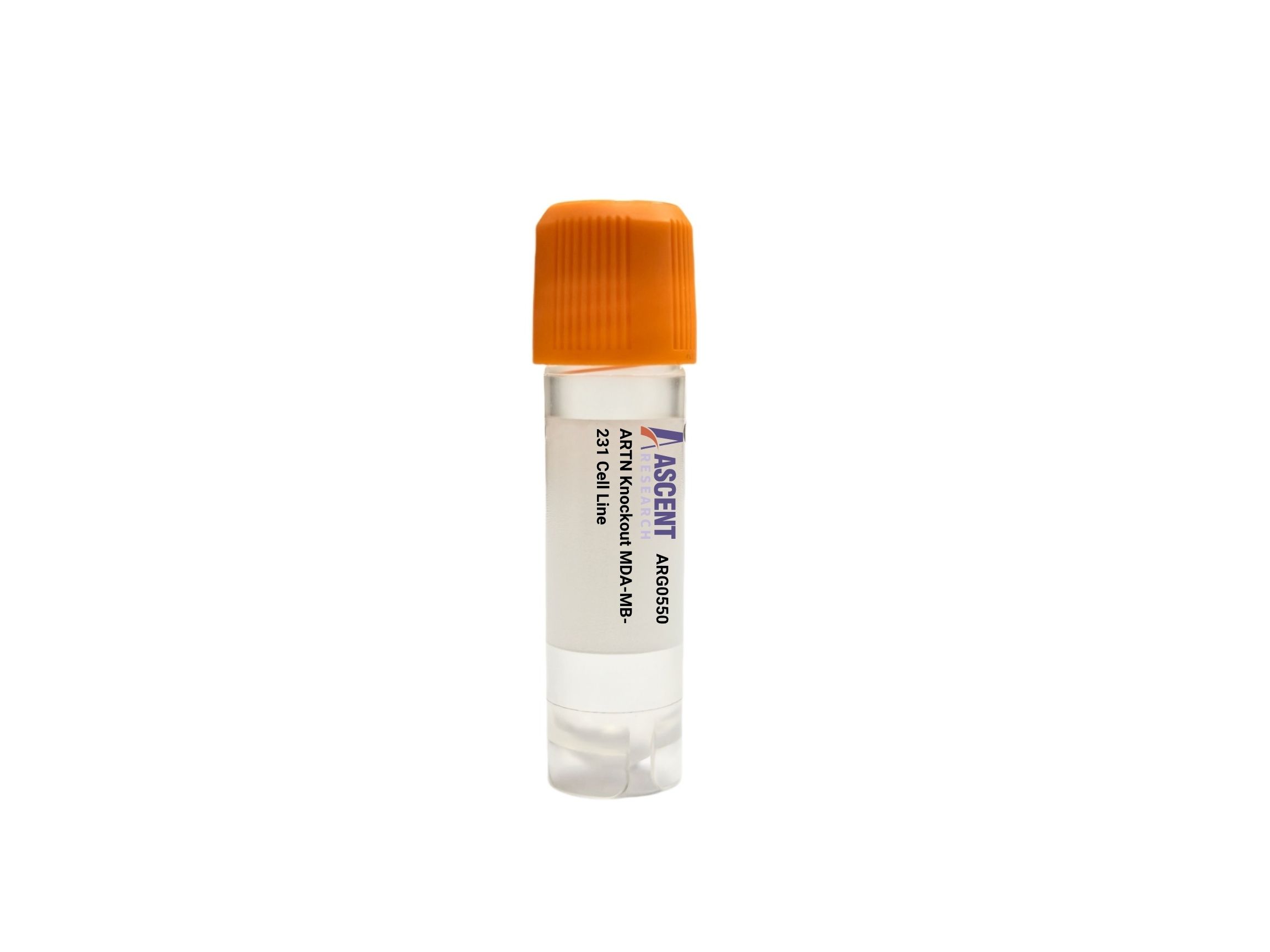
Cat. No. ARG0550

ARTN Knockout MDA-MB-231 Cell Line

  • Product Type:

    Genome-edited Cells

  • Tissue Source:

    Breast (mammary gland)

  • Disease:

    Adenocarcinoma

  • Gene Species:

    Homo sapiens (Human)

The ARTN Knockout MDA-MB-231 Cell Line is a CRISPR/Cas9-edited human triple-negative breast cancer cell line with disruption of the ARTN gene, encoding the neurotrophic factor artemin. Artemin promotes invasion, metastasis, and EMT through GFR??3?CRET signaling, upregulating downstream targets such as SNAI1 and MMP-2. This loss-of-function model enables precise dissection of artemin-dependent mechanisms in the aggressive MDA-MB-231 background. Applications include Boyden chamber invasion, wound healing migration, xenograft metastasis models, and signaling analyses via Western blotting of AKT/ERK pathways. The cell line is ideal for studying endocrine-resistant breast cancer, EMT, and drug response, providing a robust tool for cancer research.

Inquire Now

In stock

Ships next business day


Ask a Question

Shipping Info:

Cryopreserved in vials and shipped on dry ice


Disclaimer:

For Research Use Only

  • Characteristics

    Host Cell

    MDA-MB-231

    Morphology

    Epithelial-like

    Age

    51 years

    Sex of Donor

    Female

    Gene Name

    ARTN

    Gene Alias

    Artemin, Neublastin

    Gene Species

    Homo sapiens (Human)

    Gene Identifier

    NCBI Gene ID 9048

    Gene Family

    GDNF (glial cell line-derived neurotrophic factor) family

  • Culture Conditions

    Temperature

    37°C

    Atmosphere

    5% CO₂

  • Quality Control

    Sterility testing

    Daily monitoring confirms that the cells are free from bacterial, yeast, and fungal contamination.

    Mycoplasma testing

    Negative for mycoplasma through PCR analysis

    Pathogens

    Cells tested negative for HIV-1, HBV, and HCV.

  • Disclaimer

    Intended Use

    This product is intended for laboratory in vitro use only. lt is not intended for diagnostic, therapeutic, or clinical applications.

    Disclaimer

    Ascent Research endeavors to provide accurate and up-to-date product information. However, no warranties or representations are made regarding its completeness or reliability. References to scientific literature and patents are for informational purposes only, and the customer assumes sole responsibility for verifying their accuracy.

    By accepting this product, the customer acknowledges and agrees to assume all risks associated with its receipt, handling, storage, disposal, and use, including compliance with all applicable safety and environmental regulations and precautions. Relevant laws, regulations, and ethical guidelines must be followed in conducting any research, modifications, or derivatives derived from this product.

    This product is provided "AS IS", and except as expressly stated herein, Ascent Research disclaims all other warranties, express or implied. Under no circumstances shall Ascent Research, its affiliates, or representatives be liable for indirect, incidental, consequential, or punitive damages arising from the use of this material. While Ascent Research employs rigorous quality control measures, we shall not be held responsible for damages resulting from misidentification or misinterpretation of the provided materials.

Description

The ARTN Knockout MDA-MB-231 Cell Line is a CRISPR/Cas9-edited human triple-negative breast cancer cell line with targeted disruption of the ARTN gene. ARTN encodes the neurotrophic factor artemin, a key driver of tumor invasion and metastasis. This knockout model enables loss-of-function studies to dissect artemin??s role in breast cancer progression, providing a well-defined system for mechanistic investigation of ARTN-mediated signaling and cellular phenotypes. The cell line is generated via CRISPR/Cas9-mediated gene disruption, ensuring stable elimination of artemin function for rigorous experimental analysis.

The parental MDA-MB-231 cell line is a mesenchymal-like, epithelial TNBC line derived from the pleural effusion of a Caucasian female with metastatic adenocarcinoma. Exhibiting high invasive and metastatic capacity, these cells lack hormone receptor and HER2 expression and are widely employed in EMT and metastasis research. The ARTN knockout variant retains this aggressive background while specifically eliminating artemin function, facilitating direct assessment of ARTN-dependent processes in a clinically relevant context.

Artemin signals primarily through the GFR??3 co-receptor, inducing dimerization and activation of the RET receptor tyrosine kinase. This triggers SRC/FAK, PI3K/AKT, and MAPK/ERK cascades, promoting cell survival, invasion, and EMT. Upstream regulators include estrogen deprivation, androgen signaling, and pro-inflammatory cytokines. Downstream, artemin upregulates MMP-2, MMP-9, the transcription factor SNAI1, and mesenchymal markers vimentin and N-cadherin, all critical for invasive behavior. Artemin also exhibits low-affinity binding to GFR??1, but its primary signaling is mediated through the GFR??3?CRET axis. The resulting SRC/FAK pathway modulates focal adhesion dynamics, while PI3K/AKT and MAPK/ERK drive survival and proliferation, establishing this signaling network as a central driver of malignancy.

In the MDA-MB-231 background, ARTN knockout provides a valuable tool for studying endocrine-resistant breast cancer, bone metastasis, and neuropathic pain mechanisms. Artemin overexpression correlates with enhanced invasiveness and poor prognosis; its loss allows examination of attenuated EMT, reduced metastatic potential, and altered drug sensitivity. This model enables detailed analysis of how neurotrophic factor signaling intersects with the tumor microenvironment and contributes to aggressive cancer phenotypes.

Researchers can utilize this cell line in diverse assays: Western blotting for phosphorylated AKT, ERK, and SNAI1; RT-qPCR for MMP2, SNAI1, and VIM transcripts; Boyden chamber invasion and wound healing migration assays; immunofluorescence for E-cadherin and vimentin; xenograft metastasis models; and tamoxifen sensitivity assays. These approaches facilitate robust investigation of ARTN-dependent signaling, invasion, EMT, and drug resistance. The knockout line is also suitable for co-culture systems exploring tumor-stroma interactions. For technical inquiries, please contact Ascent Research.


Reset Password

    Reach Us Questions? Click Me Here!

    Fill out the form below and a member of our team will contact you shortly!

    *Required field


      Reach Us

      Fill out the form below and a member of our team will contact you shortly!

      *Required field

      Product Inquiry (Optional)