Quick Order Cart

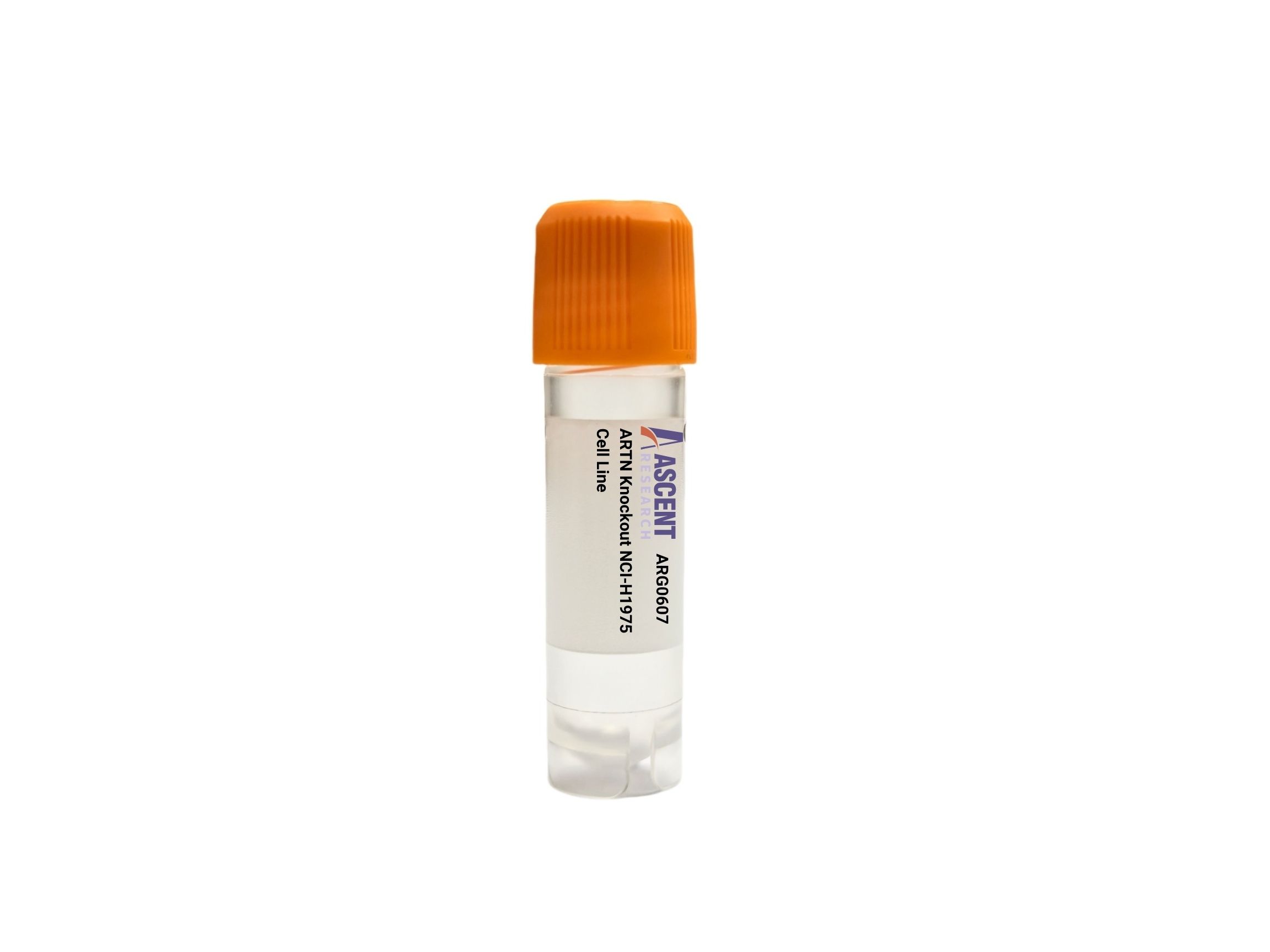
Cat. No. ARG0607

ARTN Knockout NCI-H1975 Cell Line

  • Product Type:

    Genome-edited Cells

  • Tissue Source:

    Lung

  • Disease:

    Carcinoma

  • Gene Species:

    Homo sapiens (Human)

The ARTN Knockout NCI-H1975 Cell Line is a CRISPR/Cas9-edited human lung adenocarcinoma cell line with targeted disruption of the ARTN gene. Derived from the NCI-H1975 parental line harboring EGFR L858R and T790M mutations, this model eliminates artemin-mediated signaling through the GFR??3/RET receptor complex. By ablating ARTN expression, researchers can assess the loss of downstream ERK1/2 and AKT pathway activation, leading to reduced proliferation, survival, and drug resistance. Applications include investigation of GDNF family signaling in NSCLC, screening for RET pathway inhibitors, and functional studies using western blotting, cell proliferation, and migration assays.

Inquire Now

In stock

Ships next business day


Ask a Question

Shipping Info:

Cryopreserved in vials and shipped on dry ice


Disclaimer:

For Research Use Only

  • Characteristics

    Host Cell

    NCI-H1975

    Morphology

    Epithelial-like

    Sex of Donor

    Female

    Gene Name

    ARTN

    Gene Alias

    Artemin, Neublastin

    Gene Species

    Homo sapiens (Human)

    Gene Identifier

    NCBI Gene ID 9048

    Gene Family

    GDNF (glial cell line-derived neurotrophic factor) family

  • Culture Conditions

    Temperature

    37°C

    Atmosphere

    5% CO₂

  • Quality Control

    Sterility testing

    Daily monitoring confirms that the cells are free from bacterial, yeast, and fungal contamination.

    Mycoplasma testing

    Negative for mycoplasma through PCR analysis

    Pathogens

    Cells tested negative for HIV-1, HBV, and HCV.

  • Disclaimer

    Intended Use

    This product is intended for laboratory in vitro use only. lt is not intended for diagnostic, therapeutic, or clinical applications.

    Disclaimer

    Ascent Research endeavors to provide accurate and up-to-date product information. However, no warranties or representations are made regarding its completeness or reliability. References to scientific literature and patents are for informational purposes only, and the customer assumes sole responsibility for verifying their accuracy.

    By accepting this product, the customer acknowledges and agrees to assume all risks associated with its receipt, handling, storage, disposal, and use, including compliance with all applicable safety and environmental regulations and precautions. Relevant laws, regulations, and ethical guidelines must be followed in conducting any research, modifications, or derivatives derived from this product.

    This product is provided "AS IS", and except as expressly stated herein, Ascent Research disclaims all other warranties, express or implied. Under no circumstances shall Ascent Research, its affiliates, or representatives be liable for indirect, incidental, consequential, or punitive damages arising from the use of this material. While Ascent Research employs rigorous quality control measures, we shall not be held responsible for damages resulting from misidentification or misinterpretation of the provided materials.

Description

The ARTN Knockout NCI-H1975 Cell Line is a CRISPR/Cas9-edited knockout cell line derived from the human NCI-H1975 lung adenocarcinoma cell line. This product provides a targeted loss-of-function model for the ARTN gene (encoding artemin), a member of the GDNF family of neurotrophic factors. By disrupting the endogenous ARTN locus using CRISPR/Cas9 technology, researchers can abrogate artemin expression and investigate its cellular functions in a well-characterized non-small cell lung cancer (NSCLC) background. The cell line serves as a controlled experimental platform for studying artemin-mediated signaling, cancer progression, and therapeutic resistance without the confounding effects of variable ARTN expression.

The NCI-H1975 parental line is a widely used human lung adenocarcinoma cell line harboring the EGFR L858R and T790M mutations, originally isolated from a non-smoking female patient. These activating EGFR mutations confer sensitivity to first-generation EGFR tyrosine kinase inhibitors (TKIs) like erlotinib, although the T790M mutation is associated with acquired resistance. As a model of NSCLC, NCI-H1975 cells exhibit characteristics typical of adenocarcinoma, including uncontrolled proliferation and survival signaling. The introduction of an ARTN knockout into this genetic background allows for the dissection of artemin’s role in EGFR-mutant lung cancer pathogenesis, particularly in the context of oncogenic kinase signaling and drug resistance.

Artemin (ARTN) functions as a neurotrophic factor that binds GFR??3 and activates the RET receptor tyrosine kinase. Downstream signaling through SHC, GRB2, RAS, ERK1/2, and AKT promotes cell survival, proliferation, and migration. Upstream regulators TWIST1, NF-??B, and TGF-?? control ARTN transcription. Key downstream targets include the SHC-GRB2-SOS complex, ERK1/2, AKT, BCL2, cyclin D1, and MMP9. ARTN interaction with NCAM and heparan sulfate proteoglycans further modulates signaling. Disruption of ARTN in NCI-H1975 cells eliminates RET pathway activation, impairing MAPK/ERK and PI3K/AKT cascades and thereby reducing oncogenic activities.

In the NCI-H1975 cellular context, ARTN knockout provides a valuable tool for investigating the interplay between GDNF family signaling and EGFR-driven oncogenesis. The presence of the T790M gatekeeper mutation in this cell line is a common mechanism of resistance to EGFR-TKIs in patients, and ARTN signaling has been implicated in bypass signaling that sustains cancer cell survival under TKI pressure. By ablating ARTN expression, researchers can assess the dependence of NCI-H1975 cells on artemin for maintaining proliferative and anti-apoptotic signals, as well as invasive properties. This model also enables the study of how artemin-mediated RET activation may contribute to adaptive resistance mechanisms, offering insights into combination therapies targeting both EGFR and RET pathways.

Typical applications include western blotting for RET signaling proteins, RT-qPCR for ARTN expression, cell proliferation assays, migration/invasion assays, drug sensitivity assays (EGFR-TKIs), flow cytometry for apoptosis, and immunofluorescence for RET localization. The ARTN Knockout NCI-H1975 Cell Line is thus a robust system for functional genomics studies, drug screening, and mechanistic investigations into artemin-related pathology. For additional details or technical support, please contact Ascent Research.


Reset Password

    Reach Us Questions? Click Me Here!

    Fill out the form below and a member of our team will contact you shortly!

    *Required field


      Reach Us

      Fill out the form below and a member of our team will contact you shortly!

      *Required field

      Product Inquiry (Optional)