Quick Order Cart

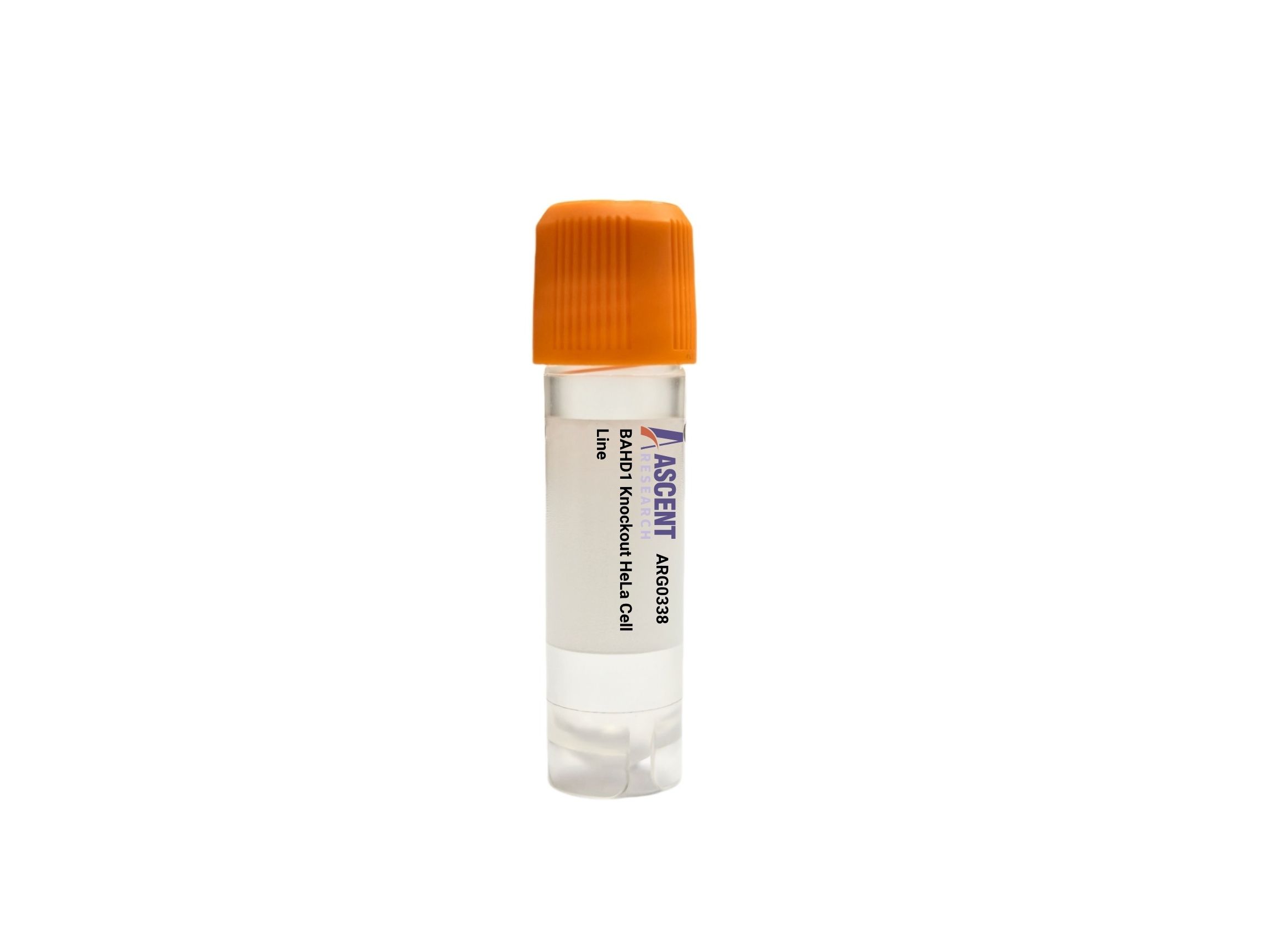
Cat. No. ARG0338

BAHD1 Knockout HeLa Cell Line

  • Product Type:

    Genome-edited Cells

  • Tissue Source:

    Uterus (cervix)

  • Disease:

    Adenocarcinoma

  • Gene Species:

    Homo sapiens (Human)

The BAHD1 Knockout HeLa Cell Line is a CRISPR/Cas9-edited loss-of-function model derived from the classic HeLa cervical adenocarcinoma cell line. BAHD1 encodes a chromatin-associated transcriptional repressor that assembles multi-protein complexes with HDAC1, HDAC2, and HP1 proteins to drive heterochromatin formation and gene silencing. This knockout line supports research into epigenetic dysregulation in cancer, enabling studies of transcriptional repression, cell cycle control, and genome stability. Applications include ChIP-qPCR, RNA-seq, and proliferation assays to investigate BAHD1-dependent pathways and identify novel therapeutic targets.

Inquire Now

In stock

Ships next business day


Ask a Question

Shipping Info:

Cryopreserved in vials and shipped on dry ice


Disclaimer:

For Research Use Only

  • Characteristics

    Host Cell

    HeLa

    Morphology

    Epithelial-like

    Age

    31 years

    Sex of Donor

    Female

    Gene Name

    BAHD1

    Gene Alias

    Breast cancer type 2 susceptibility protein; FANCD1

    Gene Species

    Homo sapiens (Human)

    Gene Identifier

    NCBI Gene ID 22893

    Gene Family

    BRCA2/RAD51 DNA repair family

  • Culture Conditions

    Temperature

    37°C

    Atmosphere

    5% CO₂

  • Quality Control

    Sterility testing

    Daily monitoring confirms that the cells are free from bacterial, yeast, and fungal contamination.

    Mycoplasma testing

    Negative for mycoplasma through PCR analysis

    Pathogens

    Cells tested negative for HIV-1, HBV, and HCV.

  • Disclaimer

    Intended Use

    This product is intended for laboratory in vitro use only. lt is not intended for diagnostic, therapeutic, or clinical applications.

    Disclaimer

    Ascent Research endeavors to provide accurate and up-to-date product information. However, no warranties or representations are made regarding its completeness or reliability. References to scientific literature and patents are for informational purposes only, and the customer assumes sole responsibility for verifying their accuracy.

    By accepting this product, the customer acknowledges and agrees to assume all risks associated with its receipt, handling, storage, disposal, and use, including compliance with all applicable safety and environmental regulations and precautions. Relevant laws, regulations, and ethical guidelines must be followed in conducting any research, modifications, or derivatives derived from this product.

    This product is provided "AS IS", and except as expressly stated herein, Ascent Research disclaims all other warranties, express or implied. Under no circumstances shall Ascent Research, its affiliates, or representatives be liable for indirect, incidental, consequential, or punitive damages arising from the use of this material. While Ascent Research employs rigorous quality control measures, we shall not be held responsible for damages resulting from misidentification or misinterpretation of the provided materials.

Description

The BAHD1 Knockout HeLa Cell Line is a CRISPR/Cas9-edited human knockout cell line with targeted disruption of the BAHD1 gene, creating a stable loss-of-function model. This cell-based platform enables detailed functional studies of BAHD1-dependent processes in a widely used epithelial cancer system.

HeLa cells, the first immortalized human cell line, originate from cervical adenocarcinoma and contain integrated HPV-18 sequences. These aneuploid, highly proliferative cells provide a robust model for cancer research, particularly for studying oncogenic signaling and epigenetic regulation.

BAHD1 is a chromatin-associated transcriptional repressor that promotes heterochromatin formation and gene silencing. It acts as a scaffold, interacting with histone deacetylases HDAC1 and HDAC2, heterochromatin proteins HP1?? and HP1??, and methyl-CpG-binding protein MBD1. This repressor complex is recruited to genomic loci marked by H3K9me3, including pericentromeric regions and promoters of cell cycle genes, where it facilitates histone deacetylation and further H3K9 methylation, leading to chromatin compaction. Upstream regulators include DNA damage response kinases and cell cycle signals, while downstream targets encompass repetitive DNA sequences and E2F-responsive genes, linking chromatin organization to proliferation and genome integrity.

In the HeLa cervical cancer background, BAHD1 knockout allows interrogation of how disruption of this silencing factor influences the transformed phenotype. Loss of BAHD1 may derepress genes involved in cell cycle control or alter heterochromatin structure, offering insights into epigenetic vulnerabilities in cancer cells and the role of HPV-18 in modulating chromatin-based repression. Given the interactions between BAHD1 and histone deacetylases, its depletion may perturb global histone acetylation patterns, thereby revealing epigenetic dependencies in tumor cells.

This KO cell line is suited for diverse assays, including western blotting and RT-qPCR for expression analysis, ChIP-qPCR to probe histone modification changes and protein occupancy, and functional tests such as proliferation, colony formation, flow cytometry, and comet assays to assess cell cycle defects and DNA damage responses. Transcriptomic analysis via RNA-seq can reveal global gene expression shifts upon BAHD1 loss. These applications make the line a valuable tool for epigenetic and cancer research. For more information, contact Ascent Research.


Reset Password

    Reach Us Questions? Click Me Here!

    Fill out the form below and a member of our team will contact you shortly!

    *Required field


      Reach Us

      Fill out the form below and a member of our team will contact you shortly!

      *Required field

      Product Inquiry (Optional)