Quick Order Cart

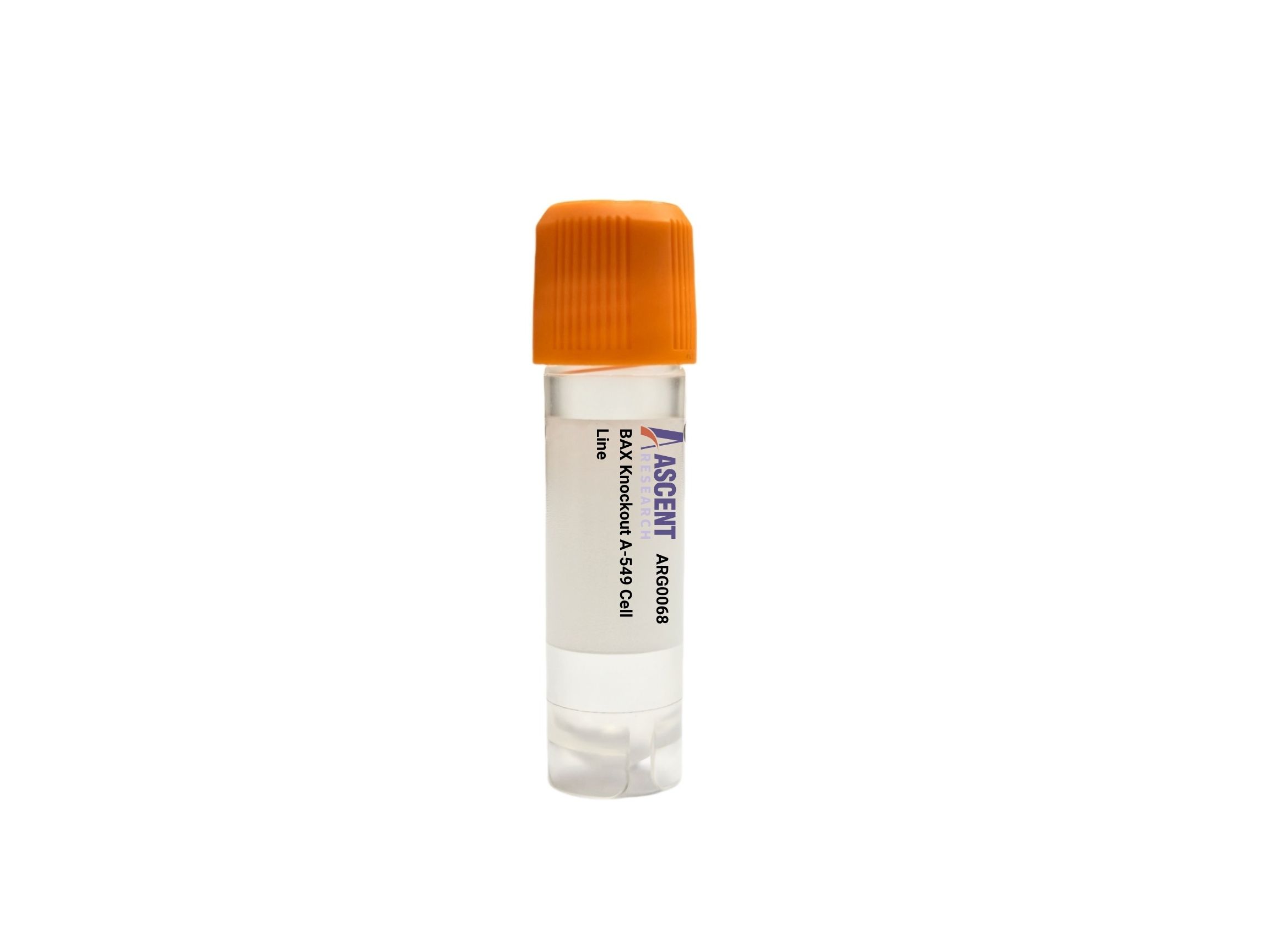
Cat. No. ARG0068

BAX Knockout A-549 Cell Line

  • Product Type:

    Genome-edited Cells

  • Tissue Source:

    Lung

  • Disease:

    Carcinoma

  • Gene Species:

    Homo sapiens (Human)

BAX Knockout A-549 is a CRISPR/Cas9-engineered human alveolar epithelial carcinoma cell line with disrupted BAX expression, providing a stable model for studying intrinsic apoptosis in lung adenocarcinoma cells. In A-549 cells, BAX normally functions downstream of TP53 and BH3-only proteins such as BID and BIM to promote mitochondrial outer membrane permeabilization, cytochrome c release, and CASP9/CASP3 activation. This knockout model is useful for investigating apoptosis dysregulation, chemotherapy and radiation response, BH3 mimetic sensitivity, and mitochondrial death signaling using assays including annexin V staining, caspase-3/7 activity, cytochrome c release, and clonogenic survival analysis.

Inquire Now

In stock

Ships next business day


Ask a Question

Shipping Info:

Cryopreserved in vials and shipped on dry ice


Disclaimer:

For Research Use Only

  • Characteristics

    Host Cell

    A-549

    Morphology

    Epithelial-like

    Age

    58 years

    Sex of Donor

    Male

    Gene Name

    BAX

    Gene Species

    Homo sapiens (Human)

    Gene Identifier

    NCBI Gene ID 581

  • Culture Conditions

    Temperature

    37°C

    Atmosphere

    5% CO₂

  • Quality Control

    Sterility testing

    Daily monitoring confirms that the cells are free from bacterial, yeast, and fungal contamination.

    Mycoplasma testing

    Negative for mycoplasma through PCR analysis

    Pathogens

    Cells tested negative for HIV-1, HBV, and HCV.

  • Disclaimer

    Intended Use

    This product is intended for laboratory in vitro use only. lt is not intended for diagnostic, therapeutic, or clinical applications.

    Disclaimer

    Ascent Research endeavors to provide accurate and up-to-date product information. However, no warranties or representations are made regarding its completeness or reliability. References to scientific literature and patents are for informational purposes only, and the customer assumes sole responsibility for verifying their accuracy.

    By accepting this product, the customer acknowledges and agrees to assume all risks associated with its receipt, handling, storage, disposal, and use, including compliance with all applicable safety and environmental regulations and precautions. Relevant laws, regulations, and ethical guidelines must be followed in conducting any research, modifications, or derivatives derived from this product.

    This product is provided "AS IS", and except as expressly stated herein, Ascent Research disclaims all other warranties, express or implied. Under no circumstances shall Ascent Research, its affiliates, or representatives be liable for indirect, incidental, consequential, or punitive damages arising from the use of this material. While Ascent Research employs rigorous quality control measures, we shall not be held responsible for damages resulting from misidentification or misinterpretation of the provided materials.

Description

The BAX Knockout A-549 Cell Line is a human gene-edited alveolar epithelial carcinoma model in which the BAX locus has been disrupted using CRISPR/Cas9 technology to abolish functional BAX expression. This stable in vitro knockout system is designed for studies requiring defined perturbation of the intrinsic apoptotic machinery in a lung cancer-relevant epithelial background. Because A-549 cells are extensively used in cancer biology and therapeutic response research, BAX loss in this context provides a controlled platform for mechanistic analysis of mitochondrial apoptosis and stress-response signaling.

A-549 is a human lung adenocarcinoma cell line with alveolar type II-like epithelial characteristics and broad utility in pulmonary epithelial biology, tumor signaling, and drug response studies. The line is commonly used to investigate non-small cell lung cancer biology, epithelial stress programs, and treatment-induced cell death. Its relevance to lung adenocarcinoma and experimental tractability make it suitable for examining how defined genetic perturbations alter survival signaling, apoptotic competence, and response to cytotoxic or targeted agents in a respiratory epithelial tumor cell setting.

BAX encodes a pro-apoptotic BCL-2 family effector that functions downstream of TP53, DNA damage, E2F1, MYC, FOXO3, and cellular stress signals. Upon activation by BH3-only proteins including BID, BIM/BCL2L11, and PUMA/BBC3, BAX translocates to the mitochondrial outer membrane, interacts with factors such as BAK1 and VDAC2, and is antagonized by anti-apoptotic proteins BCL2, BCL2L1/BCL-XL, and MCL1. Activated BAX oligomerization promotes mitochondrial outer membrane permeabilization, cytochrome c release, apoptosome assembly through APAF1, CASP9 activation, and subsequent CASP3 activation, culminating in intrinsic apoptotic cell death. Accordingly, BAX is a central component of p53 signaling, the DNA damage response, BCL-2 family signaling, and caspase-dependent execution pathways that are frequently altered in lung cancer, chemotherapy resistance, and radiation response.

In the A-549 background, BAX knockout enables direct evaluation of how mitochondrial apoptosis contributes to epithelial tumor-cell fate decisions under genotoxic stress or pathway-targeted challenge. This model is useful for distinguishing BAX-dependent from BAX-independent death mechanisms, assessing compensation by BAK1 or anti-apoptotic BCL-2 family members, and defining how loss of a key mitochondrial effector reshapes apoptotic threshold, clonogenic survival, and stress-induced signaling outputs in lung adenocarcinoma cells.

This cell line can support western blotting, RT-qPCR, RNA-seq, immunofluorescence, and co-immunoprecipitation studies of apoptotic network remodeling, as well as functional assays such as annexin V staining, flow cytometry apoptosis profiling, caspase-3/7 activity measurements, mitochondrial membrane potential analysis, cytochrome c release assays, clonogenic survival studies, and drug sensitivity testing. It is particularly relevant for investigating p53-linked apoptosis, BH3 mimetic response, chemotherapy or radiation sensitivity, and resistance mechanisms associated with impaired mitochondrial outer membrane permeabilization in non-small cell lung cancer models. Researchers may contact Ascent Research for additional technical information, product details, or related gene-edited cell models.


Reset Password

    Reach Us Questions? Click Me Here!

    Fill out the form below and a member of our team will contact you shortly!

    *Required field


      Reach Us

      Fill out the form below and a member of our team will contact you shortly!

      *Required field

      Product Inquiry (Optional)