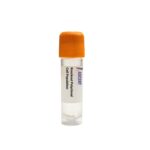
The BBC3 Knockout 143B Polyclonal Cells are a CRISPR/Cas9-edited polyclonal knockout cell population targeting the human BBC3 gene (also known as PUMA) in the 143B osteosarcoma cell line. This product comprises a heterogeneous pool of cells harboring gene disruptions at the BBC3 locus, providing a loss-of-function model that avoids artifacts associated with single-cell cloning. The polyclonal format captures diverse editing outcomes, offering a robust genetic background for functional studies in a near-native cellular context.
The 143B cell line is a well-characterized human osteosarcoma model originally derived from an osteosarcoma patient. These adherent cells exhibit aggressive growth characteristics and commonly harbor TP53 mutations, making them a relevant system for studying bone cancer biology, metastasis, and therapeutic resistance. The 143B line is widely employed in oncology research to investigate mitochondrial signaling and apoptosis pathways.
BBC3 encodes the pro-apoptotic BH3-only protein PUMA, which functions as a critical sensor of cellular stress. Under conditions such as DNA damage, PUMA is transcriptionally activated by TP53, as well as by upstream regulators including E2F1, FOXO3a, and p73. Once induced, PUMA binds and neutralizes anti-apoptotic BCL-2 family members (BCL-2, BCL-XL, MCL-1), thereby releasing the pro-apoptotic effectors BAX and BAK. This release permits BAX/BAK oligomerization at the mitochondrial outer membrane, leading to cytochrome c release, APAF1-mediated apoptosome assembly, and activation of caspase-9 and caspase-3 to execute apoptosis.
In osteosarcoma, the TP53 pathway is frequently disrupted, and BBC3 represents a key downstream effector of p53-dependent apoptosis. By ablating BBC3 in the 143B background, these polyclonal knockout cells enable dissection of p53-dependent and -independent death mechanisms. This model is valuable for exploring how tumor cells evade apoptosis through loss of pro-apoptotic signaling and for investigating mechanisms underlying chemoresistance and mitochondrial priming in bone cancer.
This BBC3 knockout product is well-suited for apoptosis research, cancer biology, and drug resistance studies. Typical applications include western blotting for BCL-2 family proteins, caspase activity assays, cytochrome c release measurements, and Annexin V flow cytometry to quantify cell death. Cell viability assays and TUNEL staining further enable analysis of apoptotic kinetics and mitochondrial integrity. The polyclonal population provides a robust platform for evaluating BH3 mimetic sensitivity and p53 pathway modulation. For further inquiries, please contact Ascent Research.