Quick Order Cart

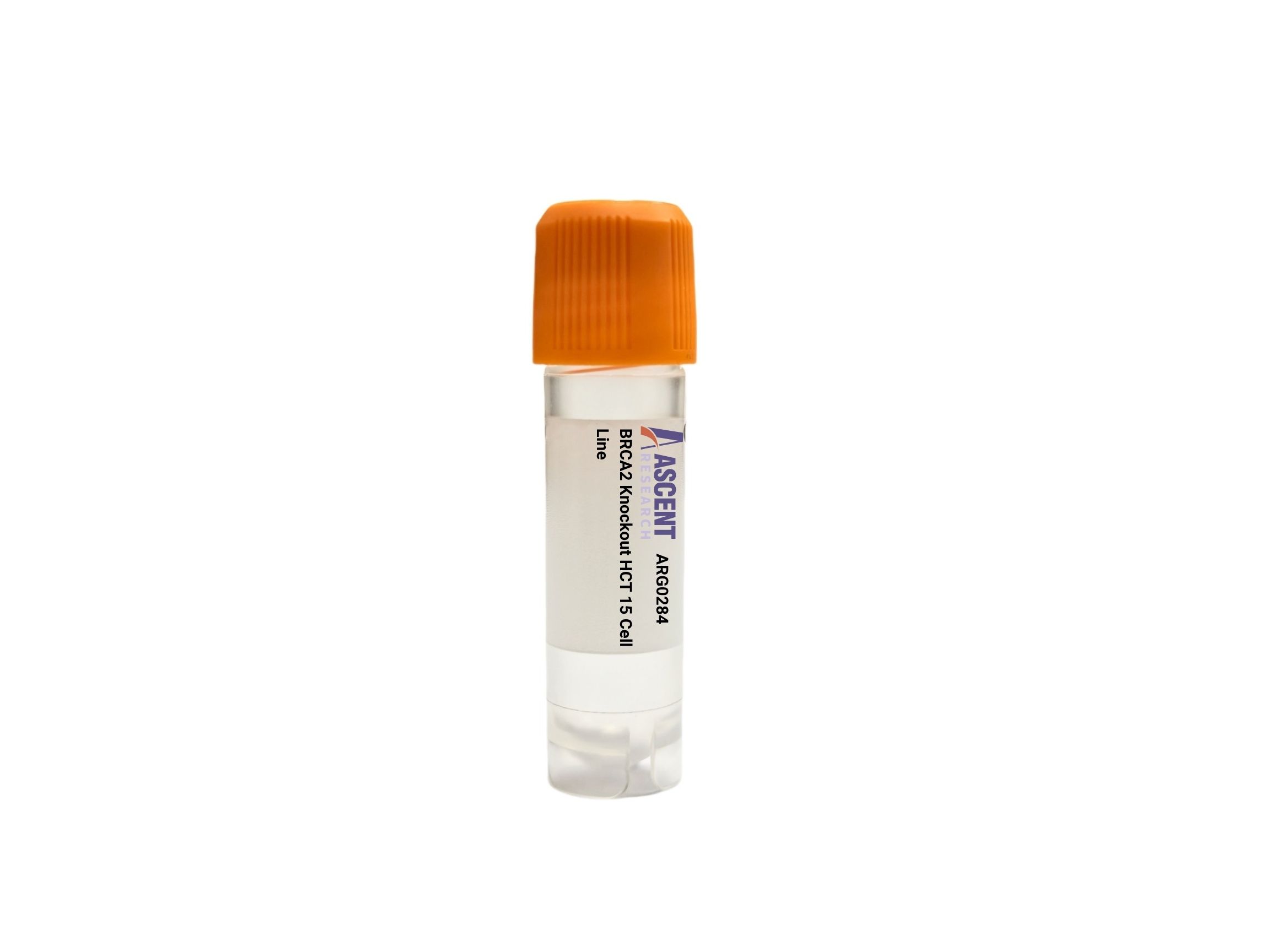
Cat. No. ARG0284

BRCA2 Knockout HCT 15 Cell Line

  • Product Type:

    Genome-edited Cells

  • Tissue Source:

    Large intestine (colon)

  • Disease:

    Adenocarcinoma

  • Gene Species:

    Homo sapiens (Human)

The BRCA2 Knockout HCT 15 Cell Line is a CRISPR/Cas9-edited knockout cell line that disrupts the BRCA2 gene in the HCT 15 colorectal carcinoma cell line, derived from a male patient. This model enables loss-of-function studies of BRCA2, a critical mediator of DNA repair. BRCA2 functions with RAD51 and PALB2 to execute homologous recombination, and its knockout impairs genomic stability, sensitizing cells to PARP inhibitors and DNA-damaging agents. The cell line supports synthetic lethality research, DNA damage response studies, and therapeutic evaluation in colorectal cancer.

Inquire Now

In stock

Ships next business day


Ask a Question

Shipping Info:

Cryopreserved in vials and shipped on dry ice


Disclaimer:

For Research Use Only

  • Characteristics

    Host Cell

    HCT 15

    Morphology

    Epithelial-like

    Age

    Unknown

    Sex of Donor

    Male

    Gene Name

    BRCA2

    Gene Species

    Homo sapiens (Human)

    Gene Identifier

    NCBI Gene ID 675

  • Culture Conditions

    Temperature

    37°C

    Atmosphere

    5% CO₂

  • Quality Control

    Sterility testing

    Daily monitoring confirms that the cells are free from bacterial, yeast, and fungal contamination.

    Mycoplasma testing

    Negative for mycoplasma through PCR analysis

    Pathogens

    Cells tested negative for HIV-1, HBV, and HCV.

  • Disclaimer

    Intended Use

    This product is intended for laboratory in vitro use only. lt is not intended for diagnostic, therapeutic, or clinical applications.

    Disclaimer

    Ascent Research endeavors to provide accurate and up-to-date product information. However, no warranties or representations are made regarding its completeness or reliability. References to scientific literature and patents are for informational purposes only, and the customer assumes sole responsibility for verifying their accuracy.

    By accepting this product, the customer acknowledges and agrees to assume all risks associated with its receipt, handling, storage, disposal, and use, including compliance with all applicable safety and environmental regulations and precautions. Relevant laws, regulations, and ethical guidelines must be followed in conducting any research, modifications, or derivatives derived from this product.

    This product is provided "AS IS", and except as expressly stated herein, Ascent Research disclaims all other warranties, express or implied. Under no circumstances shall Ascent Research, its affiliates, or representatives be liable for indirect, incidental, consequential, or punitive damages arising from the use of this material. While Ascent Research employs rigorous quality control measures, we shall not be held responsible for damages resulting from misidentification or misinterpretation of the provided materials.

Description

The BRCA2 Knockout HCT 15 Cell Line is a precisely engineered CRISPR/Cas9-edited knockout cell line designed to disrupt the BRCA2 gene in the HCT 15 human colorectal carcinoma cell line. This loss-of-function model provides a controlled system for delineating BRCA2-mediated processes in colonic epithelial cells. The cell line is a crucial resource for advancing understanding of DNA repair dynamics and tumor suppressor mechanisms.

HCT 15 is an established colorectal adenocarcinoma cell line isolated from a male patient, retaining colonic epithelial characteristics and displaying typical cancer-related genomic alterations. Its use in research spans decades, offering a robust platform for oncogenic studies. The knockout of BRCA2 in this context allows exploration of how DNA repair deficiencies contribute to colorectal tumorigenesis and therapeutic response.

BRCA2 functions as a tumor suppressor, playing an indispensable role in homologous recombination repair by facilitating the loading of RAD51 recombinase onto resected DNA double-strand breaks. This activity is orchestrated through interactions with PALB2, BRCA1, and DSS1, and is integrated into the Fanconi anemia pathway. Upstream, DNA damage activates kinases ATM and ATR, which phosphorylate targets including Chk1, while transcription factors p53 and E2F1 regulate BRCA2 expression. Downstream, BRCA2-dependent RAD51 recruitment promotes strand invasion and accurate repair, maintaining genomic stability. The BRCA2-RAD51 axis is further coordinated with the MRE11-RAD50-NBS1 complex and RPA in the DNA damage response.

In the HCT 15 colorectal carcinoma host, BRCA2 knockout leads to pronounced homologous recombination deficiency, resulting in accumulation of unresolved DNA double-strand breaks and increased genomic instability. This defect causes heightened sensitivity to PARP inhibitors, such as olaparib, and to DNA crosslinking agents, mimicking synthetic lethality observed in BRCA-mutated tumors. The model thereby enables mechanistic dissection of colorectal cancer vulnerabilities and assessment of DNA repair-targeted therapies in a clinically relevant intestinal epithelial setting.

This cell line is instrumental for diverse experimental applications, including synthetic lethality screens, PARP inhibitor sensitivity assays (via colony formation or viability assays), and chemosensitivity profiling to DNA-damaging agents. Researchers can monitor DNA repair efficiency using RAD51 foci immunofluorescence, ??-H2AX staining, and comet assays, while Western blotting validates key pathway components. Additional uses encompass cell cycle checkpoint analysis and tumor biology studies. For technical inquiries and ordering, please contact Ascent Research.


Reset Password

    Reach Us Questions? Click Me Here!

    Fill out the form below and a member of our team will contact you shortly!

    *Required field


      Reach Us

      Fill out the form below and a member of our team will contact you shortly!

      *Required field

      Product Inquiry (Optional)