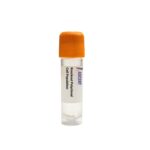
The BRSK2 Knockout HT29 Polyclonal Cells are a CRISPR/Cas9-edited polyclonal cell population derived from the HT-29 colorectal adenocarcinoma line, engineered for targeted disruption of the BRSK2 gene. This loss-of-function model enables investigation of BRSK2-dependent signaling and cellular processes in an intestinal epithelial cancer context. The polyclonal format captures a range of genetic alterations, providing a robust tool for functional studies without clonal selection bias.
HT-29 cells, derived from a primary colorectal adenocarcinoma, exhibit epithelial morphology and carry mutations in APC and TP53, mirroring key genetic aberrations in colorectal tumorigenesis. This well-characterized line is extensively used to study intestinal epithelial biology, oncogenic signaling, and drug responses, making it a relevant host for examining BRSK2 function in cancer.
BRSK2 is a serine/threonine kinase of the AMPK-related family, activated by LKB1-mediated phosphorylation within the LKB1-STRAD-MO25 complex. It phosphorylates downstream targets such as ??-tubulin, microtubule-associated proteins, PAK1, and tau, thereby regulating centrosome duplication and cell cycle progression. BRSK2 also feeds into the mTOR pathway via Raptor, influencing S6K and 4EBP1, and interacts with 14-3-3 proteins and PP2A, which modulate its localization and activity. This positions BRSK2 as an integrator of metabolic cues??including energy stress and insulin signals??with cell division.
In the APC/p53-mutant HT-29 background, BRSK2 knockout likely exacerbates cell cycle dysregulation and centrosomal abnormalities, contributing to genomic instability and altered proliferation. Disruption of BRSK2??s metabolic sensing may also impair adaptation to nutrient stress or chemotherapeutic agents, highlighting its relevance in colorectal cancer progression. This model thus provides a unique system for dissecting the LKB1-BRSK2-AMPK/mTOR axis.
Applications include centrosome analysis by ??-tubulin immunofluorescence, cell cycle profiling by flow cytometry, and proliferation assays (MTT, BrdU). Western blotting can detect phospho-AMPK, phospho-S6, and 4EBP1 changes. The cells support drug sensitivity testing (5-fluorouracil, oxaliplatin), migration/invasion assays, and metabolic signaling studies. They are well-suited for colorectal cancer research, metabolic disorder investigations, and neuronal polarization studies. For further information, contact Ascent Research.