Quick Order Cart

Cat. No. ARG34647

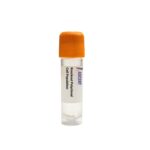
BST2 Knockout HAP1 Polyclonal Cells

  • Product Type:

    Polyclonal Cell Population

  • Species:

    Homo sapiens (Human)

  • Tissue Source:

    Bone Marrow

  • Disease:

    Chronic myeloid leukemia

The BST2 Knockout HAP1 Polyclonal Cells are a CRISPR/Cas9-edited polyclonal knockout population derived from the human near-haploid HAP1 cell line, a chronic myeloid leukemia-derived model. These cells lack functional BST2 (tetherin), an interferon-inducible restriction factor that blocks viral release and modulates NF-??B signaling through TRAF2-TAK1. This knockout model is ideal for investigating antiviral innate immunity, viral pathogenesis (e.g., HIV-1, Ebola), and BST2's tumor-suppressive roles. Researchers can perform HIV-1 release assays, interferon response studies, and NF-??B reporter analyses to dissect BST2-dependent pathways.

Inquire Now

In stock

Ships next business day


Ask a Question

Shipping Info:

Cryopreserved in vials and shipped on dry ice


Disclaimer:

For Research Use Only

  • Characteristics

    Host Cell

    HAP1

    Sex of Donor

    Male

    Age

    40 years

    Derived From Site

    Bone marrow

    Gene Name

    Bst2

    Gene Identifier

    NCBI Gene ID 684

    Storage

    Liquid nitrogen (LN2)

  • Culture Conditions

    Growth medium

    IMDM

    Supplement(s)

    10% Fetal Bovine Serum, 1% Penicillin-Streptomycin Solution

    Temperature

    37°C

    Atmosphere

    5% COâ‚‚

  • Quality Control

    Sterility testing

    The bacterial, yeast, and fungi are not detected in these cells by daily monitor.

    Mycoplasma testing

    Negative for mycoplasma through PCR analysis

  • Disclaimer

    Intended Use

    This product is intended for laboratory in vitro use only. It is not intended for diagnostic, therapeutic, or clinical applications.

    Disclaimer

    Ascent Research endeavors to provide accurate and up-to-date product information. However, no warranties or representations are made regarding its completeness or reliability. References to scientific literature and patents are for informational purposes only, and the customer assumes sole responsibility for verifying their accuracy.

    By accepting this product, the customer acknowledges and agrees to assume all risks associated with its receipt, handling, storage, disposal, and use, including compliance with all applicable safety and environmental regulations and precautions. Relevant laws, regulations, and ethical guidelines must be followed in conducting any research, modifications, or derivatives derived from this product.

    This product is provided "AS IS", and except as expressly stated herein, Ascent Research disclaims all other warranties, express or implied. Under no circumstances shall Ascent Research, its affiliates, or representatives be liable for indirect, incidental, consequential, or punitive damages arising from the use of this material. While Ascent Research employs rigorous quality control measures, we shall not be held responsible for damages resulting from misidentification or misinterpretation of the provided materials.

Description

The BST2 Knockout HAP1 Polyclonal Cells are a CRISPR/Cas9-edited polyclonal knockout population that disrupts the BST2 gene in the near-haploid HAP1 cell line. This heterogeneous pool provides a loss-of-function model for studying BST2 (tetherin) function without clonal selection bias, enabling investigation of viral restriction, interferon signaling, and NF-??B modulation.

HAP1 is a human near-haploid cell line derived from the KBM-7 chronic myeloid leukemia patient. Its haploid nature simplifies genetic loss-of-function studies, while its leukemic origin provides a hematologic context for innate immunity and cancer research.

BST2 (also known as tetherin) is a type II transmembrane protein that acts as an interferon-inducible host restriction factor. It impedes viral release by physically cross-linking budding virions to the cell surface, a process that requires BST2 homodimerization. Its expression is robustly induced by type I (IFN-??/??) and type II (IFN-??) interferons through the canonical JAK-STAT pathway, where ligand-bound IFNAR activates JAK1 and TYK2, leading to phosphorylation of STAT1 and STAT2, which dimerize and recruit IRF9 to form the ISGF3 transcription complex. Additional regulators include LPS, IL-1, and TNF. Beyond virus tethering, BST2 functions as an innate immune signaling adaptor by engaging the TRAF2-TAK1-IKK axis, culminating in NF-??B activation and transcription of pro-inflammatory cytokines and pro-apoptotic factors. BST2 also interacts with clathrin, linking it to endocytic trafficking. To counteract BST2, diverse viruses have evolved antagonists: HIV-1 Vpu targets BST2 for degradation, while Ebola VP40 and KSHV K5 also subvert its function.

The HAP1 knockout model enables investigation of BST2 in a leukemic, near-haploid setting, where its tumor-suppressive and antiviral activities can be studied without interference from wild-type alleles. This system is particularly valuable for examining how BST2 loss impacts the release of HIV-1, Ebola, and KSHV, as well as for dissecting BST2’s role in NF-??B-driven survival signaling relevant to multiple myeloma and other hematologic malignancies. The hematopoietic lineage authenticity of HAP1 cells further supports physiologically relevant interferon and inflammatory responses.

Researchers can employ these polyclonal knockout cells in a wide array of assays: HIV-1 release assays and viral tethering assays to quantify restriction, co-expression with Vpu or other antagonists to study viral evasion, interferon stimulation coupled with RT-qPCR or Western blotting to monitor JAK-STAT pathway activation, NF-??B luciferase reporter assays to probe TRAF2-TAK1 signaling, co-immunoprecipitation for BST2 interaction partners, and electron microscopy to visualize virion tethering. This model also facilitates high-throughput screening of modulators of BST2-mediated restriction and signaling. For further inquiries, please contact Ascent Research.


Reset Password

    Reach Us Questions? Click Me Here!

    Fill out the form below and a member of our team will contact you shortly!

    *Required field


      Reach Us

      Fill out the form below and a member of our team will contact you shortly!

      *Required field

      Product Inquiry (Optional)