Quick Order Cart

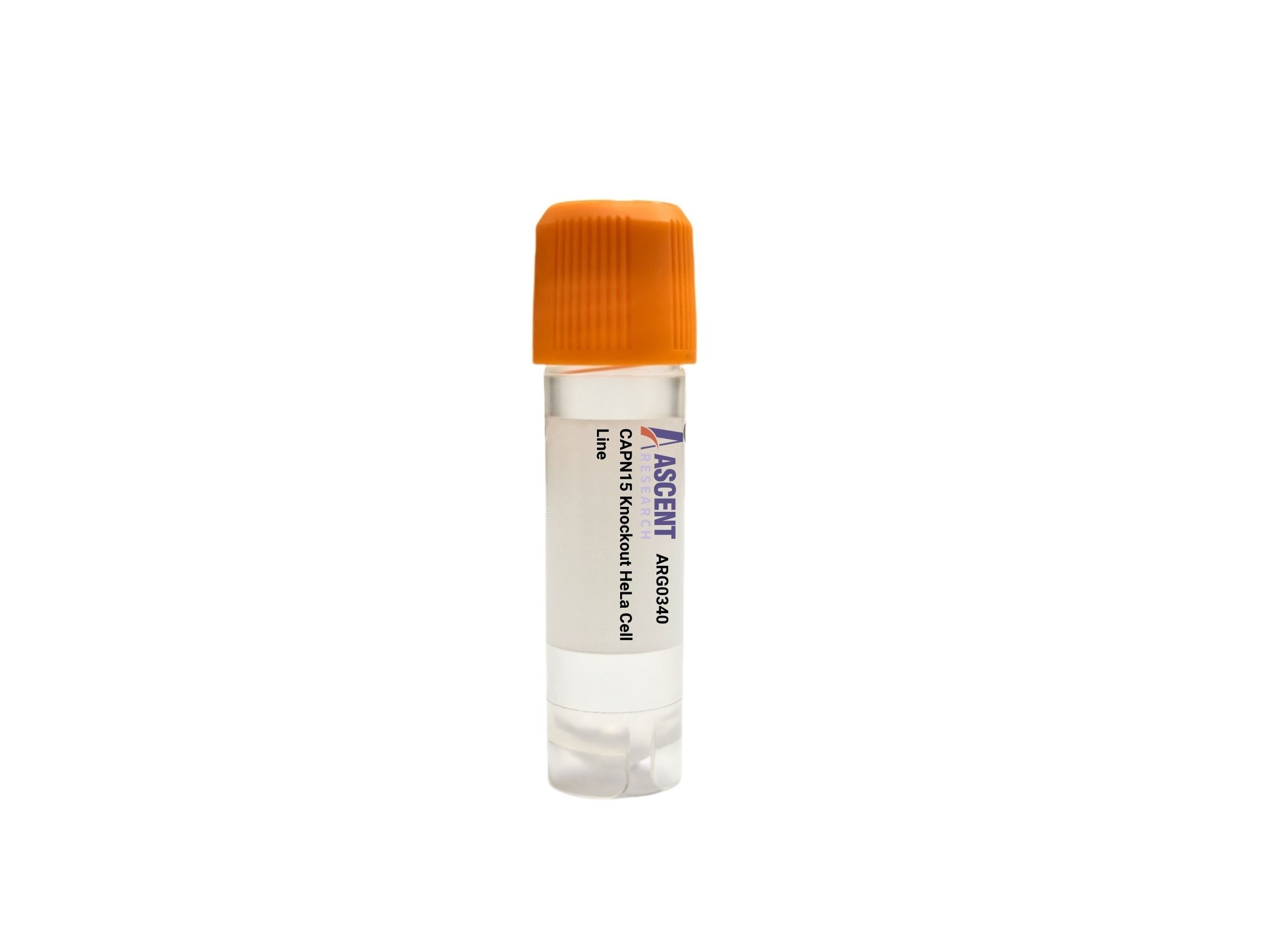
Cat. No. ARG0340

CAPN15 Knockout HeLa Cell Line

  • Product Type:

    Genome-edited Cells

  • Tissue Source:

    Uterus (cervix)

  • Disease:

    Adenocarcinoma

  • Gene Species:

    Homo sapiens (Human)

The CAPN15 Knockout HeLa Cell Line is a CRISPR/Cas9-edited loss-of-function model derived from HeLa cells. CAPN15 encodes a calcium-dependent cysteine protease involved in apoptosis, cytoskeletal remodeling, and protein turnover. HeLa, an HPV18-positive cervical adenocarcinoma line, is widely used in cancer and cell biology research. CAPN15 activity is regulated by calcium influx and integrin-mediated signaling, and it targets proteins such as spectrin, talin, Bax, and Bid. This knockout line enables studies of apoptosis, cell migration, and cytoskeletal dynamics, and is suitable for calpain inhibitor screening and pathway analysis.

Inquire Now

In stock

Ships next business day


Ask a Question

Shipping Info:

Cryopreserved in vials and shipped on dry ice


Disclaimer:

For Research Use Only

  • Characteristics

    Host Cell

    HeLa

    Morphology

    Epithelial-like

    Age

    31 years

    Sex of Donor

    Female

    Gene Name

    CAPN15

    Gene Species

    Homo sapiens (Human)

    Gene Identifier

    NCBI Gene ID 6650

  • Culture Conditions

    Temperature

    37°C

    Atmosphere

    5% CO₂

  • Quality Control

    Sterility testing

    Daily monitoring confirms that the cells are free from bacterial, yeast, and fungal contamination.

    Mycoplasma testing

    Negative for mycoplasma through PCR analysis

    Pathogens

    Cells tested negative for HIV-1, HBV, and HCV.

  • Disclaimer

    Intended Use

    This product is intended for laboratory in vitro use only. lt is not intended for diagnostic, therapeutic, or clinical applications.

    Disclaimer

    Ascent Research endeavors to provide accurate and up-to-date product information. However, no warranties or representations are made regarding its completeness or reliability. References to scientific literature and patents are for informational purposes only, and the customer assumes sole responsibility for verifying their accuracy.

    By accepting this product, the customer acknowledges and agrees to assume all risks associated with its receipt, handling, storage, disposal, and use, including compliance with all applicable safety and environmental regulations and precautions. Relevant laws, regulations, and ethical guidelines must be followed in conducting any research, modifications, or derivatives derived from this product.

    This product is provided "AS IS", and except as expressly stated herein, Ascent Research disclaims all other warranties, express or implied. Under no circumstances shall Ascent Research, its affiliates, or representatives be liable for indirect, incidental, consequential, or punitive damages arising from the use of this material. While Ascent Research employs rigorous quality control measures, we shall not be held responsible for damages resulting from misidentification or misinterpretation of the provided materials.

Description

The CAPN15 Knockout HeLa Cell Line is a CRISPR/Cas9-edited knockout cell line engineered from the HeLa host. This model features targeted disruption of the CAPN15 gene, encoding a calcium-dependent cysteine protease. It serves as a loss-of-function tool to dissect CAPN15-mediated proteolytic events, created via CRISPR/Cas9 to ensure stable gene disruption without transgene insertion.

HeLa is a cervical adenocarcinoma epithelial line positive for HPV18. The viral oncoproteins E6 and E7 inhibit p53 and Rb, respectively, resulting in a highly proliferative and aneuploid phenotype. Derived from a cervical cancer biopsy, HeLa cells are a cornerstone of cancer research, virology, and cell biology, and provide a robust host for CRISPR/Cas9-mediated knockout studies. However, their transformed nature should be taken into account when interpreting CAPN15-dependent effects.

CAPN15 is a calcium-activated cysteine protease that carries out limited proteolysis of key substrates, including spectrin, talin, the apoptosis regulators Bax and Bid, and various signaling kinases. Its activity is induced by calcium influx and integrin-mediated signaling, and is tightly controlled by the endogenous inhibitor calpastatin (CAST). CAPN15 interacts with calcium-binding proteins and integrin complexes, and functions within a network that includes calmodulin (CALM1) and calcium channels. Through its proteolytic action, CAPN15 modulates apoptosis, cell migration, and cytoskeletal dynamics.

In HeLa cells, where p53 and Rb pathways are already suppressed by HPV oncoproteins, CAPN15 knockout provides a powerful system to study calcium-regulated proteolysis in a cancer context. Disruption of CAPN15 may impair apoptotic signaling, alter cytoskeletal integrity, and reduce migratory capacity??all processes implicated in tumor progression. This model is particularly relevant for cervical adenocarcinoma research and offers a platform to investigate calpain-related mechanisms in neurodegenerative diseases and cataracts. It enables precise analysis of substrate turnover and cellular responses to calcium fluctuations.

Typical applications include apoptosis detection with Annexin V/PI staining, cell migration assessment using transwell or scratch assays, and immunofluorescence visualization of cytoskeletal proteins such as spectrin or talin. Western blotting confirms CAPN15 knockout and downstream target cleavage, while calpain activity assays provide functional validation. This cell line is also suited for drug target screening of calpain inhibitors. Side-by-side comparison with wild-type HeLa allows dissection of CAPN15-specific functions. For further details, please contact Ascent Research.


Reset Password

    Reach Us Questions? Click Me Here!

    Fill out the form below and a member of our team will contact you shortly!

    *Required field


      Reach Us

      Fill out the form below and a member of our team will contact you shortly!

      *Required field

      Product Inquiry (Optional)