Quick Order Cart

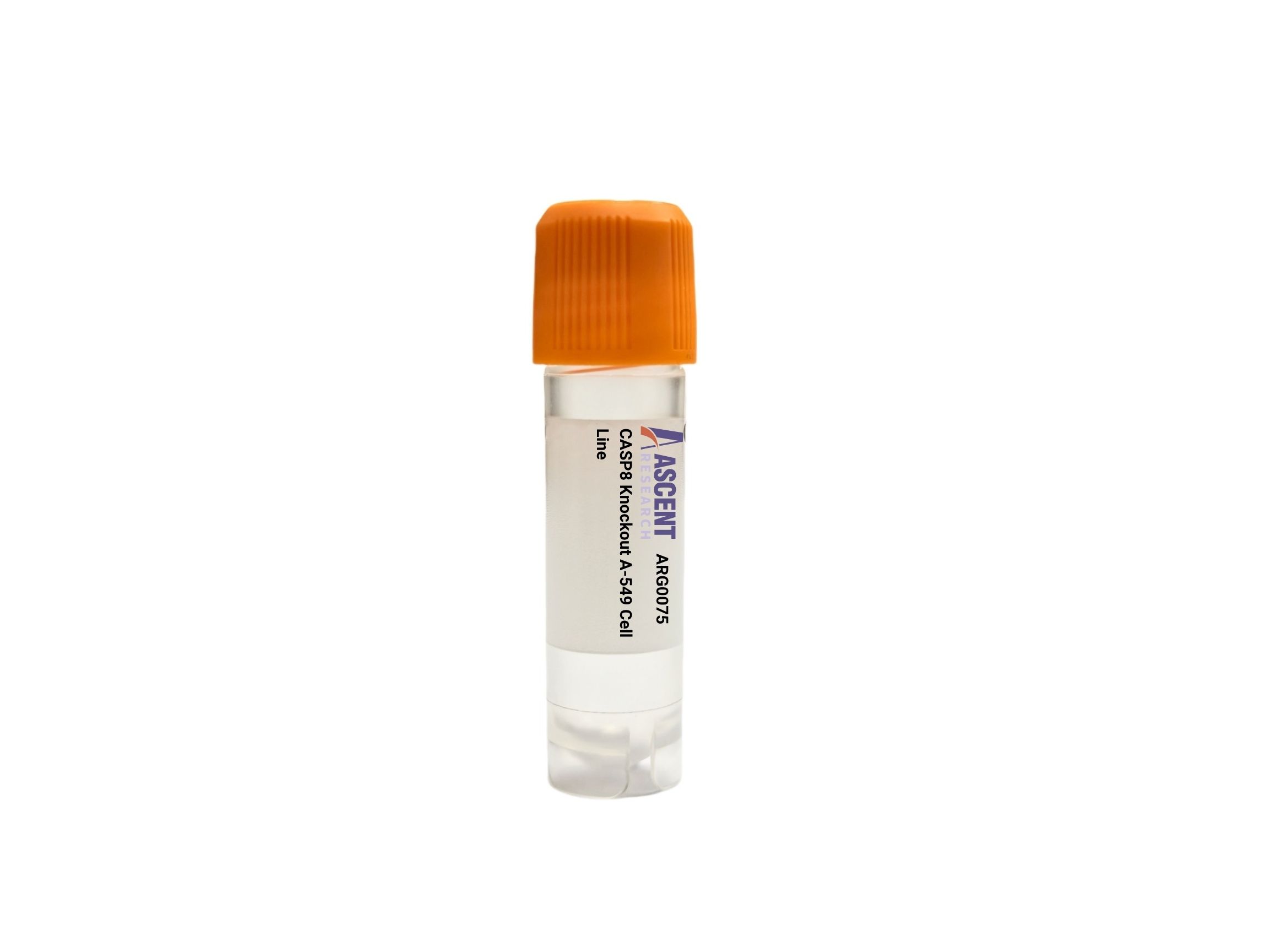
Cat. No. ARG0075

CASP8 Knockout A-549 Cell Line

  • Product Type:

    Genome-edited Cells

  • Tissue Source:

    Lung

  • Disease:

    Carcinoma

  • Gene Species:

    Homo sapiens (Human)

CASP8 Knockout A-549 is a CRISPR/Cas9-edited human lung alveolar epithelial carcinoma cell line with disruption of the CASP8 gene, encoding the initiator protease caspase-8. In A-549 cells, this model supports analysis of death receptor signaling downstream of FAS, DR4/DR5, TNF, and FADD, with effects on CASP3/7 activation, BID cleavage, and RIPK1-RIPK3-MLKL-regulated necroptosis control. It is useful for studies of lung cancer apoptosis resistance, TRAIL or Fas responsiveness, immune-mediated cytotoxicity, combination drug testing, and caspase-dependent versus necroptotic cell death using western blotting, flow cytometry, viability assays, and RNA-seq.

Inquire Now

In stock

Ships next business day


Ask a Question

Shipping Info:

Cryopreserved in vials and shipped on dry ice


Disclaimer:

For Research Use Only

  • Characteristics

    Host Cell

    A-549

    Morphology

    Epithelial-like

    Age

    58 years

    Sex of Donor

    Male

    Gene Name

    CASP8

    Gene Species

    Homo sapiens (Human)

    Gene Identifier

    NCBI Gene ID 841

  • Culture Conditions

    Temperature

    37°C

    Atmosphere

    5% CO₂

  • Quality Control

    Sterility testing

    Daily monitoring confirms that the cells are free from bacterial, yeast, and fungal contamination.

    Mycoplasma testing

    Negative for mycoplasma through PCR analysis

    Pathogens

    Cells tested negative for HIV-1, HBV, and HCV.

  • Disclaimer

    Intended Use

    This product is intended for laboratory in vitro use only. lt is not intended for diagnostic, therapeutic, or clinical applications.

    Disclaimer

    Ascent Research endeavors to provide accurate and up-to-date product information. However, no warranties or representations are made regarding its completeness or reliability. References to scientific literature and patents are for informational purposes only, and the customer assumes sole responsibility for verifying their accuracy.

    By accepting this product, the customer acknowledges and agrees to assume all risks associated with its receipt, handling, storage, disposal, and use, including compliance with all applicable safety and environmental regulations and precautions. Relevant laws, regulations, and ethical guidelines must be followed in conducting any research, modifications, or derivatives derived from this product.

    This product is provided "AS IS", and except as expressly stated herein, Ascent Research disclaims all other warranties, express or implied. Under no circumstances shall Ascent Research, its affiliates, or representatives be liable for indirect, incidental, consequential, or punitive damages arising from the use of this material. While Ascent Research employs rigorous quality control measures, we shall not be held responsible for damages resulting from misidentification or misinterpretation of the provided materials.

Description

The CASP8 Knockout A-549 Cell Line is a CRISPR/Cas9-engineered human cell model in which the CASP8 gene has been disrupted to eliminate functional caspase-8 expression. Generated in the A-549 background, this stable knockout line provides an in vitro system for interrogating caspase-8-dependent signaling in a lung alveolar epithelial carcinoma context. The model is suited for mechanistic studies of programmed cell death, death receptor signaling, and therapeutic response pathways in human tumor cells.

A-549 is a human lung adenocarcinoma epithelial cell line derived from alveolar type II-like tumor cells and is extensively used in cancer and cell signaling research. Its broad use reflects its relevance to lung cancer biology, epithelial tumor behavior, apoptosis regulation, drug response, and host-pathogen interaction studies. As an alveolar epithelial carcinoma model, A-549 offers a tractable platform for examining how tumor cells integrate inflammatory and cytotoxic stimuli with survival and cell death programs, including responses to TNF family ligands and anticancer agents.

CASP8 encodes caspase-8, an initiator cysteine-aspartate protease that functions downstream of death receptors including FAS/CD95, TNFR1/TNFRSF1A, DR4/TNFRSF10A, and DR5/TNFRSF10B. Following stimulation by FAS ligand, TNF, or TRAIL/TNFSF10, caspase-8 is recruited to FADD-containing death-inducing signaling complexes, where its activation is regulated in part by CFLAR/c-FLIP and other DED-containing DISC components. Activated caspase-8 promotes proteolytic signaling to CASP3 and CASP7, cleaves BID to connect extrinsic death receptor signaling with BAX/BAK-dependent mitochondrial apoptosis, and contributes to PARP1 cleavage, apoptotic DNA fragmentation, and phosphatidylserine externalization. CASP8 also suppresses necroptotic signaling by restraining RIPK1-RIPK3-MLKL pathway activation, in part through RIPK1 cleavage.

In the A-549 setting, loss of CASP8 provides a relevant model for studying apoptosis resistance in lung cancer cells and for defining conditions under which death receptor stimulation fails to produce efficient extrinsic apoptosis. This knockout context is particularly useful for examining pathway rewiring between apoptotic and necroptotic outputs, as well as the balance between FADD-CASP8-CFLAR complexes and RIPK1/RIPK3-dependent inflammatory cell death signaling. The model can therefore support investigations into treatment sensitivity, immune-mediated cytotoxicity, and determinants of tumor cell susceptibility to TNF-, Fas-, or TRAIL-driven responses.

This cell line is well suited for western blot analysis of caspase-8, CASP3/CASP7 activation, BID processing, RIPK1 cleavage, and PARP cleavage; flow cytometric Annexin V/propidium iodide assays; caspase-3/7 activity measurements; cell viability and drug sensitivity testing; and immunofluorescence or phospho-signaling studies under death receptor agonist or combination treatment conditions. It can also be applied to co-immunoprecipitation studies of DISC-associated factors such as FADD and CFLAR, RT-qPCR or RNA-seq analysis of pathway-adaptive transcriptional responses, and comparative profiling of apoptotic versus necroptotic phenotypes in lung cancer research. Researchers may contact Ascent Research for additional technical information, product details, or related gene-edited cell models.


Reset Password

    Reach Us Questions? Click Me Here!

    Fill out the form below and a member of our team will contact you shortly!

    *Required field


      Reach Us

      Fill out the form below and a member of our team will contact you shortly!

      *Required field

      Product Inquiry (Optional)