Security Notice: Please be aware of impersonation attempts using our company name
Legitimate communications from Ascent Research will only come from official @ascentresearch.com email addresses.
Quick Order Cart

Cat. No. ARG0688

CD19 Knockout Raji Cell Line

  • Product Type:

    Genome-edited Cells

  • Tissue Source:

    Bone

  • Disease:

    Burkitt lymphoma

  • Gene Species:

    Homo sapiens (Human)

The CD19 Knockout Raji Cell Line is a CRISPR/Cas9-edited knockout cell line derived from the Raji B lymphocyte model. Disruption of CD19, a co-receptor that collaborates with CD21 and CD81, abrogates B cell receptor signal amplification, providing a loss-of-function tool for studying PI3K/Akt and NF-kappa B pathways downstream of Lyn kinase. This product is suitable for B-cell lymphoma research, immunotherapeutic target validation, and autoimmune disease modeling. Standard characterization assays include flow cytometry, western blotting, and calcium flux analysis following BCR stimulation.

Inquire Now

In stock

Ships next business day


Ask a Question

Shipping Info:

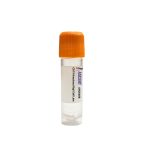
Cryopreserved in vials and shipped on dry ice


Disclaimer:

For Research Use Only

  • Characteristics

    Host Cell

    Raji

    Morphology

    Lymphoblast-like

    Age

    11 years

    Sex of Donor

    Male

    Gene Name

    CD19

    Gene Species

    Homo sapiens (Human)

    Gene Identifier

    NCBI Gene ID 930

  • Culture Conditions

    Temperature

    37°C

    Atmosphere

    5% CO₂

  • Quality Control

    Sterility testing

    Daily monitoring confirms that the cells are free from bacterial, yeast, and fungal contamination.

    Mycoplasma testing

    Negative for mycoplasma through PCR analysis

    Pathogens

    Cells tested negative for HIV-1, HBV, and HCV.

  • Disclaimer

    Intended Use

    This product is intended for laboratory in vitro use only. lt is not intended for diagnostic, therapeutic, or clinical applications.

    Disclaimer

    Ascent Research endeavors to provide accurate and up-to-date product information. However, no warranties or representations are made regarding its completeness or reliability. References to scientific literature and patents are for informational purposes only, and the customer assumes sole responsibility for verifying their accuracy.

    By accepting this product, the customer acknowledges and agrees to assume all risks associated with its receipt, handling, storage, disposal, and use, including compliance with all applicable safety and environmental regulations and precautions. Relevant laws, regulations, and ethical guidelines must be followed in conducting any research, modifications, or derivatives derived from this product.

    This product is provided "AS IS", and except as expressly stated herein, Ascent Research disclaims all other warranties, express or implied. Under no circumstances shall Ascent Research, its affiliates, or representatives be liable for indirect, incidental, consequential, or punitive damages arising from the use of this material. While Ascent Research employs rigorous quality control measures, we shall not be held responsible for damages resulting from misidentification or misinterpretation of the provided materials.

Description

The CD19 Knockout Raji Cell Line is a CRISPR/Cas9-edited knockout cell line engineered to disrupt the CD19 gene in the Raji B lymphocyte background. This loss-of-function model enables precise investigation of CD19-dependent signaling mechanisms without the confounding influence of endogenous CD19 expression. The cell line provides a defined genetic tool for researchers studying B cell receptor (BCR) signal transduction and its role in lymphomagenesis.

Raji is an EBV-positive Burkitt lymphoma-derived B cell line widely employed as a model for mature B cell biology and B-cell malignancies. These cells retain hallmark features of activated B lymphocytes, including surface immunoglobulin expression and functional BCR signaling machinery, making them a physiologically relevant platform for dissecting antigen receptor-mediated pathways. Their tumor origin also positions Raji cells as a valuable system for exploring oncogenic mechanisms in aggressive lymphomas.

CD19 functions as a B cell co-receptor that forms a complex with CD21 and CD81 to lower the activation threshold of the BCR. Upon BCR engagement, CD19 is phosphorylated by Src family kinases such as Lyn, leading to recruitment of phosphoinositide 3-kinase (PI3K). This event triggers downstream effectors including Akt, Vav, and phospholipase C gamma 2 (PLC??2), which subsequently activate mitogen-activated protein kinase (MAPK) cascades and nuclear factor kappa-light-chain-enhancer of activated B cells (NF-kappa B) signaling. Through these pathways, CD19 promotes cell survival, proliferation, and immune responses. The CD19/CD21/CD81 complex thus serves as a critical signal amplifier at the B cell surface.

Disruption of CD19 in Raji cells impairs BCR signal transduction, providing a system to study the resultant defects in calcium mobilization, cytoskeletal reorganization, and transcriptional reprogramming. This knockout model is particularly informative for investigating B-cell lymphomas, where aberrant CD19 expression or signaling may contribute to pathogenesis. Additionally, it offers a platform for evaluating the role of CD19 in autoimmune diseases and acute lymphoblastic leukemia, and for validating CD19 as an immunotherapeutic target, including in chimeric antigen receptor (CAR) T cell development.

Typical research applications include flow cytometric analysis of surface marker expression, western blotting for signaling protein assessment, and functional assays such as BCR stimulation with calcium flux measurement to gauge proximal signaling fidelity. Proliferation and apoptosis assays enable studies of growth and survival phenotypes, while co-immunoprecipitation and RNA sequencing permit interactome and transcriptome profiling. Phospho-signaling analysis further delineates pathway perturbations. These applications support B cell signaling studies, lymphoma research, and immunotherapy target validation. For further technical information, please contact Ascent Research.


Reset Password

    Reach Us Questions? Click Me Here!

    Fill out the form below and a member of our team will contact you shortly!

    *Required field


      Reach Us

      Fill out the form below and a member of our team will contact you shortly!

      *Required field

      Product Inquiry (Optional)