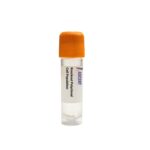
The CEP250 Knockout Raji Polyclonal Cells constitute a CRISPR/Cas9-edited polyclonal knockout cell population derived from the human Raji B lymphocyte line, designed to disrupt the CEP250 gene. This product provides a heterogeneous pool of cells bearing target gene disruptions, offering a ready-to-use loss-of-function model without the need for single-cell cloning. Researchers can directly utilize this polyclonal population for functional assays, enabling efficient investigation of CEP250-dependent processes. The knockout model is particularly suitable for studying centrosome biology, ciliogenesis, and centrosome-related pathologies.
The Raji cell line, established from a Burkitt lymphoma patient, is an EBV-positive B lymphocyte model extensively used in cancer biology, immunology, and drug screening. These suspension cells display high proliferative capacity, characteristic surface markers such as CD19 and CD20, and active B-cell receptor signaling networks. Their malignant origin and Epstein-Barr virus association make them a relevant system for dissecting oncogenic mechanisms and testing therapeutic agents. The Raji host background provides a context for evaluating the impact of centrosome protein disruption on lymphoma cell division and genomic stability.
CEP250, also known as C-Nap1, is a large centrosomal protein essential for maintaining centrosome cohesion by tethering centrioles via rootletin (CROCC) filaments. Its function is dynamically regulated by phosphorylation: CDK1-cyclin B and the Nek2 kinase phosphorylate CEP250 during the G2/M transition, triggering its displacement and permitting centrosome separation. CEP250 physically interacts with Cep68, rootletin, Nek2, and components of the ??-tubulin ring complex, forming a structural network critical for microtubule nucleation and mitotic spindle organization. Disruption of CEP250 leads to premature centriole splitting, aberrant spindle formation, defective mitotic progression, and impaired primary cilium assembly, highlighting its role as a key node in centrosome cycle control.
In the Raji lymphocyte setting, CEP250 knockout allows researchers to explore centrosome cohesion dynamics in a malignant B-cell environment. Although lymphocytes are not typically ciliated, Raji cells can be induced to form primary cilia under specialized culture conditions, extending the model’s utility to ciliogenesis and ciliopathy research. This knockout system is valuable for examining how centrosome defects contribute to mitotic errors, aneuploidy, and altered proliferative signaling in B-cell lymphoma. Furthermore, the EBV-positive background may offer insights into viral interactions with host cell cycle machinery, as several EBV oncoproteins target centrosome and mitotic regulators.
Applications for these polyclonal knockout cells include centrosome biology studies, ciliopathy disease modeling (e.g., Leber congenital amaurosis, cone-rod dystrophy), and cancer cell division research. Representative assays are Western blotting for CEP250, immunofluorescence for centrosome cohesion, flow cytometry for cell cycle, ciliogenesis assays, and proliferation measurements. They are also useful for centrosome-targeted drug screening. For more information, contact Ascent Research.