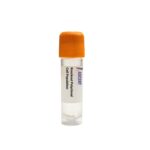
CEP78 Knockout Raji Polyclonal Cells are a CRISPR/Cas9-edited polyclonal knockout population derived from Raji B lymphocytes, designed to disrupt CEP78 expression for loss-of-function studies. The polyclonal format provides a heterogeneous pool of edited cells with diverse CRISPR-mediated gene disruptions, facilitating robust functional analyses without monoclonal isolation. This population serves as a versatile tool for investigating centrosome biology and ciliary pathways in a lymphoblastoid background.
Raji cells are an EBV-transformed lymphoblastoid line derived from an 11-year-old male Burkitt lymphoma patient. They display a B lymphocyte phenotype with rapid proliferation and tumorigenic properties, frequently used in immunological and cancer research. Their suspension culture and well-defined signaling pathways make them a convenient model for B-cell studies. Using Raji as the host for CEP78 knockout allows centrosomal functional investigations in a lymphoid cancer setting.
CEP78 encodes a centrosomal protein localizing to the centriole distal end, essential for centriole duplication and primary cilium formation. It functions as a scaffold interacting with CEP350 and CPAP (CENPJ) to regulate centriole length and centrosome cohesion. CEP78 operates downstream of cell cycle-dependent transcription factors and RFX regulators, recruiting centriole duplication complex proteins. It also associates with TALPID3 and ciliogenesis components CEP290 and IFT88, linking centriole biogenesis to cilium assembly. Loss of CEP78 leads to centrosomal defects, abnormal cell cycle progression, and impaired ciliogenesis, underscoring its critical role in centrosome integrity.
In Raji B lymphocytes, CEP78 knockout offers a system to study centrosome dynamics in hematopoietic cells. Although B cells lack primary cilia normally, centriole duplication is essential for mitotic spindle organization and cell division. Loss of CEP78 in these proliferating lymphoblastoid cells may uncover dependencies in centrosome cohesion and cell cycle checkpoints relevant to cancer. This model helps examine how centrosome dysfunction drives genomic instability in Burkitt lymphoma, characterized by MYC translocation. Inducible ciliogenesis assays can reveal latent ciliary programs in lymphoid cells.
Applications include Western blotting and RT-qPCR to verify CEP78 disruption, immunofluorescence staining for centrosomal markers (??-tubulin, centrin), and flow cytometric cell cycle analysis. Proliferation assays, ciliogenesis induction experiments, and co-immunoprecipitation with CEP350 or CPAP reveal functional consequences of CEP78 loss. Transcriptomic profiling by RNA-seq allows global pathway analysis. These capabilities support investigations into centrosome biology, B-cell lymphoma, and drug discovery targeting centrosomal defects. For additional information, please contact Ascent Research.