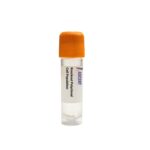
The CETN3 Knockout Raji Polyclonal Cells are a CRISPR/Cas9-edited polyclonal knockout cell population derived from the human Raji B lymphocyte cell line, designed for targeted disruption of the CETN3 gene (Homo sapiens). This product provides a genetically heterogeneous pool of cells carrying CETN3 gene disruptions, enabling loss-of-function studies without clonal selection bias. The polyclonal format reflects a population-level knockout, suitable for investigating gene function in a context that retains the diversity of editing outcomes inherent to CRISPR/Cas9-mediated gene disruption.
The parental Raji cell line is an Epstein-Barr virus (EBV)-positive, suspension-adapted B lymphoblastoid line originally derived from a Burkitt’s lymphoma patient. These cells constitutively express B cell surface markers and exhibit a transformed phenotype driven by constitutive NF-??B and MYC pathway activation, providing a widely used model for B cell biology and lymphomagenesis. Raji cells recapitulate key features of aggressive B cell malignancies, making them a relevant system for studying hematologic cancers and evaluating therapeutic vulnerabilities.
CETN3 encodes centrin-3, a calcium-binding protein that localizes to the centriole lumen and is critical for centrosome homeostasis. CETN3 drives centriole biogenesis and duplication by recruiting ??-tubulin and other pericentriolar material, thereby promoting microtubule nucleation and mitotic spindle organization. Its activity is regulated upstream by E2F transcription factors, CDK?Ccyclin complexes, and Polo-like kinase 1 (Plk1). CETN3 acts downstream of CDK2?CCyclin E and Plk1, and directly interacts with CP110, CEP97, calmodulin, and ??-tubulin complex components. Disruption of CETN3 abolishes centriole assembly, causing defective spindle formation, cell cycle arrest, and genomic instability??hallmarks of cancer and ciliopathies.
In the Raji B lymphocyte context, disruption of CETN3 is particularly informative for probing centrosome-related mitotic defects in lymphoid malignancies. Burkitt??s lymphoma and other B cell neoplasms frequently exhibit aberrant centrosome numbers and mitotic errors, yet the contribution of centriolar proteins like CETN3 remains underexplored. This knockout model allows researchers to dissect how CETN3-dependent spindle assembly checkpoint signaling intersects with the hyperproliferative state driven by active MYC and NF-??B in Raji cells. Moreover, it provides a platform to study the interplay between centrosome integrity and lymphomagenesis, potentially uncovering synthetic lethal relationships that could be targeted in anti-mitotic therapies.
Typical experimental applications include immunofluorescence microscopy to assess centrosome and spindle morphology, flow cytometric cell cycle profiling to quantify G2/M arrest, and proliferation or apoptosis assays to evaluate functional consequences of CETN3 loss. The polyclonal population is amenable to co-immunoprecipitation and RNA-seq experiments to map the CETN3 interactome and transcriptional responses in a disease-relevant background. This model supports anti-mitotic drug screening and functional genomics studies aimed at identifying vulnerabilities in hematologic cancers. For detailed characterization data, pricing, or technical support, please contact Ascent Research.