Quick Order Cart

Cat. No. ARG1207

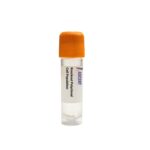
CFAP100 Knockout Raji Polyclonal Cells

  • Product Type:

    Polyclonal Cell Population

  • Species:

    Homo sapiens (Human)

  • Tissue Source:

    Bone

  • Disease:

    Burkitt lymphoma

The CFAP100 Knockout Raji Polyclonal Cells are a CRISPR/Cas9-edited polyclonal knockout population targeting the CFAP100 gene in the human Burkitt's lymphoma Raji B-cell line. CFAP100 is an axonemal ciliary protein that interacts with CCDC39, CCDC40, and DNAH5 and is regulated by FOXJ1 and RFX3; in non-ciliated Raji cells, it may modulate cell cycle progression and MAPK/ERK signaling. This model enables the study of non-ciliary CFAP100 functions in lymphoma, including effects on proliferation and apoptosis, and is suitable for transcriptomic profiling, cell cycle analysis, and drug screening. For additional details, contact Ascent Research.

Inquire Now

In stock

Ships next business day


Ask a Question

Shipping Info:

Cryopreserved in vials and shipped on dry ice


Disclaimer:

For Research Use Only

  • Characteristics

    Host Cell

    Raji

    Cell Type

    B cell line

    Sex of Donor

    Male

    Age

    11 years

    Derived From Site

    In situ; Maxilla

    Gene Name

    CFAP100

    Gene Identifier

    NCBI Gene ID 348807

    Morphology

    Lymphoblast-like

    Growth Mode

    Suspension

    Storage

    Liquid nitrogen (LN2)

  • Culture Conditions

    Growth medium

    RPMI 1640

    Supplement(s)

    10% Fetal Bovine Serum, 1% Penicillin-Streptomycin Solution

    Temperature

    37°C

    Atmosphere

    5% CO₂

  • Quality Control

    Sterility testing

    The bacterial, yeast, and fungi are not detected in these cells by daily monitor.

    Mycoplasma testing

    Negative for mycoplasma through PCR analysis

  • Disclaimer

    Intended Use

    This product is intended for laboratory in vitro use only. lt is not intended for diagnostic, therapeutic, or clinical applications.

    Disclaimer

    Ascent Research endeavors to provide accurate and up-to-date product information. However, no warranties or representations are made regarding its completeness or reliability. References to scientific literature and patents are for informational purposes only, and the customer assumes sole responsibility for verifying their accuracy.

    By accepting this product, the customer acknowledges and agrees to assume all risks associated with its receipt, handling, storage, disposal, and use, including compliance with all applicable safety and environmental regulations and precautions. Relevant laws, regulations, and ethical guidelines must be followed in conducting any research, modifications, or derivatives derived from this product.

    This product is provided "AS IS", and except as expressly stated herein, Ascent Research disclaims all other warranties, express or implied. Under no circumstances shall Ascent Research, its affiliates, or representatives be liable for indirect, incidental, consequential, or punitive damages arising from the use of this material. While Ascent Research employs rigorous quality control measures, we shall not be held responsible for damages resulting from misidentification or misinterpretation of the provided materials.

Description

The CFAP100 Knockout Raji Polyclonal Cells are a CRISPR/Cas9-edited polyclonal knockout cell population designed to disrupt the human CFAP100 gene in Raji B lymphocytes. This polyclonal format provides a heterogeneous pool of cells, each carrying distinct CRISPR/Cas9-mediated modifications at the CFAP100 locus, enabling loss-of-function studies without a clonal selection bias. The product serves as a reliable model for dissecting the biological functions of CFAP100, a cilia- and flagella-associated protein, in a non-ciliated cell context and supports bulk-scale genomic and pharmacological investigations.

Derived from an EBV-positive Burkitt’s lymphoma patient of African origin, the Raji cell line is a suspension-adapted B-lymphocyte model with mature B-cell characteristics. These cells are extensively characterized and widely utilized for studying B-cell malignancies, signal transduction, and host?Cvirus interactions. Their rapid proliferation, ease of culture in suspension, and well-annotated molecular profile make them an ideal host for CRISPR/Cas9-mediated gene disruption, facilitating reproducible assays in immunology and cancer biology.

CFAP100 encodes an axonemal protein essential for the assembly and motility of motile cilia and sperm flagella. In ciliated cells, its expression is transcriptionally activated by FOXJ1 and RFX3, and the protein interacts with structural components such as CCDC39, CCDC40, and the dynein heavy chain DNAH5 to organize dynein arms and regulate ciliary beat frequency. CFAP100 functions downstream of Notch signaling and participates in intraflagellar transport complexes containing IFT88. Although its canonical roles are cilia-dependent, emerging data suggest that in non-ciliated cells, CFAP100 may influence cell cycle progression and MAPK/ERK pathway activity, though the direct molecular mechanisms remain to be fully elucidated.

Because Raji cells lack primary cilia, this knockout model uniquely allows investigation of non-ciliary CFAP100 functions within a lymphoma-relevant background. Disruption of CFAP100 could perturb cell cycle checkpoints, alter MAPK/ERK signaling, or affect apoptotic responses, potentially revealing previously unrecognized roles in lymphomagenesis or tumor progression. This system thus provides a valuable bridge between classical ciliary biology and hematological malignancy research, enabling the study of a ciliary protein??s impact in a setting where its canonical organelle is absent.

Researchers can apply this polyclonal knockout population to a wide range of experimental workflows, including RNA-seq-based transcriptomic profiling, Western blotting, RT-qPCR, and high-content phenotypic assays such as flow cytometric analysis of viability, apoptosis, and cell cycle distribution. The polyclonal nature also supports pooled functional genomics screens and drug sensitivity testing to identify synthetic lethalities or novel therapeutic targets in B-cell lymphoma. Additional uses encompass exploring interactions between EBV latency programs and CFAP100 loss, or evaluating potential ciliopathy-related processes in a non-ciliated model. For further information, please contact Ascent Research.


Reset Password

    Reach Us Questions? Click Me Here!

    Fill out the form below and a member of our team will contact you shortly!

    *Required field


      Reach Us

      Fill out the form below and a member of our team will contact you shortly!

      *Required field

      Product Inquiry (Optional)