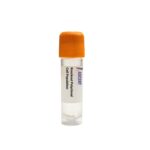
The CLIC4 Knockout Raji Polyclonal Cells provide a CRISPR/Cas9-edited polyclonal cell population in which the CLIC4 gene has been disrupted to abrogate protein function. This heterogeneous pool of Raji B lymphocytes carries diverse mutations, preserving population variability and minimizing clonal selection artifacts. The polyclonal format is ideal for measuring averaged gene knockout effects in functional assays, offering a reliable loss-of-function model without the biases of single-cell cloning.
The Raji cell line originates from a Burkitt lymphoma patient and is positive for Epstein-Barr virus (EBV). As a suspension-adapted B lymphocyte model, Raji cells recapitulate features of aggressive lymphoma and humoral immunity, including surface immunoglobulin expression and sensitivity to TGF-??. Their rapid doubling time and EBV-driven apoptosis resistance establish a relevant background for studying oncogenesis, tumor microenvironment interactions, and therapeutic interventions.
CLIC4 (Chloride Intracellular Channel 4) is a multifunctional protein that operates as an intracellular chloride channel and a signaling mediator. It is transcriptionally activated by TP53 and TGFB1, and its expression is influenced by MYC and NF-??B. CLIC4 physically associates with YWHAE and AKT1, and functionally couples to the intrinsic apoptotic machinery by upregulating CDKN1A and BAX downstream of p53. Through its interaction with BCL2 and ITGAV, CLIC4 also intersects with survival and adhesion pathways. In TGF-?? signaling, CLIC4 facilitates SMAD2/3 phosphorylation and SMAD4 nuclear translocation, promoting growth arrest and differentiation. Additionally, CLIC4 suppresses angiogenesis by attenuating VEGFA expression. This network positions CLIC4 at the convergence of tumor-suppressive and microenvironment-modulating pathways.
In the Raji lymphoma background, loss of CLIC4 is predicted to impair TGF-??-induced SMAD2/3 activation and p53-mediated apoptotic responses, potentially enhancing cell survival and proliferation. Given the presence of MYC amplification and sustained NF-??B activity??both upstream regulators of CLIC4??the knockout may synergistically accelerate lymphomagenesis. Moreover, removal of CLIC4’s angiogenic inhibition could promote pro-angiogenic signaling, altering tumor growth in vivo. These knockout cells thus enable exploration of CLIC4’s role in B cell malignancy and crosstalk with oncogenic pathways.
Researchers can characterize these polyclonal knockout cells using Western blotting to confirm CLIC4 loss, RT-qPCR for transcript analysis, and flow cytometry with Annexin V to quantify apoptosis. Cell cycle profiling and colony formation assays assess proliferation changes, while immunofluorescence reveals subcellular localization shifts. Functional studies include TGF-?? response assays with phospho-SMAD2/3 detection and ion flux measurements to probe channel activity. Applications span B cell lymphoma research, TGF-?? signaling dissection, apoptosis and angiogenesis studies, ion channel biology, and anti-cancer drug screening. For additional details, please contact Ascent Research.