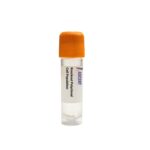
The CLPP Knockout Raji Polyclonal Cells are a CRISPR/Cas9-edited polyclonal population derived from the Raji B lymphocyte line, with disrupted CLPP expression. This product provides a heterogeneous knockout model, avoiding clonal selection and enabling robust functional studies of mitochondrial proteostasis. The polyclonal format supports bulk cell assays such as drug response profiling and metabolic analyses.
Raji is an EBV-positive Burkitt lymphoma cell line widely used in immunology and cancer research due to its rapid proliferation and apoptotic sensitivity. Its suspension growth facilitates high-throughput screening. Combining this B-cell lymphoma model with CLPP knockout offers a unique system to study mitochondrial dysfunction in hematologic cancers.
CLPP encodes a mitochondrial matrix serine protease that forms a proteolytic complex with the hexameric unfoldase CLPX to degrade misfolded or damaged proteins, essential for maintaining mitochondrial proteostasis. This function is central to the mitochondrial unfolded protein response (UPRmt), a stress pathway activated by the accumulation of protein aggregates. Key transcription factors ATF5 and CHOP are induced downstream of mitochondrial stress signals and upregulate chaperones and proteases. Upstream regulators PGC-1??, NRF1, and TFAM link mitochondrial biogenesis to proteostatic capacity. Disruption of CLPP impairs substrate degradation, leading to mitochondrial protein aggregate accumulation, elevated reactive oxygen species (ROS), reduced ATP production, and heightened apoptosis sensitivity. CLPP cooperates with mitochondrial chaperones HSP60 and HSP10, which assist in substrate handling, while alternative proteases such as LONP1 and HTRA2 may partially compensate for CLPP loss.
In the Raji B lymphocyte context, CLPP knockout enables dissection of how mitochondrial proteostasis influences survival, metabolic adaptation, and chemosensitivity of lymphoma cells. The model permits comprehensive characterization using Western blotting for CLPP and CLPX, RT-qPCR for UPRmt markers ATF5 and CHOP, JC-1-based mitochondrial membrane potential measurement, and Annexin V apoptosis detection. It is particularly valuable for drug screening studies targeting mitochondrial proteases and for investigating the UPRmt in lymphomagenesis.
This polyclonal knockout product is suitable for a broad range of applications: studying mitochondrial proteostasis mechanisms in B-cell lymphoma, investigating UPRmt signaling in cancer, and screening chemical libraries for mitochondrial protease modulators. Functional readouts include ROS measurement, ATP quantification, mitochondrial membrane potential assessment, and apoptosis assays. The model can also be used in colony formation assays to evaluate long-term proliferative effects and in drug sensitivity testing with mitochondrial toxins. For co-culture or in vivo studies, these cells provide a starting point to explore how CLPP affects tumor growth and immune interactions. For additional information, please contact Ascent Research.