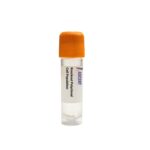
The COQ10A Knockout Raji Polyclonal Cells product provides a CRISPR/Cas9-edited polyclonal knockout cell population of human Raji B lymphocytes, generated for functional loss-of-function studies targeting the COQ10A gene. This polyclonal format consists of a heterogeneous mixture of cells harboring diverse CRISPR/Cas9-mediated disruptions within the COQ10A locus, enabling robust evaluation of gene ablation effects across a population background. The knockout model is designed to facilitate investigations into mitochondrial coenzyme Q biology, electron transport chain integrity, and oxidative stress responses without requiring single-cell clonal isolation. The product is supplied as a suspension culture optimized for standard immunological and metabolic assay workflows, offering a ready-to-use system for professional researchers in cell biology, mitochondrial medicine, and cancer metabolism.
The Raji host cell line originates from a human male with EBV-positive Burkitt lymphoma, representing an immortalized B lymphoblast model extensively employed in immunological and cancer research. These suspension-adapted cells exhibit rapid proliferation and high metabolic activity, making them particularly sensitive to perturbations in mitochondrial function. Raji cells express a functional CoQ biosynthetic pathway and rely on oxidative phosphorylation alongside glycolysis, providing a physiologically relevant system for studying COQ10A-dependent processes. Their well-characterized signaling networks and ease of genetic manipulation position them as an ideal platform for generating knockout models to dissect mitochondrial contributions to lymphoma biology and immune cell metabolism.
COQ10A encodes a mitochondrial co-chaperone integral to the coenzyme Q (CoQ) synthome, where it interacts with COQ2, COQ6, COQ7, COQ8A, and COQ9 to stabilize and facilitate the biosynthesis of ubiquinone. This multicomponent complex, together with PDSS1 and PDSS2, drives CoQ production required for electron transport chain complexes I, II, and III activity. Transcriptionally, COQ10A is regulated by PPARGC1A, PPARA, and NRF1, master regulators of mitochondrial biogenesis and antioxidant defense. Disruption of COQ10A impairs CoQ synthesis, leading to diminished electron transfer efficiency, reduced oxidative phosphorylation, and elevated reactive oxygen species (ROS) levels, thereby offering a direct molecular tool to probe these interconnected pathways.
In the Raji lymphoma context, COQ10A knockout holds particular significance due to the high metabolic demand of these proliferating B cells. Loss of COQ10A function is predicted to compromise mitochondrial respiration, exacerbate oxidative stress, and potentially alter cell survival, proliferation, and drug sensitivity profiles. This model thus enables the dissection of CoQ deficiency phenotypes within a cancerous B-cell environment, linking mitochondrial dysfunction to malignant transformation. It serves as a relevant in vitro system for investigating primary coenzyme Q10 deficiency, mitochondrial encephalopathies, and the metabolic reprogramming characteristic of Burkitt lymphoma, providing a platform to test mechanistic hypotheses at the intersection of mitochondrial biology and oncology.
Typical research applications include modeling CoQ10 deficiency states using metabolic flux analysis via Seahorse assays, ROS detection with fluorescent probes, and CoQ10 quantification by LC-MS. The polyclonal knockout cells are suitable for evaluating antioxidant defense mechanisms in B lymphocytes, performing drug screening for mitochondrial disorder therapeutics, and conducting apoptosis or viability assays under oxidative challenge. Protein expression changes can be monitored by Western blotting, transcript levels by RT-qPCR, and cellular phenotypes by flow cytometry and immunofluorescence. For further technical specifications or personalized support, please contact Ascent Research.