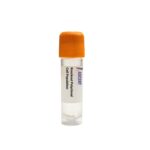
The CRABP2 Knockout Raji Polyclonal Cells are a CRISPR/Cas9-edited polyclonal knockout cell population derived from the Raji B lymphocyte cell line, engineered for targeted disruption of the CRABP2 gene. This polyclonal pool provides a heterogeneous loss-of-function model to study the roles of cellular retinoic acid binding protein 2 in retinoic acid signaling. As a mixed population, it supports robust and reproducible functional assays, making it suitable for a wide range of retinoid research applications.
The parental Raji cell line is a human Burkitt??s lymphoma-derived B lymphocyte model that is Epstein-Barr virus (EBV)-positive. It is extensively used in studies of immune surveillance, antibody production, and lymphomagenesis. Raji cells exhibit mature B cell features, facilitating the investigation of signal transduction pathways that regulate proliferation and survival in the context of hematologic malignancies.
CRABP2 encodes an intracellular retinoic acid binding protein that specifically binds all-trans-retinoic acid and facilitates its delivery to nuclear retinoic acid receptors (RARs), notably RAR??, thereby potentiating RAR/RXR-mediated transcriptional activation of retinoic acid-responsive genes. Key downstream targets include CYP26A1 and HOX genes, and CRABP2 also modulates apoptosis regulators such as the BCL-2 family. CRABP2 directly interacts with RAR?? and RXR, functioning upstream of these receptors, and shares ligand-binding characteristics with CRABP1 and FABP5. Induced by retinoic acid and subject to cross-regulation by PPARs, CRABP2 serves as a critical enhancer of retinoid-driven differentiation and proliferation control in sensitive cell types.
In Raji B lymphocytes, CRABP2-mediated retinoic acid signaling is poised at the intersection of B cell differentiation and apoptosis, offering a relevant model to investigate how EBV-positive lymphomas alter retinoid responses. Disruption of CRABP2 in this background enables the dissection of its contributions to growth control, sensitivity to differentiation-inducing agents, and the interplay between viral latency programs and retinoic acid metabolism.
This polyclonal knockout cell population is ideally suited for screening retinoic acid analogs, evaluating the impact of CRABP2 loss on RAR/RXR transcriptional output via luciferase reporter assays, and assessing changes in apoptosis or proliferation using flow cytometry and Western blotting. It supports transcriptomic studies such as RNA-seq to map CRABP2-dependent gene networks and facilitates in vitro models for drug discovery in cancers including neuroblastoma and acute promyelocytic leukemia. For further information, please contact Ascent Research.