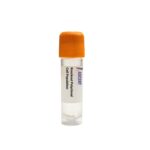
Quick Order Cart

Cat. No. ARG1126

CSGALNACT2 Knockout Raji Polyclonal Cells

  • Product Type:

    Polyclonal Cell Population

  • Species:

    Homo sapiens (Human)

  • Tissue Source:

    Bone

  • Disease:

    Burkitt lymphoma

CSGALNACT2 Knockout Raji Polyclonal Cells are a CRISPR/Cas9-edited polyclonal population derived from human EBV-positive Burkitt lymphoma B lymphocytes (Raji line) with targeted disruption of the CSGALNACT2 gene. This model ablates the initiating glycosyltransferase for chondroitin sulfate biosynthesis, eliminating chondroitin sulfate modification of proteoglycans. CSGALNACT2 functions downstream of TGF-??1, WNT, BMP2, and SOX9, and interacts with CSGALNACT1 and the sulfotransferase machinery to regulate cell adhesion and migration. Applications include studying chondroitin sulfate roles in B-cell lymphoma adhesion, drug targeting of glycosyltransferases, and modeling glycosylation defects in cancer and connective tissue disorders.

Inquire Now

In stock

Ships next business day


Ask a Question

Shipping Info:

Cryopreserved in vials and shipped on dry ice


Disclaimer:

For Research Use Only

  • Characteristics

    Host Cell

    Raji

    Cell Type

    B cell line

    Sex of Donor

    Male

    Age

    11 years

    Derived From Site

    In situ; Maxilla

    Gene Name

    CSGALNACT2

    Gene Identifier

    NCBI Gene ID 55454

    Morphology

    Lymphoblast-like

    Growth Mode

    Suspension

    Storage

    Liquid nitrogen (LN2)

  • Culture Conditions

    Growth medium

    RPMI 1640

    Supplement(s)

    10% Fetal Bovine Serum, 1% Penicillin-Streptomycin Solution

    Temperature

    37°C

    Atmosphere

    5% CO₂

  • Quality Control

    Sterility testing

    The bacterial, yeast, and fungi are not detected in these cells by daily monitor.

    Mycoplasma testing

    Negative for mycoplasma through PCR analysis

  • Disclaimer

    Intended Use

    This product is intended for laboratory in vitro use only. lt is not intended for diagnostic, therapeutic, or clinical applications.

    Disclaimer

    Ascent Research endeavors to provide accurate and up-to-date product information. However, no warranties or representations are made regarding its completeness or reliability. References to scientific literature and patents are for informational purposes only, and the customer assumes sole responsibility for verifying their accuracy.

    By accepting this product, the customer acknowledges and agrees to assume all risks associated with its receipt, handling, storage, disposal, and use, including compliance with all applicable safety and environmental regulations and precautions. Relevant laws, regulations, and ethical guidelines must be followed in conducting any research, modifications, or derivatives derived from this product.

    This product is provided "AS IS", and except as expressly stated herein, Ascent Research disclaims all other warranties, express or implied. Under no circumstances shall Ascent Research, its affiliates, or representatives be liable for indirect, incidental, consequential, or punitive damages arising from the use of this material. While Ascent Research employs rigorous quality control measures, we shall not be held responsible for damages resulting from misidentification or misinterpretation of the provided materials.

Description

The CSGALNACT2 Knockout Raji Polyclonal Cells are a CRISPR/Cas9-edited polyclonal population generated from the human Burkitt lymphoma Raji B-cell line, featuring targeted disruption of the CSGALNACT2 gene to abolish its glycosyltransferase activity. This polyclonal pool, produced via CRISPR/Cas9-mediated gene disruption, offers a heterogeneous knockout model that avoids single-cell cloning artifacts, enabling robust functional interrogation of chondroitin sulfate biosynthesis in B lymphocytes.

Raji is an EBV-positive Burkitt lymphoma-derived B-cell line harboring a t(8;14) translocation that drives c-MYC overexpression. As a mature B-lymphocyte model, Raji cells maintain immunoglobulin production and antigen-presenting functions, and their well-characterized growth and genetic tractability make them a standard system for studying B-cell malignancies, signal transduction, and adaptive immunity.

CSGALNACT2 encodes a Golgi glycosyltransferase that initiates chondroitin sulfate chain synthesis by transferring GalNAc from UDP-GalNAc onto the proteoglycan linkage tetrasaccharide. This essential step enables subsequent polymerization by the chondroitin sulfate synthase complex (CHSY1, CHPF, CHPF2) and sulfation by enzymes such as CHST3 and CHST7, ultimately modifying core proteins like versican, decorin, and CD44. The enzyme is regulated upstream by TGF-??1, WNT signaling, BMP2, and SOX9, and interacts with CSGALNACT1 to orchestrate chondroitin sulfate-dependent processes including cell adhesion, migration, and extracellular matrix organization.

In Raji B lymphoma cells, CSGALNACT2 knockout abrogates chondroitin sulfate chain initiation, yielding proteoglycans with deficient or truncated chondroitin sulfate modifications. Because chondroitin sulfate on cell-surface receptors such as CD44 and syndecans modulates lymphocyte adhesion, homing, and cytokine binding, loss of CSGALNACT2 is predicted to impair these functions. This model thus enables dissection of how altered glycosylation contributes to B-cell lymphoma behavior, including tumor cell dissemination and interaction with the microenvironment, and parallels glycosylation defects seen in skeletal dysplasias and certain carcinomas.

Typical applications include flow cytometric and immunofluorescence detection of chondroitin sulfate loss using antibodies like CS-56, Western blot confirmation of CSGALNACT2 depletion, and genotyping PCR to validate gene disruption. Functional assays such as adhesion, migration, and invasion studies, combined with RNA-seq transcriptomics and proteoglycan chromatography, can delineate downstream molecular consequences. These polyclonal knockout cells are suited for drug target validation, glycosylation research in lymphomas, and modeling chondroitin sulfate-related disorders. For further details, please contact Ascent Research.


Reset Password

    Reach Us Questions? Click Me Here!

    Fill out the form below and a member of our team will contact you shortly!

    *Required field


      Reach Us

      Fill out the form below and a member of our team will contact you shortly!

      *Required field

      Product Inquiry (Optional)