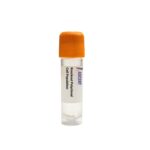
The CSNK1D Knockout Raji Polyclonal Cells are a CRISPR/Cas9-edited polyclonal knockout cell population designed for functional studies of the serine/threonine kinase CK1?? (encoded by CSNK1D). This polyclonal pool derives from the Raji B lymphocyte line and harbors heterogeneous gene disruptions across the CSNK1D locus, enabling loss-of-function analysis in a mixed genetic background. The product is suited for experiments that do not require clonal homogeneity, such as bulk population assays, pooled screening, and pathway interrogation where the polyclonal nature captures diverse editing outcomes.
The host cell model, Raji, is a suspension-adapted human B lymphocyte line established from a Burkitt lymphoma patient. These cells exhibit an Epstein-Barr virus (EBV)-positive, lymphoblastoid phenotype and are widely employed as a model system for B-cell malignancies. Raji cells express markers characteristic of mature B cells and are used extensively in lymphoma biology, immunology, and anticancer drug screening due to their robust proliferation and well-characterized signaling networks, including active Wnt/??-catenin and circadian pathways relevant to CSNK1D function.
CK1?? is a pleiotropic kinase that phosphorylates key substrates in multiple signaling cascades. In the Wnt/??-catenin pathway, CSNK1D encodes a priming kinase that phosphorylates DVL and, in a complex with AXIN, APC, and GSK3??, targets ??-catenin for degradation; its loss stabilizes ??-catenin and enhances TCF-dependent transcription. CK1?? also phosphorylates PER2 in the circadian core loop, regulating its stability alongside CLOCK/BMAL1. Additionally, it participates in DNA damage signaling downstream of ATM/ATR, phosphorylates p53 and MDM2, and modulates Hippo pathway effectors. Interacting partners include DVL, 14-3-3 proteins, and protein phosphatases, underscoring its integrative role in coordinating proliferation, survival, and genome maintenance.
In the Raji lymphoma context, disruption of CSNK1D is predicted to dysregulate Wnt-driven gene expression (e.g., MYC, AXIN2) and impair circadian clock-dependent cell cycle control, potentially altering DNA repair capacity and apoptotic thresholds. The EBV-positive background provides a unique environment to study how viral oncoproteins intersect with CK1??-dependent pathways. This knockout model therefore offers a tool to dissect the contribution of CK1?? to B-cell malignancy phenotypes, including uncontrolled growth and drug resistance, and to evaluate the therapeutic relevance of CK1?? inhibition in lymphoma.
Researchers can apply these polyclonal knockout cells in a range of assays to investigate CK1?? function. Western blotting for total and phospho-??-catenin (S45) or PER2 levels verifies pathway activation, while TOPFlash/FOPFlash luciferase reporters quantify Wnt transcriptional output. Cell viability (MTT, CellTiter-Glo), flow cytometric apoptosis (Annexin V) and cell cycle analyses, and RT-qPCR of Wnt targets (AXIN2, MYC) enable phenotypic characterization. Co-immunoprecipitation studies can probe CK1??-DVL interactions, and immunofluorescence can assess ??-catenin nuclear translocation. This product is a versatile resource for cancer signaling, circadian biology, and drug-screening campaigns. For further details or to request a quotation, please contact Ascent Research.