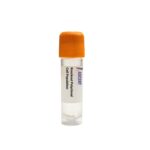
The CSRP3 Knockout Raji Polyclonal Cells are a CRISPR/Cas9-edited polyclonal knockout cell population based on the human Raji B lymphocyte line. This pool carries a loss-of-function disruption of the CSRP3 gene, enabling investigation of CSRP3 function in a hematopoietic setting. The polyclonal nature retains population heterogeneity, reflecting a range of edits while preserving Raji immunological features. These cells provide a versatile tool for studying non-muscle CSRP3 roles in biochemical and functional genomics assays without monoclonal limitations.
The Raji cell line, derived from a Burkitt lymphoma patient, is a suspension-adapted human B lymphocyte model. Raji cells express surface immunoglobulins and sustain active NF-??B and B cell receptor signaling, making them widely used in immuno-oncology and viral oncology. They exhibit germinal center B cell characteristics and are amenable to genetic manipulation, supporting loss-of-function screens. Their transformed phenotype and active cytoskeletal dynamics offer a context for studying proteins involved in cytoarchitecture and adhesion.
CSRP3 encodes muscle LIM protein (MLP), a cysteine-rich protein that positively regulates myogenic differentiation. MLP scaffolds sarcomeric and cytoskeletal components, interacting directly with ??-actinin, actin, and telethonin. Its transcription is driven by MyoD, myogenin, and MEF2, and it participates in mechanotransduction and calcineurin/NFAT signaling. Although characterized in muscle, LIM domain proteins may have broader roles in cell architecture and signal integration, motivating exploration of CSRP3 functions beyond striated muscle.
In Raji lymphocytes, CSRP3 knockout can reveal latent MLP functions unrelated to sarcomere assembly. LIM proteins modulate actin dynamics and focal adhesion, suggesting that loss of CSRP3 may affect lymphocyte morphology, migration, or mechanosensitivity. This model differentiates muscle-specific from ubiquitous roles and serves as a negative control for muscle-gene CRISPR screens. The absence of sarcomeric proteins in Raji cells ensures that observed phenotypes reflect non-sarcomeric scaffolding or signaling activities of MLP.
This polyclonal knockout cell pool supports diverse experimental approaches. Knockout efficiency can be confirmed by Western blotting or RT-qPCR, and transcriptomic changes assessed via RNA-seq. Immunofluorescence enables visualization of protein localization, while co-immunoprecipitation probes MLP interaction partners. Functional assays such as migration and invasion tests evaluate cytoskeletal roles. Additionally, these cells are suitable for proliferation analyses, drug sensitivity profiling, and CRISPR-based functional screens to dissect CSRP3-dependent pathways in lymphocytes. For further information, contact Ascent Research.