Security Notice: Please be aware of impersonation attempts using our company name
Legitimate communications from Ascent Research will only come from official @ascentresearch.com email addresses.
Quick Order Cart

Cat. No. ARG0552

CT83 Knockout MDA-MB-231 Cell Line

  • Product Type:

    Genome-edited Cells

  • Tissue Source:

    Breast (mammary gland)

  • Disease:

    Adenocarcinoma

  • Gene Species:

    Homo sapiens (Human)

The CT83 Knockout MDA-MB-231 Cell Line is a CRISPR/Cas9-edited knockout human triple-negative breast cancer (TNBC) cell line targeting CT83 (cancer/testis antigen 83). MDA-MB-231 is a highly invasive, mesenchymal-like epithelial line lacking ER, PR, and HER2, and harboring mutant p53 and KRAS G13D, making it an ideal model for metastatic TNBC research. CT83 activates PI3K/AKT and MAPK/ERK signaling, upregulating Cyclin D1, Bcl-2, and MMP2/MMP9 to drive proliferation and invasion. This knockout model supports applications in cancer immunotherapy, target validation, and functional studies of CT83-dependent pathways using assays such as western blot, proliferation, migration, and xenograft models.

Inquire Now

In stock

Ships next business day


Ask a Question

Shipping Info:

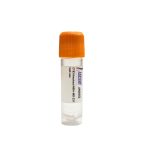
Cryopreserved in vials and shipped on dry ice


Disclaimer:

For Research Use Only

  • Characteristics

    Host Cell

    MDA-MB-231

    Morphology

    Epithelial-like

    Age

    51 years

    Sex of Donor

    Female

    Gene Name

    CT83

    Gene Species

    Homo sapiens (Human)

    Gene Identifier

    NCBI Gene ID 203413

  • Culture Conditions

    Temperature

    37°C

    Atmosphere

    5% CO₂

  • Quality Control

    Sterility testing

    Daily monitoring confirms that the cells are free from bacterial, yeast, and fungal contamination.

    Mycoplasma testing

    Negative for mycoplasma through PCR analysis

    Pathogens

    Cells tested negative for HIV-1, HBV, and HCV.

  • Disclaimer

    Intended Use

    This product is intended for laboratory in vitro use only. lt is not intended for diagnostic, therapeutic, or clinical applications.

    Disclaimer

    Ascent Research endeavors to provide accurate and up-to-date product information. However, no warranties or representations are made regarding its completeness or reliability. References to scientific literature and patents are for informational purposes only, and the customer assumes sole responsibility for verifying their accuracy.

    By accepting this product, the customer acknowledges and agrees to assume all risks associated with its receipt, handling, storage, disposal, and use, including compliance with all applicable safety and environmental regulations and precautions. Relevant laws, regulations, and ethical guidelines must be followed in conducting any research, modifications, or derivatives derived from this product.

    This product is provided "AS IS", and except as expressly stated herein, Ascent Research disclaims all other warranties, express or implied. Under no circumstances shall Ascent Research, its affiliates, or representatives be liable for indirect, incidental, consequential, or punitive damages arising from the use of this material. While Ascent Research employs rigorous quality control measures, we shall not be held responsible for damages resulting from misidentification or misinterpretation of the provided materials.

Description

The CT83 Knockout MDA-MB-231 Cell Line is a CRISPR/Cas9-edited human cell line designed for constitutive disruption of the CT83 gene in the MDA-MB-231 triple-negative breast cancer background. This loss-of-function model enables precise investigation of CT83’s roles in tumorigenesis and metastasis without wild-type gene interference, providing a reliable tool for functional genomics and drug target studies. Supplied as a stable knockout cell line, it is suitable for a broad range of in vitro and in vivo experimental systems.

MDA-MB-231 is a highly invasive, mesenchymal-like epithelial breast adenocarcinoma cell line derived from a metastatic pleural effusion. It lacks estrogen receptor, progesterone receptor, and HER2 amplification, and harbors mutant p53 and KRAS G13D. These features render it a classical in vitro and in vivo model for metastatic triple-negative breast cancer, particularly suited for studying the molecular drivers of invasion and dissemination.

CT83 (KK-LC-1) is a cancer/testis antigen normally restricted to testis but aberrantly expressed in multiple cancers. It promotes cell proliferation, migration, and invasion by activating both the PI3K/AKT and MAPK/ERK pathways. CT83 expression is upregulated by SOX2 and ETS transcription factors, often via DNA hypomethylation. Downstream, it transcriptionally induces Cyclin D1 (CCND1) to drive cell cycle progression, BCL2 to enhance survival, and MMP2/MMP9 to degrade the extracellular matrix, all mediated through key kinases including PIK3CA, AKT1, mTOR, RAF1, MEK, and ERK. CT83 may also influence cytoskeletal organization, further potentiating cell motility. Ectopic expression of CT83 has been documented in triple-negative breast cancer, non-small cell lung cancer, gastric adenocarcinoma, ovarian cancer, and melanoma, underscoring its relevance across multiple tumor types.

In MDA-MB-231 cells, CT83 knockout is anticipated to impair the aggressive phenotype, as the gene’s signaling outputs converge on critical nodes of proliferation and invasion. This model allows researchers to dissect CT83-dependent contributions to TNBC metastasis and evaluate its potential as an immunotherapeutic target, given its restricted expression profile and immunogenicity. Pairing knockout and parental lines facilitates high-resolution comparative analyses of signaling networks, epigenetic regulation, and immune recognition.

Applications include target validation, cancer-testis antigen biology, and biomarker development. Typical assays with this cell line encompass Western blotting for CT83, phosphorylated AKT and ERK, and Cyclin D1; RT-qPCR for transcript quantification; MTT or CCK-8 proliferation assays; Transwell migration/invasion tests; apoptosis measurements via flow cytometry; RNA-seq for global expression profiling; and xenograft tumor growth studies. Together, these enable comprehensive functional and translational research. For further information, please contact Ascent Research.


Reset Password

    Reach Us Questions? Click Me Here!

    Fill out the form below and a member of our team will contact you shortly!

    *Required field


      Reach Us

      Fill out the form below and a member of our team will contact you shortly!

      *Required field

      Product Inquiry (Optional)