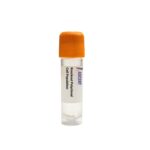
The CTPS2 Knockout Raji Polyclonal Cells are a CRISPR/Cas9-edited polyclonal cell population derived from the human Raji B lymphocyte line. This product features targeted disruption of the CTPS2 gene, providing a loss-of-function model to investigate pyrimidine nucleotide metabolism in B-cell lymphoma. The knockout pool is designed for functional studies without clonal isolation.
Raji cells are an EBV-positive B-lymphoblastoid cell line originating from Burkitt’s lymphoma that serves as a standard model for aggressive B-cell malignancies. These cells exhibit rapid proliferation and constitutive activation of the MYC oncogene, making them ideal for studying oncogene-driven metabolic rewiring.
CTPS2 encodes CTP synthase 2, the rate-limiting enzyme in de novo pyrimidine biosynthesis that catalyzes the conversion of UTP to CTP. CTP is required for DNA and RNA synthesis as well as membrane phospholipid production. CTPS2 expression is regulated by oncogenic transcription factors MYC and E2F, and its activity is modulated by mTORC1 signaling. The enzyme operates downstream of CAD and DHODH and upstream of UMPS in the pyrimidine pathway. It functionally interacts with the isoform CTPS1 and with IMPDH from the purine synthesis route to coordinate nucleotide pool homeostasis. Knockout of CTPS2 disrupts CTP supply, impairing DNA replication and cell growth.
In Raji cells driven by MYC overexpression, CTPS2 is critical for sustaining elevated CTP demands. Loss of CTPS2 creates a metabolic imbalance that leads to replication stress, cell cycle arrest, and apoptosis. This knockout model therefore enables dissection of pyrimidine dependency in Burkitt’s lymphoma and exploration of CTPS2 as a therapeutic target. The polyclonal nature preserves population heterogeneity, avoiding clonal artifacts.
These cells support a variety of experimental approaches, including proliferation assays, nucleotide quantification by HPLC, Western blotting for CTPS2, and RT-qPCR of related genes. Apoptosis can be assessed through caspase or Annexin V staining. The model is also suitable for drug library screening against pyrimidine synthesis and for studying cross-talk with purine metabolism via IMPDH. For further details, please contact Ascent Research.