Quick Order Cart

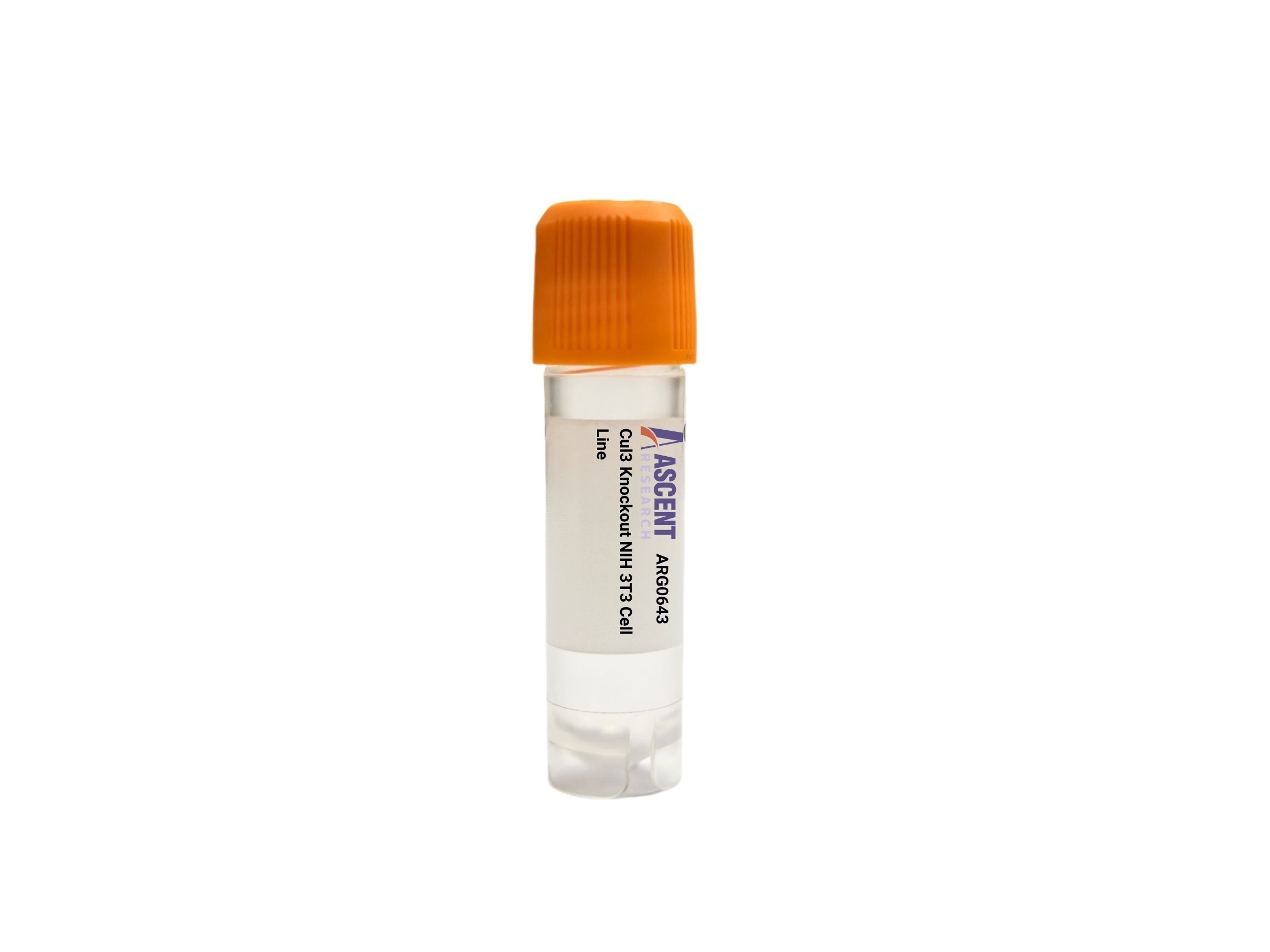
Cat. No. ARG0643

Cul3 Knockout NIH 3T3 Cell Line

  • Product Type:

    Genome-edited Cells

  • Disease:

    Normal

  • Gene Species:

    Mus musculus (Mouse)

The Cul3 Knockout NIH 3T3 Cell Line offers a CRISPR/Cas9-edited loss-of-function model for Cullin-3, a scaffold protein in the CRL3 E3 ubiquitin ligase complex. Hosted in NIH 3T3 mouse embryonic fibroblasts, this cell line disrupts CUL3-dependent ubiquitination of substrates like NRF2 and DAXX, influencing oxidative stress response, cell cycle control, and cytoskeleton dynamics. It is an essential tool for studying KEAP1-NRF2 signaling, ubiquitin-proteasome pathways, and cancer biology, supporting assays from Western blotting to functional complementation. This knockout line enables precise interrogation of CUL3??s role in cell adhesion, motility, and signaling, advancing research in oxidative stress disorders and oncogenic transformation.

Inquire Now

In stock

Ships next business day


Ask a Question

Shipping Info:

Cryopreserved in vials and shipped on dry ice


Disclaimer:

For Research Use Only

  • Characteristics

    Host Cell

    NIH 3T3

    Gene Name

    Cul3

    Gene Species

    Mus musculus (Mouse)

    Gene Identifier

    NCBI Gene ID 26554

  • Culture Conditions

    Temperature

    37°C

    Atmosphere

    5% CO₂

  • Quality Control

    Sterility testing

    Daily monitoring confirms that the cells are free from bacterial, yeast, and fungal contamination.

    Mycoplasma testing

    Negative for mycoplasma through PCR analysis

    Pathogens

    Cells tested negative for HIV-1, HBV, and HCV.

  • Disclaimer

    Intended Use

    This product is intended for laboratory in vitro use only. lt is not intended for diagnostic, therapeutic, or clinical applications.

    Disclaimer

    Ascent Research endeavors to provide accurate and up-to-date product information. However, no warranties or representations are made regarding its completeness or reliability. References to scientific literature and patents are for informational purposes only, and the customer assumes sole responsibility for verifying their accuracy.

    By accepting this product, the customer acknowledges and agrees to assume all risks associated with its receipt, handling, storage, disposal, and use, including compliance with all applicable safety and environmental regulations and precautions. Relevant laws, regulations, and ethical guidelines must be followed in conducting any research, modifications, or derivatives derived from this product.

    This product is provided "AS IS", and except as expressly stated herein, Ascent Research disclaims all other warranties, express or implied. Under no circumstances shall Ascent Research, its affiliates, or representatives be liable for indirect, incidental, consequential, or punitive damages arising from the use of this material. While Ascent Research employs rigorous quality control measures, we shall not be held responsible for damages resulting from misidentification or misinterpretation of the provided materials.

Description

The Cul3 Knockout NIH 3T3 Cell Line provides a CRISPR/Cas9-mediated gene disruption of Cul3 in the widely used NIH 3T3 mouse embryonic fibroblast cell line. This knockout cell line serves as a powerful loss-of-function model for dissecting the role of Cullin-3 in the ubiquitin-proteasome system and its regulatory impact on cell signaling, adhesion, and motility. The parental NIH 3T3 cells are immortalized fibroblasts derived from NIH Swiss mouse embryos, known for their contact-inhibited growth and extensive use in studies of cell adhesion, migration, and signal transduction. Their genetic stability and ease of culture make them an ideal host for generating a stable CRISPR-edited knockout line, enabling reproducible and physiologically relevant experiments. CUL3 functions as a core scaffold in the Cullin-RING E3 ubiquitin ligase (CRL3) complex, where it assembles with the RING protein RBX1/ROC1 and a variable BTB domain adaptor such as KEAP1, SPOP, or KLHL3 to target specific substrates for ubiquitination and proteasomal degradation. Key substrates include the transcription factor NRF2, the apoptotic protein DAXX, the kinase PLK1, the mTOR inhibitor DEPTOR, and the WNK kinases. CUL3 activity is dynamically regulated by NEDD8 modification, which activates the complex, and by CAND1, which facilitates adaptor exchange. Through these interactions, CUL3 governs critical signaling pathways including the KEAP1-NRF2 oxidative stress response, NF-??B signaling, cell cycle progression, cytoskeletal remodeling, and Wnt signaling. This central role makes CUL3 essential for maintaining cellular homeostasis and responding to environmental cues. In the NIH 3T3 fibroblast context, disruption of CUL3 leads to dysregulation of these ubiquitin-dependent processes, providing an invaluable model to study how CUL3 controls cell adhesion, migration, and contact inhibition. The knockout line allows researchers to investigate the molecular mechanisms by which CUL3-mediated degradation influences fibroblast motility and cytoskeletal organization, contributing to insights in cancer metastasis, tissue fibrosis, and wound healing. This cell line supports a broad range of research applications, including investigation of the ubiquitin-proteasome system, dissection of CUL3 substrate interactions, and analysis of the KEAP1-NRF2 oxidative stress pathway. It is suitable for cancer research, drug screening targeting the ubiquitin system, and functional complementation assays to validate CUL3-dependent phenotypes. Representative assays include Western blotting, RT-qPCR, immunofluorescence, flow cytometry, co-immunoprecipitation, and in vivo ubiquitination assays. For additional product details and technical support, please contact Ascent Research.

Reset Password

    Reach Us Questions? Click Me Here!

    Fill out the form below and a member of our team will contact you shortly!

    *Required field


      Reach Us

      Fill out the form below and a member of our team will contact you shortly!

      *Required field

      Product Inquiry (Optional)