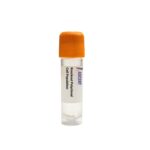
The DAGLB Knockout Raji Polyclonal Cells are a CRISPR/Cas9-edited polyclonal knockout population derived from the human Raji B lymphocyte line, designed to disrupt the DAGLB gene. This loss-of-function model enables study of diacylglycerol lipase beta in endocannabinoid signaling. The polyclonal format yields a genetically diverse pool of cells with ablated target-gene function, suitable for robust functional assays.
Raji cells are a human Burkitt lymphoma-derived lymphoblastoid line, EBV-positive, and serve as a model for neoplastic B lymphocytes with active antibody production. Widely used in immunology and cancer research, this line provides a reliable background for CRISPR-based gene editing. Their well-characterized biology allows investigators to probe signaling pathways that control lymphoid cell proliferation, survival, and immune function.
DAGLB encodes diacylglycerol lipase beta, which hydrolyzes diacylglycerol to produce the endocannabinoid 2-arachidonoylglycerol (2-AG). Acting downstream of GPCR-activated phospholipase C and calcium/PKC signals, 2-AG engages cannabinoid receptors CB1 and CB2, modulating adenylate cyclase, MAPK/ERK, and PI3K/AKT pathways. DAGLB localizes to lipid droplets, indicating a role in compartmentalized signaling. Knockout of DAGLB eliminates 2-AG synthesis, attenuating cannabinoid receptor-mediated regulation of cell growth and immune responses.
In the Raji background, DAGLB disruption allows investigation of endocannabinoid signaling in B-cell malignancy. Loss of 2-AG may impinge on MAPK/ERK and PI3K/AKT pathway activity, altering proliferation and survival of lymphoma cells. This model also facilitates studies on how cannabinoid receptor signaling affects antibody production and cytokine secretion, providing insights into immunomodulation. It represents a valuable tool for linking lipid metabolism to oncogenic processes and immune function.
Typical applications include endocannabinoid signaling research, lipid metabolism profiling in B lymphocytes, and cancer biology studies. The knockout cells are suited for western blotting of phosphorylated signaling proteins, RT-qPCR of downstream targets, LC-MS?Cbased lipidomics to confirm 2-AG depletion, and assays for proliferation, apoptosis, and calcium flux. Flow cytometry can examine surface markers, enabling multiparametric analysis. These polyclonal knockout cells are also useful for drug screening and immunomodulatory compound testing. For additional details, contact Ascent Research.