Quick Order Cart

Cat. No. ARG0799

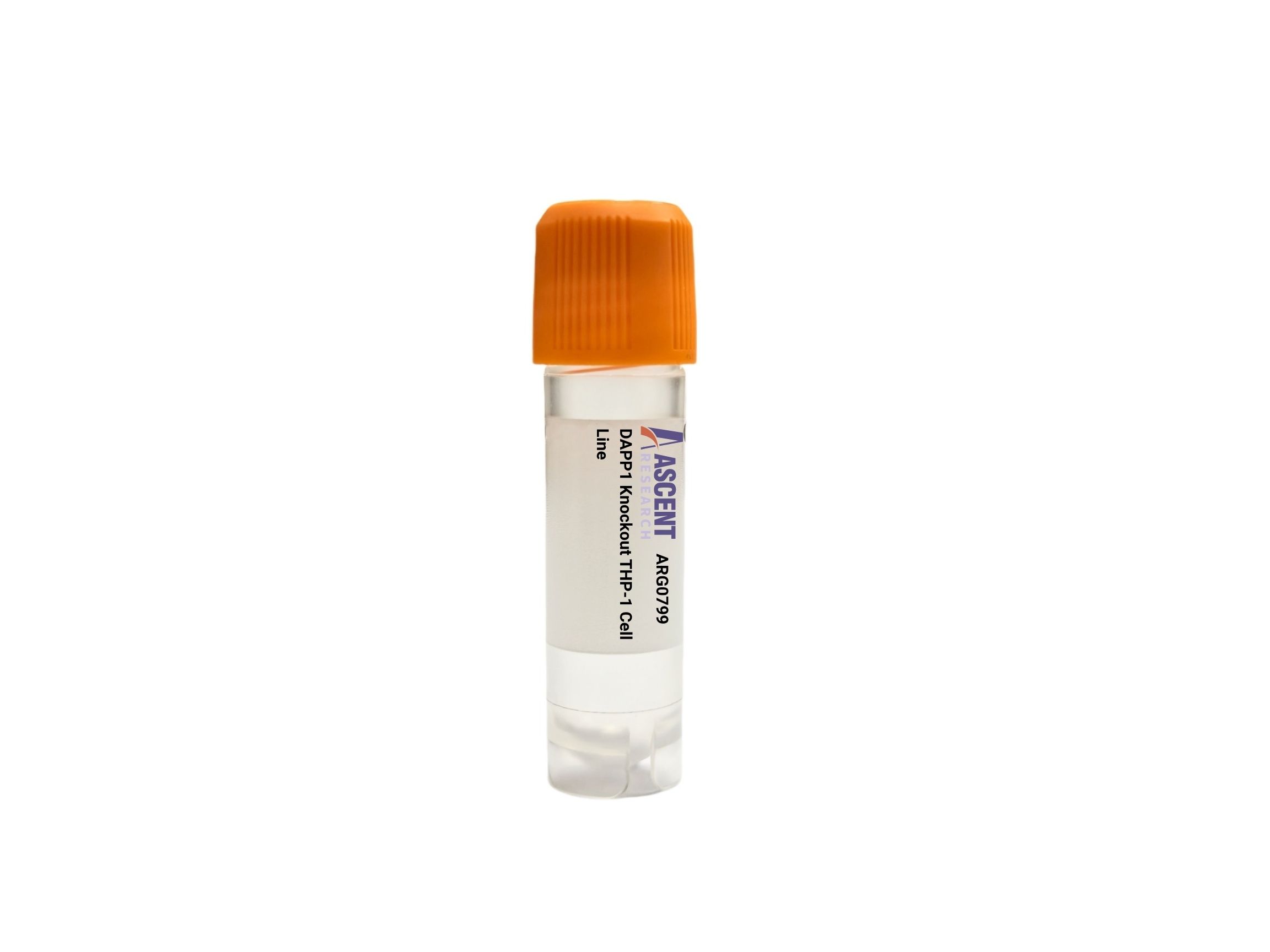
DAPP1 Knockout THP-1 Cell Line

  • Product Type:

    Genome-edited Cells

  • Tissue Source:

    Blood (peripheral blood)

  • Disease:

    Acute monoblastic leukemia

  • Gene Species:

    Homo sapiens (Human)

The DAPP1 Knockout THP-1 Cell Line is a CRISPR/Cas9-edited human monocytic model derived from the THP-1 leukemia cell line, with disrupted DAPP1 expression. DAPP1 is an adaptor linking PI3K lipid signaling to tyrosine kinase pathways, interacting with SHIP and PLC??2 to regulate AKT, ERK, and NF-??B. This knockout facilitates dissection of DAPP1??s role in immune receptor signaling, phagocytosis, and inflammatory responses. Applications include phospho-protein western blotting, calcium flux measurements, and NF-??B reporter assays, supporting research in primary immunodeficiency, autoimmune disease, and hematological malignancies.

Inquire Now

In stock

Ships next business day


Ask a Question

Shipping Info:

Cryopreserved in vials and shipped on dry ice


Disclaimer:

For Research Use Only

  • Characteristics

    Host Cell

    THP-1

    Age

    1 year

    Sex of Donor

    Male

    Gene Name

    DAPP1

    Gene Species

    Homo sapiens (Human)

    Gene Identifier

    NCBI Gene ID 27071

  • Culture Conditions

    Temperature

    37°C

    Atmosphere

    5% CO₂

  • Quality Control

    Sterility testing

    Daily monitoring confirms that the cells are free from bacterial, yeast, and fungal contamination.

    Mycoplasma testing

    Negative for mycoplasma through PCR analysis

    Pathogens

    Cells tested negative for HIV-1, HBV, and HCV.

  • Disclaimer

    Intended Use

    This product is intended for laboratory in vitro use only. lt is not intended for diagnostic, therapeutic, or clinical applications.

    Disclaimer

    Ascent Research endeavors to provide accurate and up-to-date product information. However, no warranties or representations are made regarding its completeness or reliability. References to scientific literature and patents are for informational purposes only, and the customer assumes sole responsibility for verifying their accuracy.

    By accepting this product, the customer acknowledges and agrees to assume all risks associated with its receipt, handling, storage, disposal, and use, including compliance with all applicable safety and environmental regulations and precautions. Relevant laws, regulations, and ethical guidelines must be followed in conducting any research, modifications, or derivatives derived from this product.

    This product is provided "AS IS", and except as expressly stated herein, Ascent Research disclaims all other warranties, express or implied. Under no circumstances shall Ascent Research, its affiliates, or representatives be liable for indirect, incidental, consequential, or punitive damages arising from the use of this material. While Ascent Research employs rigorous quality control measures, we shall not be held responsible for damages resulting from misidentification or misinterpretation of the provided materials.

Description

The DAPP1 Knockout THP-1 Cell Line is a CRISPR/Cas9-edited human knockout cell line designed for loss-of-function studies of the adaptor protein DAPP1. This stable cell line provides a reproducible system for investigating DAPP1-dependent signaling in a monocytic background.

THP-1 is a human monocytic leukemia cell line derived from an acute monocytic leukemia patient. Widely used to model monocyte and macrophage function, THP-1 cells can be differentiated into adherent macrophage-like cells with phorbol esters, retaining key immune activities such as phagocytosis, cytokine secretion, and antigen presentation.

DAPP1 contains a PH domain that specifically binds phosphoinositides, notably PIP3, and an SH2 domain that engages phosphotyrosine motifs on activated receptors and adaptors. It functions as a scaffold linking PI3K-generated lipid signals to tyrosine kinase cascades downstream of immune receptors such as B cell receptors, Fc receptors, and cytokine receptors (e.g., interleukin-4). DAPP1 forms complexes with SHIP, Grb2, SOS1, and PLC??2, and collaborates with BTK to facilitate signal propagation. These interactions culminate in activation of AKT, ERK, and NF-??B, as well as modulation of intracellular calcium, thereby integrating PI3K/AKT and MAPK pathways to regulate immune cell proliferation, differentiation, and effector functions.

In the THP-1 monocytic context, DAPP1 knockout enables dissection of its role in myeloid immune receptor signaling. Since THP-1 cells express Fc?? receptors, this model is ideal for studying DAPP1 in antibody-mediated responses and inflammatory pathways. DAPP1 dysfunction is associated with primary immunodeficiencies, autoimmune disorders, and hematological cancers, highlighting the translational relevance of this knockout system.

Typical assays enabled by this knockout line include western blot detection of phosphorylated AKT and ERK following immune receptor cross-linking, flow cytometry for surface activation markers and cytokine production, and ratiometric calcium imaging to capture immediate signaling dynamics. NF-??B luciferase reporters and co-immunoprecipitation of signaling complexes provide insights into transcriptional and scaffolding mechanisms. Cell proliferation and viability assays further reveal the phenotypic consequences of DAPP1 loss. Together, these applications support research in immunology, signal transduction, drug target validation, and preclinical inflammation and cancer immunotherapy models. For further technical inquiries, please contact Ascent Research.


Reset Password

    Reach Us Questions? Click Me Here!

    Fill out the form below and a member of our team will contact you shortly!

    *Required field


      Reach Us

      Fill out the form below and a member of our team will contact you shortly!

      *Required field

      Product Inquiry (Optional)