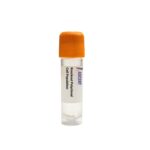
The DCAF11 Knockout Raji Polyclonal Cells constitute a CRISPR/Cas9-edited polyclonal knockout cell population engineered to disrupt the DCAF11 gene in a Raji B lymphoblastoid background. This product provides researchers with a loss-of-function model for investigating DCAF11-dependent ubiquitin-proteasome processes and oxidative stress signaling. The polyclonal nature of the population ensures diverse genetic disruption events while maintaining robust functional ablation of DCAF11, enabling reproducible studies of substrate receptor activity within the CRL4 E3 ubiquitin ligase complex.
Raji cells are a well-characterized Epstein-Barr virus-positive Burkitt’s lymphoma-derived B lymphocyte line. These suspension-adapted cells retain key features of mature B cells, including surface immunoglobulin expression and the capacity for robust proliferation, making them a widely used host for functional genomics studies. Their derivation from a B-cell malignancy also positions them as a relevant model for lymphomagenesis research, particularly for dissecting signaling pathways that intersect with B-cell receptor signaling, apoptosis regulation, and immune evasion mechanisms.
DCAF11 functions as a substrate recognition subunit of the CRL4 (CUL4A?CDDB1?CRBX1) E3 ubiquitin ligase, directly binding target proteins and mediating their ubiquitination for proteasomal degradation. Under basal conditions, DCAF11 promotes constitutive ubiquitination and turnover of NFE2L2 (NRF2), a master transcription factor governing antioxidant gene expression. This process is modulated by oxidative stress: reactive oxygen species attenuate DCAF11-mediated NRF2 degradation, leading to NRF2 stabilization and activation of downstream cytoprotective programs. The DDB1-DCAF11-CUL4A-RBX1 complex also interacts with additional substrates and regulatory factors, linking DCAF11 to broader cellular homeostasis control, including CHK1 stability and KEAP1-dependent stress sensing.
In the Raji B lymphoma context, DCAF11 knockout is particularly valuable for examining how dysregulation of the ubiquitin-proteasome system influences oxidative stress responses, cell survival, and potentially chemoresistance. B lymphocytes are subject to redox fluctuations during activation and differentiation, and aberrant NRF2 signaling has been implicated in both lymphomagenesis and neuroprotective responses. Disrupting DCAF11 in this immune cell background allows investigators to dissect the crosstalk between CRL4-mediated degradation and adaptive immune functions, offering insights into tumor biology and the molecular basis of stress resilience in transformed B cells.
This polyclonal knockout product is suitable for a range of sophisticated experimental workflows, including ubiquitination assays to monitor substrate turnover, Western blotting for protein-level validation, reactive oxygen species quantification, and RT-qPCR profiling of NRF2 target genes. It serves as a powerful tool for functional genomics screens, redox biology investigations, and targeted drug discovery efforts aimed at modulating the ubiquitin-proteasome system in cancer or neurodegenerative disorders. For detailed product specifications, validation data, and ordering information, please contact Ascent Research.