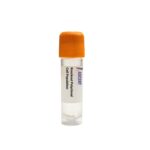
The DCD Knockout Raji Polyclonal Cells product comprises a population of Raji B lymphocytes harboring a targeted disruption of the DCD gene through CRISPR/Cas9-mediated genome editing. This polyclonal knockout cell population is designed to ablate expression of the dermcidin peptide, providing a physiologically relevant loss-of-function model in a human Burkitt lymphoma-derived cell background. As a non-clonal knockout pool, the cells retain the genetic heterogeneity characteristic of the engineered population, making them suitable for pooled functional assays and pathway analysis.
The Raji cell line is an Epstein?CBarr virus (EBV)-positive B lymphocyte line originally isolated from a Burkitt lymphoma patient. Raji cells serve as a widely used model for B-cell lymphoma biology, including antigen presentation and immune signaling studies. Their tumorigenic properties and rapid proliferation make them especially useful for investigating oncogenic pathways and apoptosis resistance mechanisms. The B lymphocyte lineage context of Raji cells is particularly relevant for examining the role of immunomodulatory molecules such as DCD in lymphocyte survival and transformation.
Dermcidin (DCD) is an antimicrobial peptide that also promotes cell proliferation and survival in cancer. At the cell membrane and lipid rafts, DCD putatively interacts with EGFR to trigger downstream phosphorylation cascades. Its expression is transcriptionally regulated by AR, NF-??B, AP-1, and glucocorticoids. Active DCD promotes EGFR phosphorylation, activating PI3K-AKT and MAPK/ERK pathways, which upregulate BCL-2 and suppress caspase-9. Disruption of DCD impairs these axes, reducing AKT and ERK1/2 phosphorylation, lowering BCL-2, and increasing apoptosis susceptibility.
In the Raji B-cell lymphoma model, DCD-mediated oncogenic signaling contributes to the malignant phenotype by sustaining growth factor-independent proliferation and apoptosis resistance. Elimination of DCD in this polyclonal knockout population thus provides a direct tool to dissect DCD-dependent survival pathways and their crosstalk with EGFR-PI3K-AKT and MAPK cascades. This model is highly relevant to the study of Burkitt lymphoma, where aberrant survival signals are a hallmark, and it also extends to other DCD-expressing cancers such as breast, prostate, and melanoma malignancies.
Researchers can use these cells for mechanistic studies including Western blotting for DCD and phospho-EGFR, RT-qPCR for DCD mRNA, and flow cytometry for apoptosis with Annexin V. Functional assays such as MTT cell viability, colony formation, and drug sensitivity profiling with PI3K or AKT inhibitors are directly applied. Key applications are investigation of DCD oncogenic signaling in Burkitt lymphoma, screening EGFR/PI3K/AKT pathway inhibitors, study of apoptosis resistance, and evaluation of antimicrobial peptide function in immune cells. For additional technical information, please contact Ascent Research.