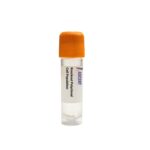
The DCK Knockout Raji Polyclonal Cells are a CRISPR/Cas9-edited polyclonal knockout cell population derived from the Raji human B lymphocyte line, engineered to disrupt the deoxycytidine kinase (DCK) gene. This loss-of-function model ablates DCK-mediated phosphorylation of deoxynucleosides, a critical step in nucleoside salvage and the activation of nucleoside analog prodrugs. The polyclonal format avoids clonal expansion biases, maintaining a heterogeneous knockout representation that is well-suited for pooled functional screens and bulk pharmacodynamic assays. Routine quality control verifies DCK disruption by genomic sequencing and Western blotting.
The Raji parental line is an Epstein-Barr virus (EBV)-positive B lymphocyte isolated from a Burkitt’s lymphoma patient. These cells are characterized by rapid proliferation, robust antibody production, and antigen presentation capabilities, making them a widely used model for B-cell malignancies and immune surveillance studies. EBV-driven transformation results in constitutive activation of NF-??B and MYC signaling, which are key upstream regulators of DCK expression. Raji cells are inherently sensitive to nucleoside analogs, rendering them highly informative for dissecting mechanisms of drug resistance following DCK loss.
DCK encodes deoxycytidine kinase, the rate-limiting enzyme of the nucleoside salvage pathway that phosphorylates deoxycytidine, deoxyadenosine, and deoxyguanosine to dCMP, dAMP, and dGMP, feeding dNTP pools for DNA synthesis and repair. It also activates nucleoside analog prodrugs such as cytarabine and gemcitabine to cytotoxic triphosphates that induce DNA damage and apoptosis. Transcription is regulated by E2F, MYC, and NF-??B, while enzymatic activity is modulated by NME1, NME2, and CMPK1. Downstream, CTPS1 and RRM1 contribute to nucleotide metabolism. DCK disruption abolishes these functions, depleting dNTP pools and causing resistance to nucleoside analogs.
In the context of Raji Burkitt’s lymphoma cells, DCK knockout provides a powerful model to study drug resistance mechanisms commonly observed in aggressive B-cell malignancies. Loss of DCK function mimics a clinically relevant resistance phenotype to antimetabolite chemotherapies used in acute lymphoblastic leukemia and myelodysplastic syndromes. The interaction between DCK and NME1/2 is particularly important in lymphoma, where aberrant nucleotide metabolism supports uncontrolled proliferation. This model allows researchers to decouple salvage pathway contributions from de novo synthesis, evaluate compensatory adaptations, and examine how upstream oncogenic MYC and NF-??B signals converge on nucleotide metabolism to drive malignant growth.
Key applications include drug resistance profiling, nucleoside analog pharmacology, and salvage pathway analysis. Researchers confirm DCK disruption by Western blotting and RT-qPCR, and quantify resistance via cell viability assays with cytarabine or gemcitabine. Nucleoside phosphorylation assays, dNTP pool measurements, and DNA damage assays (e.g., ??-H2AX) assess functional loss. The polyclonal nature also enables pooled CRISPR screens for synthetic lethal interactions. The cells support screening for bypass modulators and next-generation antimetabolites. For further details, please contact Ascent Research.