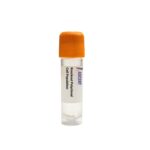
The DCTD Knockout Raji Polyclonal Cells represent a CRISPR/Cas9-edited polyclonal knockout cell population designed to disrupt the DCTD gene in the Raji human B lymphocyte suspension cell line. This loss-of-function model is generated by introducing targeted gene disruptions in a bulk population, yielding a heterogeneous pool of cells with ablated DCTD activity. The polyclonal nature ensures representation of diverse editing outcomes while eliminating the need for single-cell cloning, providing a robust tool for studying DCTD function in lymphoma biology.
Raji cells are a well-established suspension cell line derived from an EBV-positive Burkitt??s lymphoma, retaining features of mature B lymphocytes, including immunoglobulin secretion and antigen-presenting capacity. These cells are extensively used to investigate oncogenic mechanisms in B-cell malignancies and to evaluate responses to antimetabolite chemotherapies. Their rapid proliferation and well-characterized signaling networks make them an ideal host for dissecting nucleotide metabolism pathways.
DCTD encodes the pyrimidine salvage enzyme dCMP deaminase, which catalyzes the deamination of dCMP to dUMP, a critical step providing the substrate for thymidylate synthase (TYMS) to produce dTMP. DCTD is transcriptionally regulated by E2F transcription factors and p53, and its activity is modulated downstream of mTORC1 signaling. The enzyme operates within the pyrimidine metabolism and one-carbon pool by folate pathways, functionally interacting with TYMS, ribonucleotide reductase, and dCMP kinase. Pathway components such as dihydrofolate reductase (DHFR), serine hydroxymethyltransferase 1 (SHMT1), and methylenetetrahydrofolate reductase (MTHFR) cooperate to sustain balanced nucleotide pools. Disruption of DCTD abolishes dCMP deamination, leading to diminished dUMP availability, impaired TYMS-dependent dTTP synthesis, and consequent DNA replication stress.
In the context of Raji B lymphoma cells, DCTD knockout profoundly perturbs pyrimidine homeostasis, mimicking scenarios encountered during antimetabolite chemotherapy. The resulting nucleotide pool imbalance can induce DNA replication errors and genomic instability, providing a platform to examine how lymphoma cells tolerate or succumb to dTTP depletion. This model is particularly valuable for elucidating resistance mechanisms to thymidylate synthase inhibitors such as 5-fluorouracil (5-FU) and antifolates like methotrexate, which target the same pathway.
Researchers can employ this polyclonal knockout model for a wide array of functional assays, including dCMP deaminase activity measurements, LC-MS-based nucleotide pool quantification, and thymidine incorporation assays to assess DNA synthesis rates. It facilitates targeted investigations into pyrimidine metabolism, genomic instability via comet assays, and drug sensitivity profiling with 5-FU and methotrexate. Moreover, the model supports drug resistance mechanism elucidation in lymphoma and the study of nucleotide salvage pathway adaptations. For further information, please contact Ascent Research.