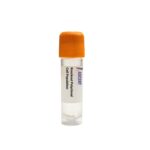
DDX60 Knockout Raji Polyclonal Cells represent a CRISPR/Cas9-edited polyclonal knockout population derived from the human Burkitt’s lymphoma Raji B lymphocyte line, engineered for targeted disruption of the DDX60 gene. This loss-of-function model enables investigation of DDX60-dependent innate antiviral signaling mechanisms in a lymphoid context. The polyclonal nature provides a robust tool for functional genomics studies without clonal selection biases, allowing researchers to dissect RLR pathway activation in B cells.
The Raji cell line is a human Burkitt’s lymphoma-derived B lymphocyte model, established from EBV-positive tumor cells. These lymphoblastoid suspension cells retain hallmark B-cell characteristics, including surface immunoglobulin and CD antigen expression, and are extensively used for B-cell receptor signaling, apoptosis, and viral oncogenesis studies. The EBV-positive background is valuable for examining virus-host interactions affecting innate immunity, and Raji cells constitutively express RLR pathway components, providing a physiologically relevant setting for studying DDX60 function upon stimulation with RNA agonists or viral challenge.
DDX60 encodes a DExD/H-box RNA helicase that functions as a critical cofactor for the RLR sensors RIG-I (DDX58) and MDA5 (IFIH1). Upon viral double-stranded RNA binding, DDX60 facilitates assembly of RIG-I with the mitochondrial adaptor MAVS, an interaction stabilized by TRIM25, leading to recruitment of TRAF3 and 14-3-3 proteins. This nucleates a signaling complex that activates the downstream kinases TBK1 and IKK??, which phosphorylate IRF3 and IRF7 to drive transcription of type I interferons (IFN-??/??) and ISGs such as ISG15 and IFIT1. DDX60 expression is induced by interferons via STAT1/STAT2/IRF9, forming a positive feedback loop.
In Raji B cells, DDX60 knockout provides a platform to study intersection of RLR-mediated innate immunity with lymphomagenesis and viral persistence. EBV latent infection suppresses interferon responses, partly via RIG-I interference. DDX60 ablation helps delineate its role in residual antiviral state and viral reactivation restriction. Additionally, B-cell-intrinsic innate immune checkpoints affecting infection outcomes or autoimmunity can be investigated, and the model supports crosstalk studies between B-cell receptor signaling and RLR pathways.
These polyclonal knockout cells are suited for dissecting RLR signal transduction through co-immunoprecipitation of DDX60 with RIG-I or MAVS, monitoring IRF3 phosphorylation by western blot, quantifying interferon-?? induction by RT-qPCR or luciferase reporter assays, and visualizing IRF3 nuclear translocation by confocal microscopy. Viral challenge assays with Sendai virus or influenza A virus allow functional assessment of DDX60-dependent antiviral activity. Flow cytometry for B-cell surface markers confirms Raji identity. The model also enables CRISPR-based drug target validation and small-molecule screening for interferon modulators. For further information, please contact Ascent Research.