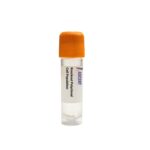
The DESI2 Knockout Raji Polyclonal Cells comprise a CRISPR/Cas9-edited polyclonal knockout population of human Raji B lymphoblast cells, designed for loss-of-function analysis of the DESI2 gene. The heterogeneous pool of edited cells harbors diverse disruptions at the target locus, averaging clonal variation for robust functional studies. This format avoids drug selection markers, preserving native cellular physiology, and is suitable for investigating DESI2-dependent processes in ubiquitin signaling and apoptosis within a B-lymphocyte context.
Raji is an EBV-positive Burkitt??s lymphoma-derived B lymphoblast cell line that grows in suspension and is extensively used to model B-cell lymphoma biology and immune function. The cells retain key signaling pathways of mature B lymphocytes, including those governing survival and apoptosis. EBV-encoded proteins such as LMP1 modulate host networks, including p53, making Raji cells valuable for studying viral interference with tumor suppressor mechanisms and for assessing drug responses in lymphoma.
DESI2 encodes a deubiquitinase functioning as a p53-inducible positive regulator of p53 stability. Upon genotoxic stress, p53 transcriptionally upregulates DESI2, which deubiquitinates p53, counteracting MDM2-mediated degradation. This establishes a feedback loop that amplifies p53 signaling, promoting BAX expression and caspase activation to drive apoptosis. DESI2 operates within the ubiquitin-proteasome system, interacting with p53 and ubiquitin, and constitutes a key node in the DNA damage response pathway linking upstream damage signals to cell death execution.
In Raji cells, which can activate p53-dependent apoptosis in response to DNA-damaging agents, DESI2 knockout disrupts this feedback loop, potentially attenuating p53 stabilization and reducing apoptotic output. This model thereby allows dissection of how DESI2 loss impacts drug-induced cell death in a B-cell lymphoma context, offering insights into resistance mechanisms. The knockout cells facilitate exploration of the interplay between deubiquitination and tumor suppression, and how its dysregulation may contribute to lymphomagenesis.
Typical applications include western blotting and co-immunoprecipitation to monitor p53 levels and ubiquitination, Annexin V/flow cytometry apoptosis assays, caspase activity measurements, ??H2AX and cell cycle analyses by flow cytometry, and chemosensitivity testing with DNA-damaging drugs. These assays enable comprehensive examination of DESI2??s role in DNA damage signaling, apoptosis, and drug response in B-lymphoma models. For additional support, please contact Ascent Research.