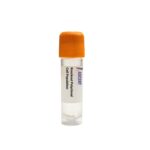
The DPP8 Knockout HEK293T Polyclonal Cells are a CRISPR/Cas9-edited polyclonal knockout cell population generated from human embryonic kidney HEK293T cells, with targeted disruption of the DPP8 gene. This product provides researchers with a versatile loss-of-function model to investigate dipeptidyl peptidase 8 biology without the limitations associated with clonal selection. The polyclonal nature of the knockout pool ensures representation of diverse editing events across the cell population, offering a robust system for studying DPP8-dependent signaling and cellular responses in a context that avoids the potential phenotypic biases of single-cell-derived clones.
The HEK293T host cell line is widely recognized for its utility in biomedical research, owing to its high transfectability and capacity for efficient protein expression and viral production. Originally derived from HEK293 cells, the 293T line was generated by stable integration of the SV40 large T antigen, which promotes episomal replication of transfected plasmids containing the SV40 origin of replication. These human embryonic kidney epithelial cells provide an experimentally tractable background for genetic manipulation and are routinely used in assays ranging from transient overexpression to stable knockout generation, making them an ideal chassis for CRISPR-engineered cell products.
DPP8 encodes a serine protease that functions as a critical negative regulator of the NLRP1 inflammasome. Under homeostatic conditions, DPP8 interacts with NLRP1 and DPP9 to prevent inflammasome assembly. DPP8 suppresses caspase-1 activation by inhibiting NLRP1, preventing cleavage of pro-IL-1?? and pro-IL-18 and GSDMD-mediated pyroptosis. Disruption of DPP8 relieves this inhibition, allowing NLRP1 to nucleate ASC-dependent caspase-1 autoactivation, which cleaves gasdermin D and releases mature IL-1?? and IL-18. This pathway is responsive to upstream signals such as the small-molecule inhibitor Val-boroPro, TNF-??, and cellular stress.
In the HEK293T background, the DPP8 knockout model enables dissection of inflammasome signaling in a context that can be readily manipulated through transfection. Although endogenous NLRP1 expression may be limited, the high transfection efficiency of HEK293T cells allows for reconstitution of the pathway by co-expressing NLRP1 and other components, thereby creating a controllable system to study DPP8-mediated regulation. The polyclonal knockout population circumvents clonal artifacts and clonal selection bottlenecks, providing a more representative loss-of-function phenotype. This model is thus particularly valuable for analyzing protease-dependent signaling events and for conducting comparative studies with pharmacological inhibitors such as Val-boroPro.
DPP8 Knockout HEK293T Polyclonal Cells support a broad range of experimental applications, including mechanistic studies of inflammasome activation, validation of DPP8 as a drug target, and investigation of pyroptotic cell death. Typical downstream assays include western blotting for DPP8 and cleaved caspase-1, IL-1?? ELISA, LDH release assays for pyroptosis, flow cytometry for active caspase-1, co-immunoprecipitation of NLRP1 complexes, and RT-qPCR for inflammatory cytokine transcripts. For additional product details and technical support, please contact Ascent Research.