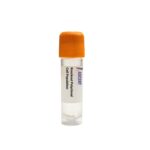
The DPYSL5 Knockout Huh-7 Polyclonal Cells are a CRISPR/Cas9-edited polyclonal knockout cell population derived from the human Huh-7 hepatocellular carcinoma cell line, engineered to disrupt the DPYSL5 gene encoding collapsin response mediator protein 5 (CRMP5). This polyclonal pool provides a heterogeneous loss-of-function model for studying DPYSL5-dependent processes in a liver cancer background.
The Huh-7 cell line is a well-differentiated human hepatocellular carcinoma model that retains many hepatocyte-like features, including active metabolic and detoxification pathways. Widely employed in hepatocellular carcinoma research, drug metabolism studies, and toxicology, Huh-7 cells offer a physiologically relevant context for investigating the tumorigenic and cytoskeletal roles of DPYSL5.
DPYSL5 (CRMP5) functions as a microtubule-associated protein that transduces signals from semaphorin ligands, particularly Sema3A, through neuropilin-1/plexin-A receptor complexes to regulate cytoskeletal dynamics. Upon semaphorin stimulation, CRMP5 acts downstream of FARP2 and Rac1, promoting growth cone collapse and axon repulsion via microtubule depolymerization and actin reorganization. In non-neuronal contexts, DPYSL5 is regulated by GSK3-beta phosphorylation and interacts with cytoskeletal components including tubulin and actin, as well as with related CRMP family members CRMP2 and CRMP4. It also associates with neurofibromin and kinesin, implicating it in microtubule-based transport and cell polarity. Through downstream effectors such as RhoA, Rac1, and Cdc42, DPYSL5 modulates cell migration and invasion, processes that are frequently dysregulated in cancer.
In the context of hepatocellular carcinoma, DPYSL5 has been implicated in tumor cell migration, invasion, and metastasis. Disruption of DPYSL5 in the Huh-7 polyclonal cell population enables dissection of its contributions to the malignant phenotype, including alterations in cell motility, cytoskeletal architecture, and signaling through Rho GTPase pathways. This model is particularly relevant for investigating paraneoplastic neurological syndromes, where DPYSL5 serves as an autoantigen in small-cell lung carcinoma and hepatocellular carcinoma patients, and for exploring its broader roles in tumor progression.
These polyclonal knockout cells are suitable for a wide range of functional studies, including quantitative Western blotting to confirm loss of DPYSL5 protein, Transwell migration and invasion assays to assess changes in metastatic potential, and immunofluorescence staining to visualize tubulin and actin organization. They also serve as a platform for drug screening targeting cytoskeletal regulators and for transcriptomic profiling via RNA-seq to identify DPYSL5-dependent gene networks. Co-immunoprecipitation experiments can further elucidate protein?Cprotein interactions involving CRMP5, tubulin, and associated signaling factors. For further information, please contact Ascent Research.