Quick Order Cart

Cat. No. ARG0670

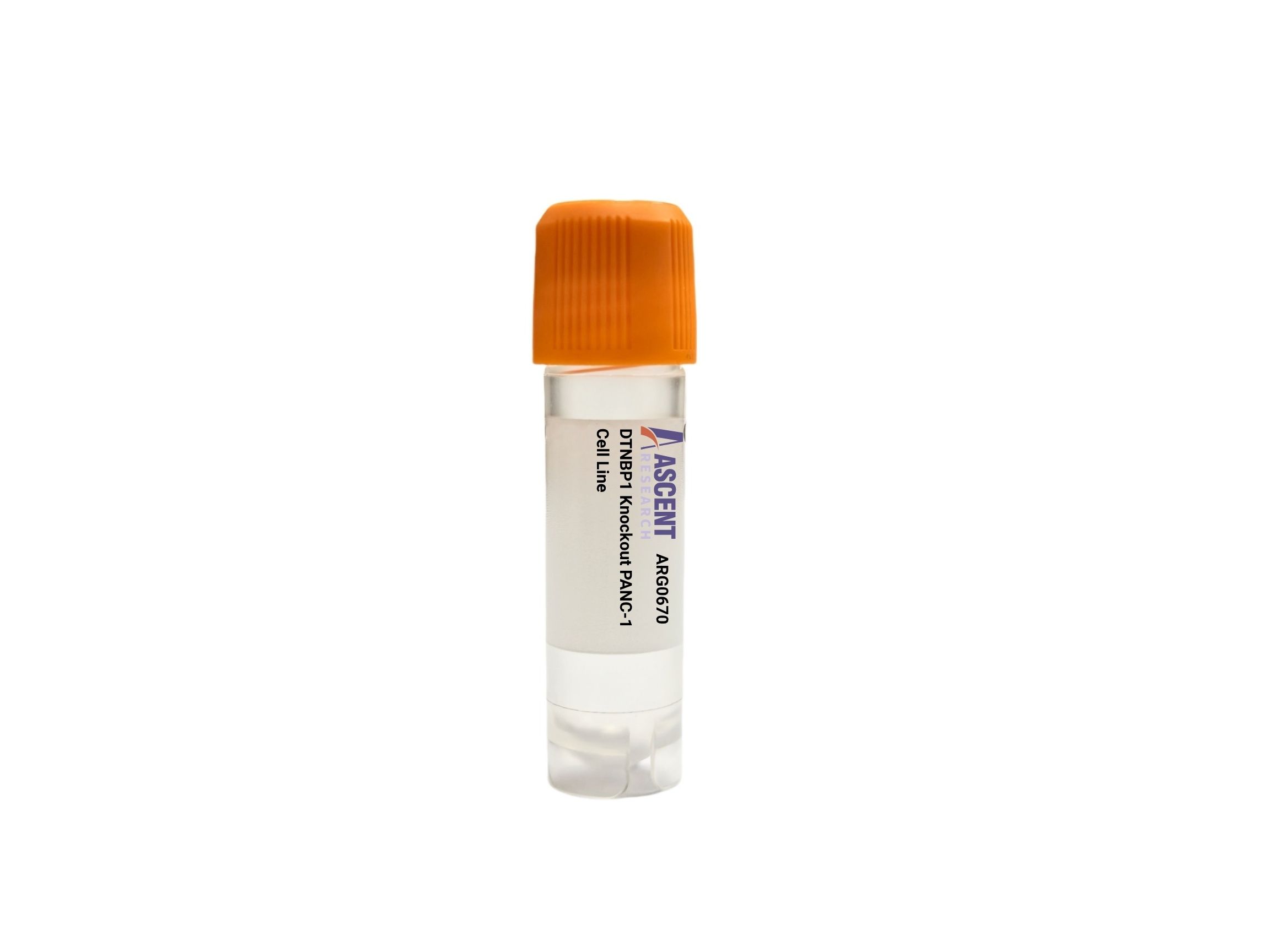
DTNBP1 Knockout PANC-1 Cell Line

  • Product Type:

    Genome-edited Cells

  • Tissue Source:

    Pancreas

  • Disease:

    Epithelioid carcinoma

  • Gene Species:

    Homo sapiens (Human)

The DTNBP1 Knockout PANC-1 Cell Line is a CRISPR/Cas9-edited knockout cell model in which the DTNBP1 gene, encoding the BLOC-1 subunit dysbindin, has been disrupted. This stable loss-of-function model uses human PANC-1 pancreatic ductal adenocarcinoma cells to study lysosomal trafficking, autophagy, and exocytosis, as dysbindin interacts with dystrobrevin, BLOC1S1, and SNARE proteins. Researchers can apply this cell line to investigate pancreatic cancer biology, lysosomal dysfunction, and drug sensitivity, employing assays such as autophagy flux measurement, immunofluorescence for LAMP1, and western blotting. The knockout model is particularly suited for dissecting dysbindin-dependent signaling in cancer and neurobiology-related contexts.

Inquire Now

In stock

Ships next business day


Ask a Question

Shipping Info:

Cryopreserved in vials and shipped on dry ice


Disclaimer:

For Research Use Only

  • Characteristics

    Host Cell

    PANC-1

    Morphology

    Epithelial-like

    Age

    56 years

    Sex of Donor

    Male

    Gene Name

    DTNBP1

    Gene Alias

    SDY; DBND; HPS7; My031; BLOC1S8

    Gene Species

    Homo sapiens (Human)

    Gene Identifier

    NCBI Gene ID 84062

  • Culture Conditions

    Temperature

    37°C

    Atmosphere

    5% CO₂

  • Quality Control

    Sterility testing

    Daily monitoring confirms that the cells are free from bacterial, yeast, and fungal contamination.

    Mycoplasma testing

    Negative for mycoplasma through PCR analysis

    Pathogens

    Cells tested negative for HIV-1, HBV, and HCV.

  • Disclaimer

    Intended Use

    This product is intended for laboratory in vitro use only. lt is not intended for diagnostic, therapeutic, or clinical applications.

    Disclaimer

    Ascent Research endeavors to provide accurate and up-to-date product information. However, no warranties or representations are made regarding its completeness or reliability. References to scientific literature and patents are for informational purposes only, and the customer assumes sole responsibility for verifying their accuracy.

    By accepting this product, the customer acknowledges and agrees to assume all risks associated with its receipt, handling, storage, disposal, and use, including compliance with all applicable safety and environmental regulations and precautions. Relevant laws, regulations, and ethical guidelines must be followed in conducting any research, modifications, or derivatives derived from this product.

    This product is provided "AS IS", and except as expressly stated herein, Ascent Research disclaims all other warranties, express or implied. Under no circumstances shall Ascent Research, its affiliates, or representatives be liable for indirect, incidental, consequential, or punitive damages arising from the use of this material. While Ascent Research employs rigorous quality control measures, we shall not be held responsible for damages resulting from misidentification or misinterpretation of the provided materials.

Description

The DTNBP1 Knockout PANC-1 Cell Line is a genetically modified human pancreatic cancer cell model generated by CRISPR/Cas9-mediated disruption of the DTNBP1 gene. This knockout cell line provides a stable loss-of-function system for studying the roles of dysbindin, the protein product of DTNBP1, in cellular processes. The engineered PANC-1 cells enable researchers to dissect dysbindin-dependent mechanisms without relying on transient knockdown methods, offering a consistent and defined genetic background for functional assays.

PANC-1 is an epithelial cell line originally derived from a 56-year-old Caucasian male with pancreatic ductal adenocarcinoma. These cells exhibit an epithelioid morphology and serve as a widely used model for pancreatic cancer biology, including tumor cell signaling, metabolism, and therapeutic resistance. The PANC-1 line retains key mutations and signaling pathway alterations characteristic of pancreatic ductal adenocarcinoma, making it a relevant host for probing gene functions in cancer progression.

DTNBP1 encodes dysbindin, a core component of the biogenesis of lysosome-related organelles complex 1 (BLOC-1). Dysbindin interacts with dystrobrevin alpha and beta, BLOC1S1, BLOC1S2, and SNARE proteins such as SNAP-25 and syntaxin-1 to regulate lysosomal trafficking, autophagy, and exocytosis. Upstream signals involve dystrobrevin, the SNARE complex, and BDNF/TrkB signaling, while downstream effects include modulation of glutamate receptor trafficking and lysosomal enzyme secretion. Through its scaffolding role in BLOC-1, dysbindin coordinates cargo delivery to lysosomes and lysosome-related organelles, influencing cellular homeostasis.

In the PANC-1 pancreatic cancer context, DTNBP1 knockout eliminates dysbindin expression, impairing BLOC-1-dependent lysosomal biogenesis and function. This disruption is expected to alter autophagy flux, lysosomal pH, and secretory pathways, potentially affecting cancer cell growth, survival, and drug sensitivity. The model enables investigation of how lysosomal dysfunction contributes to pancreatic cancer pathogenesis and may reveal vulnerabilities that can be targeted therapeutically.

This cell line is suitable for a range of experimental applications, including analysis of lysosomal trafficking and pH homeostasis using lysotracker dyes or pH-sensitive probes, autophagy flux assays with LC3 turnover or p62 degradation, and immunofluorescence localization of lysosomal markers such as LAMP1. It also supports drug sensitivity screening, cell proliferation assays, and western blotting for dysbindin network proteins. Typical research areas include cancer cell biology, autophagy regulation, and the study of schizophrenia-related pathways that intersect with lysosomal function. For additional details or to place an order, contact Ascent Research.


Reset Password

    Reach Us Questions? Click Me Here!

    Fill out the form below and a member of our team will contact you shortly!

    *Required field


      Reach Us

      Fill out the form below and a member of our team will contact you shortly!

      *Required field

      Product Inquiry (Optional)