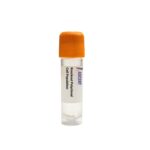
The EMC10 Knockout Raji Polyclonal Cells are a CRISPR/Cas9-edited polyclonal knockout population derived from the Raji human Burkitt lymphoma B lymphocyte line. These cells carry a targeted disruption of EMC10, encoding an ER membrane complex subunit critical for ER protein folding and homeostasis. The polyclonal format provides a heterogeneous loss-of-function model without clonal bias, suitable for studying ER stress and B-cell signaling.
The Raji line, an EBV-positive Burkitt lymphoma from an 11-year-old male, is a standard model for B-cell antigen presentation, viral latency, and lymphoma biology. It exhibits constitutive NF-??B activity due to latent EBV gene expression and expresses surface immunoglobulins and MHC class II, making it valuable for examining oncogenic signaling and immune evasion in the context of ER perturbations.
EMC10, a subunit of the ER membrane protein complex, facilitates co-translational insertion of transmembrane proteins and maintains ER proteostasis. It is regulated by UPR transcription factors XBP1 and ATF6, and by NF-??B downstream of B-cell receptor signaling. EMC10 interacts with EMC subunits (EMC1-9), calnexin, calreticulin, and BiP. Its disruption triggers PERK and IRE1 UPR branches, upregulating CHOP and GRP78, and may shift BCL2/BAX ratios, thereby influencing apoptosis. Additionally, EMC10 loss can modulate cytokine secretion, including IL-6 and TNF, partly through altered STAT3 signaling.
In Raji cells, EMC10 knockout enables dissection of ER stress and B-cell survival crosstalk. EBV-driven B lymphoblasts rely on robust ER quality control for immunoglobulin synthesis and viral protein production; EMC10 loss may exacerbate ER stress and sensitize cells to CHOP/BAX-mediated apoptosis while altering NF-??B survival signals. This model is thus pertinent for studying ER proteostasis in B-cell autoimmunity, lymphoma pathogenesis, and the systemic effects of tumor-derived ER stress, such as cancer cachexia.
Researchers can utilize these cells for Western blotting and RT-qPCR of EMC10 and UPR markers, flow cytometric apoptosis assays, ELISA-based cytokine profiling (IL-6, TNF), immunofluorescence of ER morphology, and co-immunoprecipitation of EMC complex interactions. Transcriptomics via RNA-seq further reveals global expression changes. These applications support drug screening for ER proteostasis modulators, mechanistic studies in B-cell malignancies, and apoptosis research. For support, contact Ascent Research.