Quick Order Cart

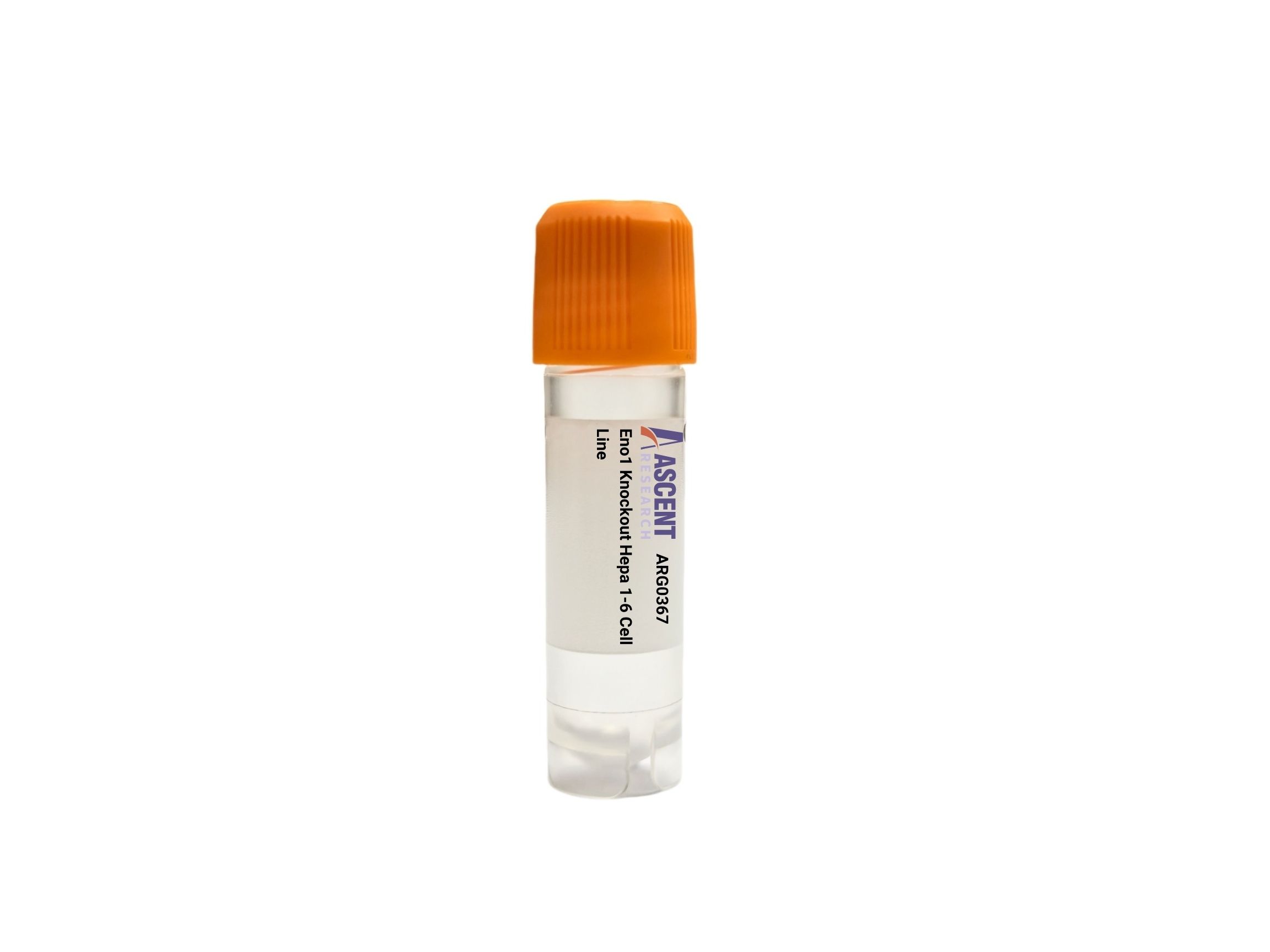
Cat. No. ARG0367

Eno1 Knockout Hepa 1-6 Cell Line

  • Product Type:

    Genome-edited Cells

  • Tissue Source:

    Liver

  • Disease:

    Hepatocellular carcinoma

  • Gene Species:

    Mus musculus (Mouse)

The Eno1 Knockout Hepa 1-6 Cell Line is a CRISPR/Cas9-edited mouse hepatoma cell line with targeted disruption of Eno1, encoding alpha-enolase. This enzyme catalyzes the conversion of 2-phosphoglycerate to phosphoenolpyruvate in glycolysis and functions as a plasminogen receptor promoting cell migration, while its MBP-1 isoform represses c-Myc transcription to link metabolism and proliferation. Derived from the Hepa 1-6 hepatocellular carcinoma model, this knockout enables study of ENO1-dependent glycolysis, HIF-1?? and MYC regulation, and invasion. It supports cancer metabolism research, drug sensitivity testing with glycolysis inhibitors, and plasminogen activation assays.

Inquire Now

In stock

Ships next business day


Ask a Question

Shipping Info:

Cryopreserved in vials and shipped on dry ice


Disclaimer:

For Research Use Only

  • Characteristics

    Host Cell

    Hepa 1-6

    Morphology

    Epithelial-like

    Gene Name

    Eno1

    Gene Species

    Mus musculus (Mouse)

    Gene Identifier

    NCBI Gene ID 13806

  • Culture Conditions

    Temperature

    37°C

    Atmosphere

    5% CO₂

  • Quality Control

    Sterility testing

    Daily monitoring confirms that the cells are free from bacterial, yeast, and fungal contamination.

    Mycoplasma testing

    Negative for mycoplasma through PCR analysis

    Pathogens

    Cells tested negative for HIV-1, HBV, and HCV.

  • Disclaimer

    Intended Use

    This product is intended for laboratory in vitro use only. lt is not intended for diagnostic, therapeutic, or clinical applications.

    Disclaimer

    Ascent Research endeavors to provide accurate and up-to-date product information. However, no warranties or representations are made regarding its completeness or reliability. References to scientific literature and patents are for informational purposes only, and the customer assumes sole responsibility for verifying their accuracy.

    By accepting this product, the customer acknowledges and agrees to assume all risks associated with its receipt, handling, storage, disposal, and use, including compliance with all applicable safety and environmental regulations and precautions. Relevant laws, regulations, and ethical guidelines must be followed in conducting any research, modifications, or derivatives derived from this product.

    This product is provided "AS IS", and except as expressly stated herein, Ascent Research disclaims all other warranties, express or implied. Under no circumstances shall Ascent Research, its affiliates, or representatives be liable for indirect, incidental, consequential, or punitive damages arising from the use of this material. While Ascent Research employs rigorous quality control measures, we shall not be held responsible for damages resulting from misidentification or misinterpretation of the provided materials.

Description

The Eno1 Knockout Hepa 1-6 Cell Line is a CRISPR/Cas9-edited knockout cell line derived from the Hepa 1-6 mouse hepatoma line, engineered for stable disruption of the Eno1 gene. Eno1 encodes alpha-enolase, a key glycolytic enzyme that also functions as a plasminogen receptor and transcriptional regulator. This knockout model provides a powerful tool for investigating Eno1-dependent processes in metabolism, signaling, and tumor biology within a relevant liver cancer context.

Hepa 1-6 is a well-established mouse hepatoma cell line originating from the BW7756 tumor in C57L mice. It exhibits hepatocyte-like characteristics and is widely used as a model for hepatocellular carcinoma (HCC) research, recapitulating many molecular features of liver cancer. The cell line is responsive to metabolic and oncogenic pathway perturbations, making it an appropriate host for studying gene function in hepatocarcinogenesis.

Alpha-enolase (ENO1) catalyzes the conversion of 2-phosphoglycerate to phosphoenolpyruvate in glycolysis. Beyond its enzymatic role, ENO1 acts as a cell-surface plasminogen receptor, binding plasminogen and promoting its activation to plasmin for extracellular matrix degradation and cell migration. Its alternative translation product, MBP-1, localizes to the nucleus and represses c-Myc transcription, linking glycolytic activity to growth control. ENO1 expression is upregulated by HIF-1?? under hypoxia and by MYC in proliferative states, and is modulated by insulin and AMPK signaling. It interacts with cytoskeletal proteins tubulin and actin, and with the glycolytic enzyme PKM2, functioning within a network that includes hexokinase 2 (HK2) and lactate dehydrogenase A (LDHA) to coordinate metabolism and tumor progression.

In the Hepa 1-6 hepatoma context, Eno1 knockout disrupts a critical metabolic and signaling hub. Hepatocellular carcinoma cells rely on enhanced glycolysis and HIF-1??-mediated adaptation to hypoxia, processes dependent on ENO1. Loss of ENO1 permits dissection of its contributions to glycolytic flux, lactate production, proliferation, and plasminogen receptor-mediated invasion. The MBP-1?Cc-Myc axis provides a direct link between metabolism and oncogene regulation, enabling studies of metabolism-driven gene expression changes in liver cancer.

Researchers can utilize this knockout cell line for applications including cancer metabolism studies via metabolic profiling and glycolytic flux assays, hypoxia response research, and drug sensitivity testing with glycolysis inhibitors such as 2-DG. It supports migration and invasion assays, co-immunoprecipitation with plasminogen, and immunofluorescence. For further information, please contact Ascent Research.


Reset Password

    Reach Us Questions? Click Me Here!

    Fill out the form below and a member of our team will contact you shortly!

    *Required field


      Reach Us

      Fill out the form below and a member of our team will contact you shortly!

      *Required field

      Product Inquiry (Optional)